Get Full Government Meeting Transcripts, Videos, & Alerts Forever!
Get email alerts on the Land Use topic
No spam. Unsubscribe anytime.
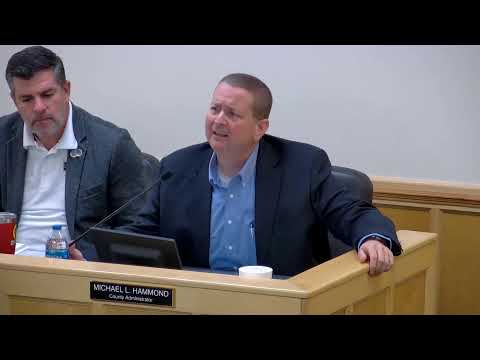
Gulf County holds workshop on industrial land-use change as residents press for wider waterfront buffers
Summary
Gulf County held a public workshop March 24 to review a county-initiated large-scale future land-use map amendment that would reclassify about 3,200 acres from agricultural to industrial to create an industrial corridor, county staff and commissioners said.
Gulf County held a public workshop March 24 to review a county-initiated large-scale future land-use map amendment that would reclassify about 3,200 acres from agricultural to industrial to create an industrial corridor, county staff and commissioners said.
The discussion focused on where industry could be sited along the proposed corridor, how existing Land Development Regulations (LDRs) and development orders would control setbacks and environmental protections, and whether the county should add larger waterfront buffers or explicit bans on dredging and pipelines before approving the map change.
County planning staff member Doug said the industrial designation would allow uses tied to “the moving of goods, manufacturing of goods” and similar activities, but that individual projects larger than 5,000 square feet would still require development review and likely come before the county planning-development review board and the commission for approval. He noted existing LDR protections include a 50-foot wetland setback south of the Intracoastal Waterway and that setbacks for “high-intensity” industry can be extended depending on the use. The transcript records Doug saying, “it can be anything with the distribution, manufacturing, or moving of goods” when explaining the industrial category.
Residents and organized groups urged stronger, blanket protections for waterways. Deborah Mays, speaking for the Gulf County Citizens Coalition, asked commissioners to include a 250-foot buffer, a prohibition on dredging across that buffer into the industrial lands, and a ban on pipelines to the port. “We don’t oppose industry… we do want it to be balanced,” Mays said, urging the board to add protections in the LDR rather than rely solely on case-by-case development orders.
Other commenters echoed concerns about stormwater and hurricane risk. A resident, identified in the record as John Airman, described a buffer as an “insurance policy” to reduce siltation and debris entering canals and the Intracoastal during construction or storms. Multiple speakers noted the area includes wetlands and that any development would require wetland studies and state permitting. County staff and another staff member, Jack, told the workshop the state’s stormwater rules are changing in December 2025 to require controls for total nitrogen and total phosphorus, which the staff estimated would raise stormwater treatment requirements by roughly 20–40 percent for new developments.
Commissioners and staff also discussed jurisdictional limits and the proper vehicle for changes. Planning staff said the ordinance before the commission is a comprehensive plan amendment to change the future land-use map; changes such as mandatory buffers or bans on dredging would belong in the LDR, not the comprehensive plan. Staff cautioned that adding strict, blanket restrictions could force desirable water-dependent businesses to seek variances or decline to locate here, while other speakers said an LDR change could be written to allow case-by-case exceptions if needed.
Speakers also raised questions about whether the effort is linked to airport plans. Members of the public cited earlier meetings where they believed an airport was discussed; commissioners replied the workshop was limited to the land-use map amendment and that the airport does not require a land-use change. Staff reiterated this workshop was informational and that a formal public hearing with parcel numbers is scheduled for the following day.
No final land-use decision was taken at the workshop. The only formal action recorded in the transcript was a routine motion to adjourn. The commission’s agenda for the upcoming public hearing will include parcel numbers and the formal ordinance changing the comprehensive plan’s future land-use map.
Votes at a glance
- Motion to adjourn: Motion by Commissioner Macron; second by Commissioner Hudson. The transcript records the motion as passed by the commission at the end of the workshop.
Next steps
The commission will consider the formal ordinance changing the comprehensive plan at a noticed public hearing the following day; any LDR amendments (for example, mandatory buffers or no-dredge/no-pipeline provisions) would require a separate process or an LDR amendment that the board could pursue concurrently if it chooses.