Get Full Government Meeting Transcripts, Videos, & Alerts Forever!
Get email alerts on the Budget Deficit Reduction topic
No spam. Unsubscribe anytime.
Springfield SD 186 board reviews three-year deficit-reduction plan and wrestles with possible end of SCOPE program
Summary
Superintendent and business officials presented a three-year deficit-reduction plan that relies mainly on attrition, staffing reassignments and program cuts; the board and public focused on the possible termination or outsourcing of SCOPE, the district’s before/after-school program.
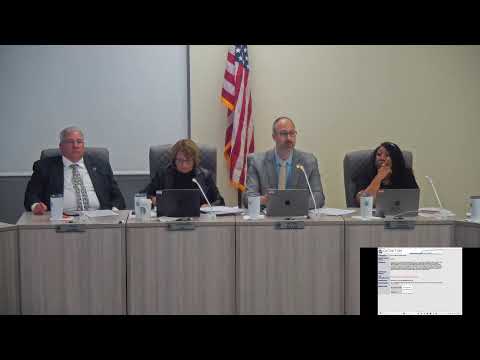
Springfield — Springfield School District 186 leaders laid out a three-year deficit-reduction plan on March 24 and opened a wider debate about whether to end or transfer SCOPE, the district’s long-running before- and after-school care program.
The plan presented by the superintendent and Chief School Business Officer Michael Miller aims to reduce district spending through vacancies, program scope changes and operational savings while protecting classroom positions where possible. During more than two hours of budget discussion the board and public repeatedly pressed district staff for more detailed line-item data and for alternatives to closing SCOPE.
The district framed the review as a response to flat state funding, looming categorical cuts and the phasing out of one-time federal ESSER money. “This is never a good and happy topic,” the superintendent said during the presentation, adding that the cabinet and business office worked to limit classroom impacts. Miller summarized the approach as largely built on attrition: “there's not a single person that is being cut in any of these budget line items,” he said, describing vacancies, repurposed roles and a reduction from two district coaches to one as examples.
Why it matters: The district faces multi-year revenue pressure and is considering changes that would affect employees, families and the district’s capacity to provide before- and after-school care. SCOPE serves roughly the same children who are most affected by chronic absenteeism and by the need for supervised care during work hours, and parents warned the board that closing or privatizing it could create hardship.
Key elements of the reduction plan and clarifying figures - Central office and administrative: district leaders described a cabinet-level vacancy that yields roughly $50,000 in FY25 savings and an ongoing $150,000 annual savings when not filled in FY26; additional planned savings rely on retirements and repurposing positions. - Operations & maintenance: projected reductions include a $100,000 cut next year to fleet replacement and an ongoing $40,000 reduction annually thereafter; small efficiencies such as tighter temperature controls were estimated at minimum savings of $10,000. - Energy/solar: the district turned on solar panels at Lanfier and recorded one month of savings of about $4,000; the vendor estimates roughly $96,000 in annual utility savings (about $48,000 pro‑rated into the current year and $48,000 next year), a figure the district said it will continue to monitor. - Schools/teaching staff: Miller said staffing reductions at secondary schools total about 15 positions across three buildings and up to 11 elementary positions were identified, though six elementary positions were held in reserve pending registration. District leaders emphasized those changes would occur via attrition and not immediate layoffs. - Career & technical enrollment (CACC): the district currently budgets about $1,700 per CACC student per semester and noted that it pays those amounts regardless of whether a student completes the program; staff proposed district-level eligibility criteria to reduce payments for students who fail to meet attendance or performance thresholds.
SCOPE, summer programming and the district’s options District staff flagged SCOPE as a program with a multi-year deficit. Multiple presentations and public comments provided financial detail and personal testimony: - Fiscal context: staff reported FY24 SCOPE revenues of about $1,260,000 and FY24 expenditures of roughly $2,055,000, leaving a gap on the order of $787,000 at the end of the school year; summer operation narrowed that shortfall to about $400,000 following additional summer revenue. Staff also described a cumulative multi-year deficit in the program stretching back to 2014 and estimated that, at current rates and staffing, SCOPE could require a substantial ongoing subsidy if unchanged. - Suggested remedies and estimates: district staff said a break-even rate for the full-week SCOPE product could be approximately $127 per week (current full-week parent rate cited as $85 per week), and noted that raising rates may push some families out of the program or alter eligibility for Community Child Care Connections subsidies. - Transition/outsourcing option: the administration said legal counsel advised that, to explore an outside operator such as the YMCA, the district should terminate the current SCOPE arrangement and solicit alternative providers. The YMCA was described as an interested partner in some locations; the administration did not present a completed contract at this meeting.
Public comment and union response Public comment was heavily focused on preserving SCOPE. Staff leads, Teamsters representatives and dozens of parents described SCOPE as integral to family stability and student safety. Key quotes from the record include: - John Berry, Teamsters Local 916: “Teamsters are asking the board to vote no and give us a right to bargain the outcome on behalf of our members.” - Danielle Watts, Teamsters: “We stand in strong opposition to the proposed dissolution of the project.” - Cheryl Rice, SCOPE lead at Laketown: “I go to church for Thanksgiving, Christmas, did baskets and stuff for the less fortunate… I know what it is not to have what you want.” Board members and staff acknowledged the competing goals: several trustees said they wanted to preserve services while also resolving the budget gap. Board members asked for more transparency and detailed line-item breakdowns of SCOPE expenditures (salaries, benefits, purchase services and supplies) and asked staff to provide a specific plan for consolidations, busing costs if sites are combined, and a clearer picture of summer revenue assumptions.
Board direction and next steps At the meeting the board did not adopt a final change to SCOPE. Trustees voted earlier in the agenda process to remove item 12.7 from the consent agenda and treat it as discussion only, and then continued discussion under the budget items. The administration said it would: - Provide detailed line-item SCOPE expenditures and revenue data and a projection of the deficit under current pricing; - Draft possible rate scenarios and an analysis of financial aid eligibility under Community Child Care Connections; - Return with options for consolidation, transportation cost estimates and a description of potential employee impacts, including IMRF/pension and health-insurance consequences.
What the community emphasized Parents and staff testified repeatedly that SCOPE provides essential supervision, continuity and relationships that many families rely on. Several speakers said transfer to an outside operator would risk higher fees, lost pensions and health coverage for staff and logistical burdens for families who live close to a school but would have to travel farther for care.
Bottom line District staff proposed a budget reduction plan that leans on attrition, operational efficiencies and program changes to narrow a multi-year gap driven by state and federal funding uncertainties. The meeting produced no final decision to terminate SCOPE, but it produced clear direction: staff must return with detailed SCOPE finances, concrete alternatives (including cost models for keeping SCOPE in-house and for an external operator), and a plan that addresses staffing and transportation logistics. Public commenters and union representatives demanded bargaining rights and urged the board to preserve the program.
Ending note Board members asked for the requested supplemental materials to be circulated well before the next decision point so the public, staff and trustees can evaluate tradeoffs and potential mitigations for families and employees.