Get Full Government Meeting Transcripts, Videos, & Alerts Forever!
Get email alerts on the Public Safety Ems topic
No spam. Unsubscribe anytime.
Lancaster County EMS chief seeks pay, staffing and equipment increases in FY2026 budget
Summary
Lancaster County emergency services presented a budget that raises volunteer rescue and fire contributions, absorbs a state contract for electronic patient-care records and requests pay and staffing increases to address recruitment and retention.
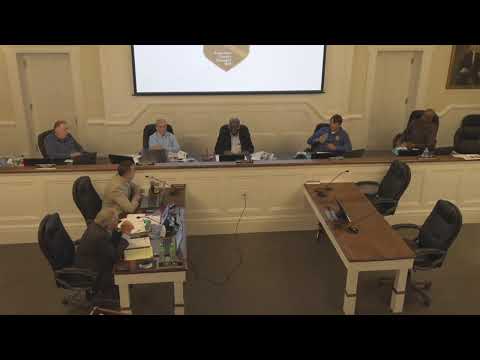
Lancaster County Emergency Services Chief Matt Smith told the Board of Supervisors on March 25 that the county’s EMS budget for fiscal year 2026 includes higher contributions to volunteer rescue and fire departments, stepped-up pay for full‑time staff and new costs tied to a state contract shift for electronic patient-care records.
The request is anchored by two requested increases the board discussed at the budget hearing: raising the county’s long-standing volunteer rescue squad contribution from $115,000 to $173,250 and increasing annual funding for the three volunteer fire departments to $413,546.10 after a 10 percent agreed increase by the departments. “The contribution, it's been at hundred and 15,000 for quite some time,” Chief Smith said, adding that operating costs and mechanical and protection‑equipment expenses have risen countywide.
Why it matters: county leaders heard the presentation as staffing and equipment pressures converge. Smith said Lancaster EMS answered 2,253 calls in 2024 (countywide totals later cited at 2,489) with an average response time of 10 minutes, 32 seconds and that the service is prioritizing recruitment and retention to reach a target of 16 full‑time staff.
Chief Smith said Lancaster currently has 13 full‑time EMS staff and expects one retirement imminently. To make full‑time positions more competitive he proposed pay raises and a reworked pay scale that would set EMTs at $21 per hour, advanced EMTs at $23, intermediate EMTs at $25 and paramedics at $27. “We're still down. ... The problem ... is that the pool of qualified people is just not there,” Smith said, noting surrounding localities are raising wages and competing for the same candidates.
Another major budget shift is the return of a statewide contract for the county’s electronic patient care report (PCR) software to local responsibility. Smith said the state had covered the PCR vendor during the COVID years but will “put it back on the localities” beginning in July. Smith said the annual contract covering Lancaster County’s EMS system, both volunteer agencies and three fire departments is $656,500.
Smith also described a locally proposed EMT training program intended to boost recruitment by creating a hybrid EMT class managed in‑county. He said the planned training would involve five instructors and a lead instructor, cost about $600 per student for the learning management system and require roughly $3,000 in consumable training supplies. The board discussed an original plan for 16 students amended to 20 seats.
On pharmaceuticals and drug management, Smith described a change in which the county will assume responsibility for purchasing and tracking drugs formerly handled by others. He warned the biggest administrative burden will be recordkeeping: “We've got to track it from the time that we receive it, here till the time that's either administered, expired, or wasted,” Smith said. He said the county is preparing inspections for state and DEA requirements and will track pharmacy costs through revenue recovery.
Board reaction and next steps: supervisors asked about liability, overtime, and how the county will measure the cost of managing drugs in‑house. Smith said overtime remains driven by last‑minute callouts and staffing gaps; the budget reflects overtime at recent actuals. After questions, the board indicated informal consensus to include the EMS proposals in the draft budget to be finalized in upcoming budget sessions.
Ending: Chief Smith asked the board to consider the recruitment and retention measures as essential to maintain emergency coverage countywide; the items will move into the FY2026 draft for further discussion at the April budget work sessions.