Get Full Government Meeting Transcripts, Videos, & Alerts Forever!
Get email alerts on the Impact Fees topic
No spam. Unsubscribe anytime.
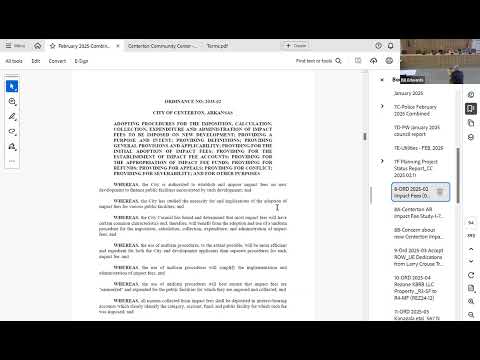
Centerton council tables impact-fee ordinance after concerns about commercial rate
Summary
Centerton City Council delayed a vote on a new impact-fee ordinance after members and staff raised concerns that the proposed commercial fee per 1,000 square feet would be prohibitively high for small businesses; council asked staff to consult the city attorney and other cities and return with more information next month.
The Centerton City Council on Feb. 11, 2025 voted to table consideration of a citywide impact-fee ordinance after council members and staff said the proposed commercial rate could burden small businesses and invite legal challenges.
City staff presented the ordinance by title and explained results of a recently completed fee study. The study, which staff said cost $70,000, recommended a commercial impact fee of about $12,320 per 1,000 square feet. City staff warned that an 80,000-square-foot retail project at that rate would face about $2 million in fees before credits for eligible infrastructure work.
“After doing further analysis ... I think that number is just too substantial,” Councilmember Justin Cowgarden said, arguing the fee could hurt smaller local businesses even if national retailers could absorb it. City staff and the consultant told the council the study provides the maximum lawful fee and that the council may set a lower amount.
Council members asked for legal analysis and comparisons with neighboring cities before setting a final commercial rate. The city attorney (present at the meeting) and staff recommended caution because changes to commercial rates could expose the city to litigation if not applied consistently with state law and prior residential decisions.
Councilmember discussion noted the municipal policy choices already made for residential fees, and several members asked whether lowering commercial fees would require matching adjustments to residential rates. Staff and the city attorney said they needed time to research proportionality and other legal principles, and to gather examples from other jurisdictions.
After discussion, a motion to table the ordinance until the next meeting passed on a roll call vote. Councilmembers voting yes included Cliff Thompson, Justin Cowgarden, Wendy Henson, Jesse Reed, Joshua Hagen and Cody Miles; the ordinance will return to the Feb. agenda after staff consultation with the attorney and additional data collection.
The council also discussed crediting mechanisms in the draft ordinance, noting that developers who fund public improvements (for example, a traffic signal) can receive credits only for the relevant category (road impacts) and not for unrelated categories such as police or fire. Staff said the city had received a written letter from a commercial developer on Feb. 3 raising concerns about the fee methodology and asking for adjustments.
The council instructed staff to: consult the city attorney about legal risks of different commercial rates, compile impact-fee practices from comparable cities (including public records or FOIA disclosures if needed), and bring a revised recommendation to the next meeting.
Ending: The council did not adopt the impact-fee ordinance; it was tabled for further review. Staff said it will circulate the developer letter and additional background materials to council members once legal review is complete.