Get Full Government Meeting Transcripts, Videos, & Alerts Forever!
Get email alerts on the Brownfield Housing Tif topic
No spam. Unsubscribe anytime.
Newaygo County hears Brownfield briefing on new housing TIFs; public hearing set for Jan. 22
Summary
County commissioners received a presentation from Fishbeck consultants on changes to Michigan’s brownfield law that allow tax increment financing (TIF) to subsidize housing; three housing brownfield plans are pending and a City of Newaygo project will be the subject of a public hearing on Jan. 22.
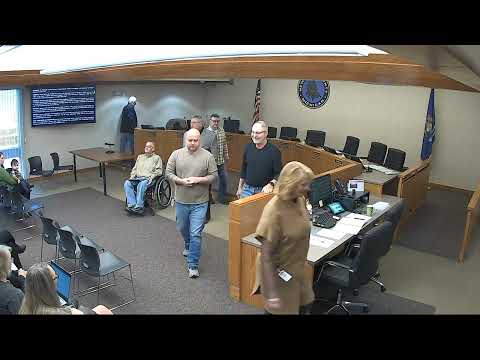
Newaygo County commissioners on Jan. 8 heard a detailed briefing from Fishbeck consultants and county staff about recent state changes that allow brownfield tax-increment financing to be used for housing projects and about three housing-focused brownfield plans that are now pending in the county. County and city staff said one of those plans — a rental project in the City of Newaygo — will have a public hearing before the board on Jan. 22, followed by a request for the Brownfield Authority’s recommendation.
The presentation, led by Trudy Gala and Susan Winslick of Fishbeck, reviewed Act 381 (the Brownfield Redevelopment Financing Act) and the 2023 statutory changes that make housing an eligible brownfield use. “Act 381 is the Brownfield Redevelopment Financing Act. It was put in place in 1996 to encourage brownfield redevelopment mainly on sites that have been contaminated,” Trudy Gala said. Susan Winslick summarized the basic TIF mechanism: “Tax increment financing is just the difference between what the taxes are now on a piece of property and what they're going to be in the future once it's developed.”
Under the statute discussed, a project becomes eligible for a housing TIF if it creates or rehabs at least one housing unit and serves residents at or below 20 percent of area median income (AMI) as claimed in the brownfield plan. Fishbeck explained eligible uses can include environmental cleanup and traditional site work as well as housing-specific items such as renovation costs and a rent-subsidy gap to keep rents affordable. Fishbeck noted the statutory maximum TIF capture period is 30 years and that the statute allows up to five of those years to seed a local Brownfield revolving fund; Newaygo County staff said the county is targeting a shorter capture period (about 15 years) for the projects it expects to consider.
Fishbeck and county staff described the multi-step approval process: a developer brings a brownfield plan to the local Brownfield Redevelopment Authority, the local municipality (city or township) must support the plan and the county must hold a public hearing and take final action, and state review by the Michigan State Housing Development Authority (MSHDA) is required if state school taxes (the 24 mills of state education tax on the parcel) are requested for capture. Fishbeck stressed reporting and compliance requirements: developers must document eligible costs with invoices and must verify household incomes for subsidized units at move-in; MSHDA approves the development agreement that lays out those requirements. Fishbeck also noted that development agreements can prorate or reduce capture if a project fails to meet the income-qualified unit count.
County staff and city officials said municipalities may negotiate separate municipal services agreements with developers to address increased local service costs (police, fire, ambulance) during the TIF term; those agreements are separate from the brownfield reimbursement contract but staff said they can be referenced in the development agreement to give the city contractual recourse. John Schneider, Newaygo city manager, told commissioners the city has approved zoning and a city resolution in support of the Newaygo rental project and said its walkable location behind the grocery store would help local businesses.
Fishbeck noted local brownfield authorities will still vet plans for public benefit, feasibility and whether enough tax increment will be generated to reimburse eligible project costs. County staff said consultant and review costs are paid by developers through escrow deposits and that the county is preparing materials for the Jan. 22 public hearing.
The board will hold the public hearing and then may approve, deny or request modifications to the brownfield plan and related development agreement.