Get Full Government Meeting Transcripts, Videos, & Alerts Forever!
Get email alerts on the Opioid Settlement Fund topic
No spam. Unsubscribe anytime.
Commissioners approve opioid-settlement spending plan to fund treatment, jail-based medication programs
Summary
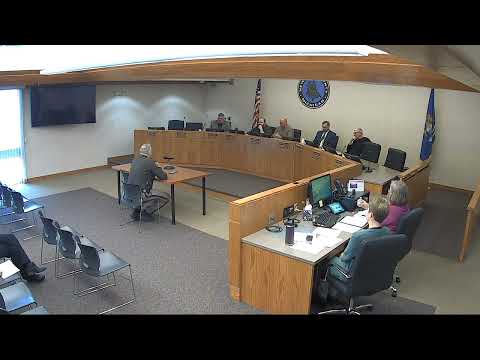
Newaygo County commissioners recommended the finance committee adopt Resolution 01-003-25 to establish an opioid settlement fund spending plan that directs one-time and recurring payments to community mental health, supports a partial school resource officer, and funds medication-assisted treatment in the county jail.
Newaygo County commissioners voted to recommend that the finance committee adopt Resolution 01-003-25 establishing a county opioid settlement fund spending plan.
The motion was made by Commissioner Cobb and seconded by Commissioner Trent and approved by voice vote. The plan outlines both one-time and ongoing allocations from an opioid-related settlement fund with a reported fund balance of roughly $250,000.
The plan’s authors proposed a one-time payment to Community Mental Health to support housing and recovery-coaching programs and coaching for incarcerated individuals. The plan also recommends continuing partial funding of a school resource officer in Hesperia and allocating $30,000 per year to support a proposed drug court initiative. County officials discussed prioritizing medication-assisted treatment in the correctional facility, including more costly injectable options versus oral delivery.
“This is a plan that is mandated to us,” the meeting chair said during discussion, noting funds arrive from multiple settlement sources with different restrictions. Commissioners and staff described the allocations as intended to support treatment, recovery coaching and in-jail medication-assisted treatment while noting the plan can be adjusted if additional settlement dollars arrive.
Speakers emphasized cost and operational implications for the jail. Officials said injectable delivery of medications for opioid use disorder is more expensive but can reduce the staff time corrections officers spend supervising oral medication dosing. The plan therefore reserves funds to support delivery methods thought to be more effective in a correctional setting.
Commissioners noted the state’s guidance limits how settlement dollars may be used, and officials said future settlements or state-level litigation could change available funding. No roll-call vote tally was recorded in the meeting minutes; the clerk called for “aye,” commissioners responded and the motion carried.
The finance committee will review the resolution and the recommended spending plan before any final appropriation. County staff said they will return with implementation details and any necessary contract language for agencies receiving one-time payments.
The board moved on to other business after the vote.