Get Full Government Meeting Transcripts, Videos, & Alerts Forever!
Get email alerts on the Solar Farm Tax Abatement topic
No spam. Unsubscribe anytime.
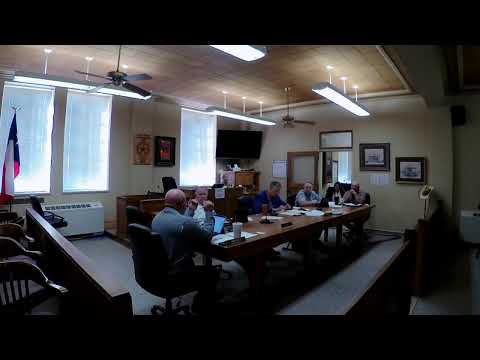
Young County commissioners press Tapadares Solar for maps, counsel-payment guarantee in abatement talks
Summary
Commissioners discussed a tax-abatement request from Tapadares Solar LLC and heard public concerns about location, leases and conflicts of interest; no formal action taken.
Young County Commissioners discussed an application from Tapadares Solar LLC seeking a tax abatement for a proposed solar farm, but commissioners and members of the public said they have received incomplete information and the company has not confirmed it will reimburse county legal costs.
The commissioners’ discussion, led by Commissioner Wiley and Commissioner Cresswell, focused on outstanding questions about the project’s location, whether leases have been recorded and whether the applicant would pay the county’s counsel fees regardless of whether an abatement is granted. Commissioner Cresswell told the court he had asked the applicant’s representative, “Mr. Pena,” for answers and for written confirmation of payment for legal counsel and had not received them. He said, “I still haven't received any kind of written confirmation that they would cover our costs.”
The absence of a detailed site plan drew multiple public comments. One resident asked to “see a plat where this thing's gonna be” and said the map provided was too pixelated to show which roads or property boundaries would be affected. Another resident who identified nearby property ownership expressed concern that panels might be placed east of Murray Cemetery Road and said, “If they put solar panels in there, they can't kick me out,” referencing a recorded easement on adjacent land.
Public speakers also urged caution about offering an abatement. A speaker who identified himself as a nearby landowner said he would not support incentivizing the project and warned that an abatement could forfeit county tax revenue: “If you give them 50% tax break … I will do 50% tax break,” he said in describing his opposition to the county reducing the tax take on a multimillion-dollar installation.
Several commissioners and a member of the public flagged possible conflicts of interest tied to private property holdings and recommended legal review. One commenter referenced conflict-of-interest provisions in state law, saying, “1 0 0 2 talks about a little bit about conflicts of interest in both the government code and 1 71,” and suggested a commissioner with a property interest should recuse from deliberations; the court agreed an attorney should be consulted.
Commissioners also discussed a condition they previously set when they agreed to engage counsel: the applicant must agree to reimburse the county for legal costs whether or not an abatement is granted. Cresswell said the county still lacks written confirmation of that reimbursement. He said the county “remained noncommittal as to the tax abatement” and had hired counsel on the condition the company pay for those costs.
No motion was made and no vote was taken on the tax-abatement application during the meeting. Commissioners asked staff to continue outreach to the applicant and to request clearer maps or plats and written confirmation about counsel reimbursement. Members of the public urged the court not to act until the county receives complete, recorded documents and responses to questions.
The issue will return to the court if or when the applicant supplies the requested information or a formal abatement ordinance is placed on a future agenda.