Citizen Portal

Board reviews redevelopment law, plan tools and options for town-hall site and vacant lot

2661309 · February 10, 2025

Get AI-powered insights, summaries, and transcripts

Subscribe
AI-Generated Content: All content on this page was generated by AI to highlight key points from the meeting. For complete details and context, we recommend watching the full video. so we can fix them.

Summary

Staff reviewed how declaring a redevelopment area changes the town’s toolkit (RFP sales, buy/sell authority, condemnation as a public purpose) and discussed implementation items including the façade program, circulation/parking links and potential uses for the vacant lot behind Athens and the town-hall site.

At a workshop meeting of the Economic Development Advisory Board, staff outlined why the town is using redevelopment statutes and how those statutory tools differ from ordinary real-estate procedures.

Staff explained that a declared redevelopment area, supported by a redevelopment plan, gives the town additional tools: the ability to buy property and resell through an RFP process rather than standard statutory auction rules for major disposals, and to establish redevelopment as a public purpose that enables the limited use of condemnation when statutorily appropriate. Staff said the town’s 2015 Village Center Master Plan served as the basis for the redevelopment plan and that the redevelopment plan adds a required implementation matrix that lists projects such as a façade program.

The board discussed application of the redevelopment plan to specific sites. Staff said a currently vacant lot behind Athens (fronting Cape Creek Road) is shown in the redevelopment plan as a building site but that staff is exploring using the lot as interim parking to improve access to town center. Staff said any change to the redevelopment plan would be routed through the planning and zoning commission and could require council approval; transitional parking is a common interim use in other communities until redevelopment occurs.

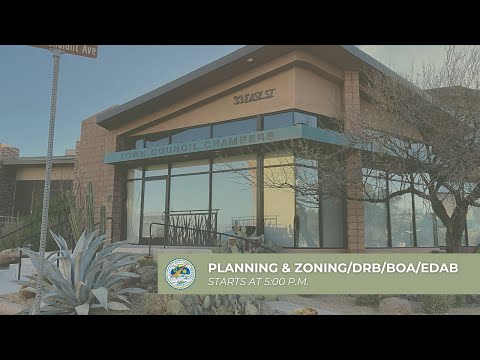
The town-hall site was discussed as a future redevelopment opportunity. Staff said a needs assessment, appraisal and a series of workshops would be required to structure an RFP or alternate approach; staff noted such projects typically require multiple review cycles between staff, boards and council.

Staff emphasized transparency and monitoring: the redevelopment implementation matrix will be used to sequence projects and staff proposed periodic reports (annual or semiannual) on plan progress. Staff noted that redevelopment plans have statutory time limits (a 10-year term was mentioned) and can be amended if priorities or circulation/parking outcomes change.

Why it matters: redevelopment designation expands the town’s tools for guided reuse of key parcels, and decisions about interim parking, town-hall relocation and any property transactions will shape the center’s future land use and tax base.