Get Full Government Meeting Transcripts, Videos, & Alerts Forever!
Get email alerts on the Council Procedures topic
No spam. Unsubscribe anytime.
Governance committee adopts amendment to draft rules on when items can bypass committees
Summary
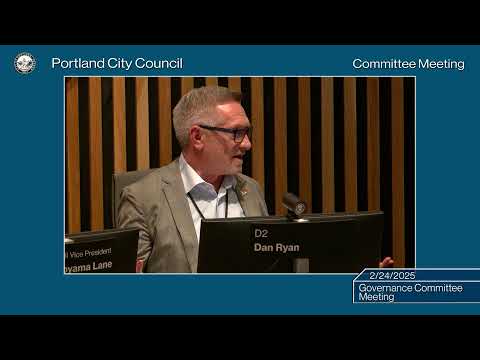
The Governance Committee of the Portland City Council adopted an amendment on Feb. 24 to a draft resolution that establishes when ordinances, resolutions and similar items may bypass committee consideration and go directly to full council.
The Governance Committee of the Portland City Council adopted an amendment on Feb. 24 to a draft resolution that establishes when ordinances, resolutions and similar items may bypass committee consideration and go directly to full council. Councilor Ryan moved the amendment and Councilor Dunphy seconded; the committee adopted the change by roll call (exact vote tally not specified in the transcript).
The change now explicitly recognizes the auditor as a potential submitter whose items may be considered for expedited full-council handling and omits the city administrator from that list. Council staff said the auditor requested inclusion because the auditor’s office sometimes needs to bring matters to council on an expedited timeline; staff removed the city administrator because the city code lists the mayor but not the city administrator as a direct submitter.
Committee members debated the amendment and broader language in the draft resolution. Some councilors asked for clearer standards for when an item can bypass committee; Councilor Clark said parts of the draft that allow the council president and committee chairs to decide an exception "feel kind of amorphous" and asked for more definition. Councilor Dunphy proposed combining repeated paragraphs to reduce duplication and tighten phrasing; that consolidation was included in the adopted amendment after a motion by Dunphy and a second by Councilor Koyama Lane.
Public testimony influenced the discussion. Terry Harris of Hillsdale, a public testifier, urged the committee to protect the committee process and warned against back‑room decisions, saying: "If you're building a strong committee system, you're gonna have to defend that committee system." Harris also recommended slower drafting and more explicit public procedures.
City Attorney Robert Taylor clarified procedural options available to the committee and council. Taylor told members that the committee could adopt the amendment now and leave broader policy decisions to future consideration or table the item for later. He advised that adopting the amendment would not prevent the committee from returning to the resolution at a later date.
Why it matters: the resolution would set standard practice for how work moves between committees and the full council, and codifying an exception process affects how quickly the council can act on time‑sensitive matters. Supporters said a narrow exception process preserves committee vetting while allowing room for genuine emergencies or items that have already received substantial review; critics warned that vague exception language could be used to circumvent public review.
Next steps: committee members asked staff to incorporate the feedback and suggested written edits, and indicated they will return to the resolution in a future meeting. The committee did not move a full final reading to full council on Feb. 24; staff said the amendment adopted today can be reworked further before any subsequent vote.