Get Full Government Meeting Transcripts, Videos, & Alerts Forever!
Get email alerts on the Budget And Finance topic
No spam. Unsubscribe anytime.
Board reviews FY2026 budget tradeoffs: health insurance, procurement savings, staffing and fees under scrutiny
Summary
At a March 13 work session Fauquier County staff and supervisors discussed the proposed FY2026 budget, focusing on a county‑school transfer increase, health‑insurance risk and RFP timing, procurement savings, proposed community development fee increases and staffing shortfalls, and fire/sheriff staffing and equipment needs.
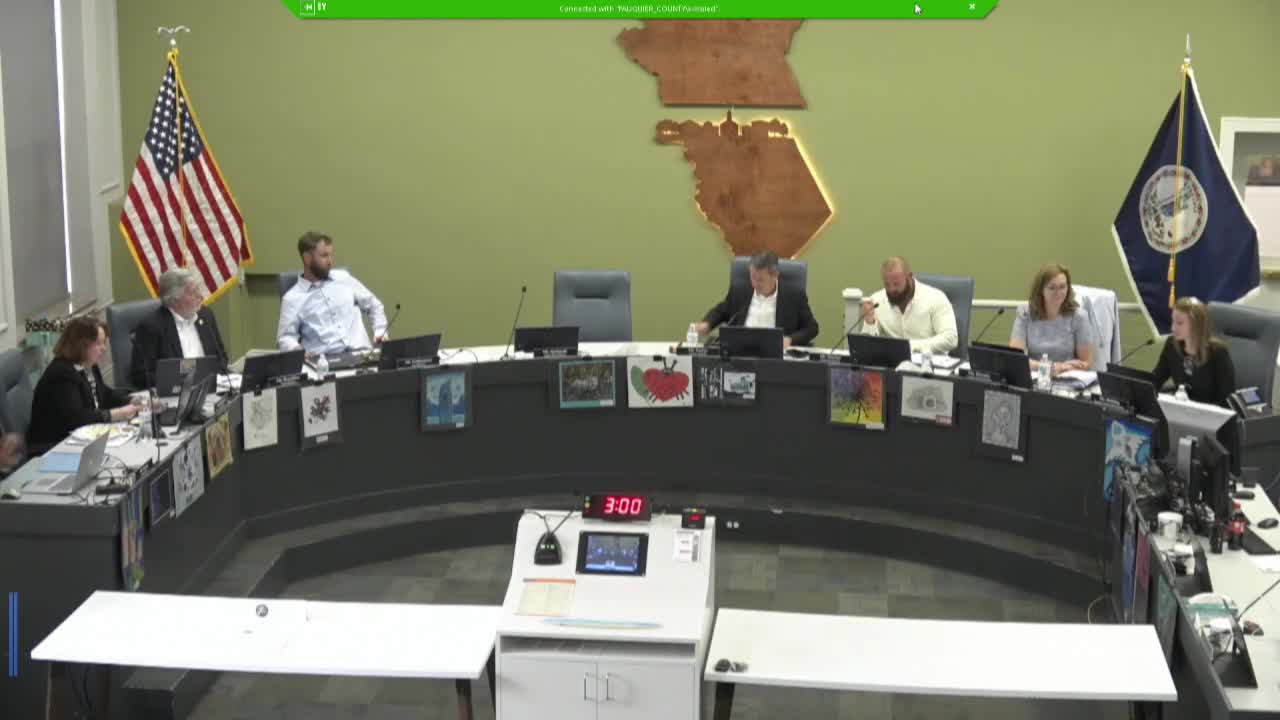
Fauquier County officials reviewed components of the proposed FY2026 budget at a work session on March 13, with staff highlighting follow‑ups from March 4 and supervisors raising questions about health insurance, procurement savings, staffing shortages in community development and public safety, and options to broaden the county's commercial tax base.
County finance staff said the administrator had proposed an additional $3.4 million in recurring funds to the school division (about a 3.4% increase) and that a change in proposed general workforce compensation (a 3.0% flat adjustment) combined with updated projections from the state compensation board had reduced the county's projected tax‑rate increase to about 2.6 cents on the tax rate at that time. Staff cautioned that health‑insurance claims could produce an overrun of roughly 6.2% relative to the fund this fiscal year (about $2.5 million) and said the county would finalize RFP results for the medical/dental contract to reduce uncertainty before adopting a final budget.
Procurement staff reported progress renegotiating contracts and closing compliance gaps since last year: the procurement office reduced active contracts and brought all contracts into compliance, completed thousands of purchase orders, and reported $116,000 in realized savings since mid‑January and additional upstream savings (not yet realized) tied to CPI and renewal negotiations. The procurement presentation also flagged cooperative purchasing and intergovernmental opportunities as ways to obtain future savings and potential new revenue streams.
Community Development briefed the board on a comprehensive fee review and a staffing shortage that department leaders said was impeding permit timeliness. Staff recommended updating land‑development and building fee schedules for the first time in years; a conservative estimate of additional revenue from proposed fee updates was $318,000, with an upper estimate of about $550,000. Community Development requested several positions (building and land‑development reviewers, an environmental specialist and planning staff) to stand up an expedited review team and improve timeliness; staff said bringing salaries to 90% of market for existing employees would cost roughly $100,000.
Public safety leaders outlined requests for sheriff and fire‑rescue. The sheriff sought additional traffic enforcement deputies, funding increases for contracts and equipment, and continued evaluation of a county‑run animal‑control facility. Fire‑Rescue reported a flat levy request for FY2026 that includes step increases and equipment replacement plans: the department seeks funds for a self‑contained breathing apparatus (SCBA) replacement program, vehicle replacements (including ambulances) and a shared upgrade to the county's public‑safety radio system. Fire leadership said ambulance turnaround times and out‑of‑service transport trips have strained capacity; the department described a plan that would require 15–18 additional personnel over coming years to reach desired staffing levels and said appliances such as engines and ambulances are reaching industry replacement ages.
Supervisors discussed options to grow the county's commercial tax base — including more targeted commercial development in service districts — as a way to spread fiscal burden beyond residential taxpayers. Several board members asked staff to supply a detailed, reproducible breakdown of cost allocations and tax contributions by class (residential, commercial, pass‑through taxes) and to return with analysis for policy decisions. The board scheduled further markup and follow‑up sessions on March 25 and asked staff to provide requested data ahead of that meeting.
No final budget vote was taken; staff and supervisors agreed to continue negotiations and to finalize provider RFPs, fee schedules and staffing proposals before adoption.