Get Full Government Meeting Transcripts, Videos, & Alerts Forever!
Get email alerts on the Vision Zero Safety topic
No spam. Unsubscribe anytime.
Safety advocates urge council not to cut Vision Zero programs as PBOT faces shortfall
Summary
Families for Safe Streets, The Street Trust and other advocates urged the Transportation & Infrastructure Committee to protect multimodal safety programs and reaffirm Portland's Vision Zero commitments, warning that cuts would cost lives amid rising traffic fatalities.
Pedestrian and bicycle safety advocates urged the Transportation & Infrastructure Committee to protect safety programs and to publicly recommit to Vision Zero as PBOT confronts budget pressures.
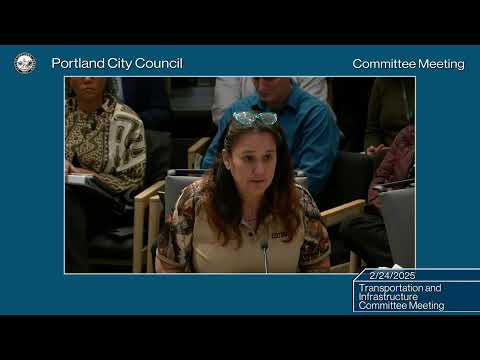
"Ensuring stable funding for PBOT, and its critical safety and multimodal programs isn't just about balancing a budget. It's about saving lives and keeping Portland moving in the right direction," Sarah Iannarone, executive director of The Street Trust, said in testimony. Families for Safe Streets and other advocates warned that cutting safety programs would lead to more pedestrian deaths and urged the committee to advance a clear funding plan.
Advocates highlighted recent increases in traffic deaths and offered a public-health framing: Families for Safe Streets argued that traffic fatalities are driven by kinetic energy transferred in vehicle impacts, and they emphasized speed reduction and protected infrastructure as the key countermeasures. Sarah Risser, representing Families for Safe Streets, said vehicle registrations in Multnomah County have increased about 25 percent since 2007 and called for measures that reduce speed and vehicle miles traveled.
Why it matters: Michelle DeBerry, co-chair of Families for Safe Streets, told the committee that Portland's traffic deaths hit a 30-year high with 74 people killed in 2023 and urged the council to align actions and budgets with the city's stated safety priorities. Oregon Walks and BikeLab PDX urged quick action on protected bicycle facilities, traffic-calming tools such as bridal filtering and raised crossings, and speed management including automated enforcement where allowed.
Requests and proposals: Testimony included requests that the council adopt a clear Vision Zero recommitment, protect funding for programs that deliver pedestrian and bicycle safety, and use repaving and capital projects as opportunities to install protected bike and pedestrian facilities rather than just resurfacing pavement. Advocates also asked the committee to prioritize low-cost, high-impact interventions such as bridal filters on neighborhood greenways and to update the Transportation System Plan to permit designs proven to reduce speeds.
Ending: The committee did not take formal action on safety funding at the meeting. Speakers asked councilors to publicly declare Vision Zero as the city's guiding policy and to postpone cuts that would reduce active-transportation and safety programs.