Get Full Government Meeting Transcripts, Videos, & Alerts Forever!
Get email alerts on the Solar Developments topic
No spam. Unsubscribe anytime.
Open Road Renewables pitches ‘Alameda’ solar with grazing and permanent agricultural preservation after Planning Commission denial
Summary
Open Road Renewables presented revisions to the Alameda Solar project, emphasizing regenerative agriculture, permanent agricultural preservation and $20 million in projected lifetime tax revenue; the company said it removed acreage that would displace tenant farmers and proposed conditions staff characterized as unusually robust.
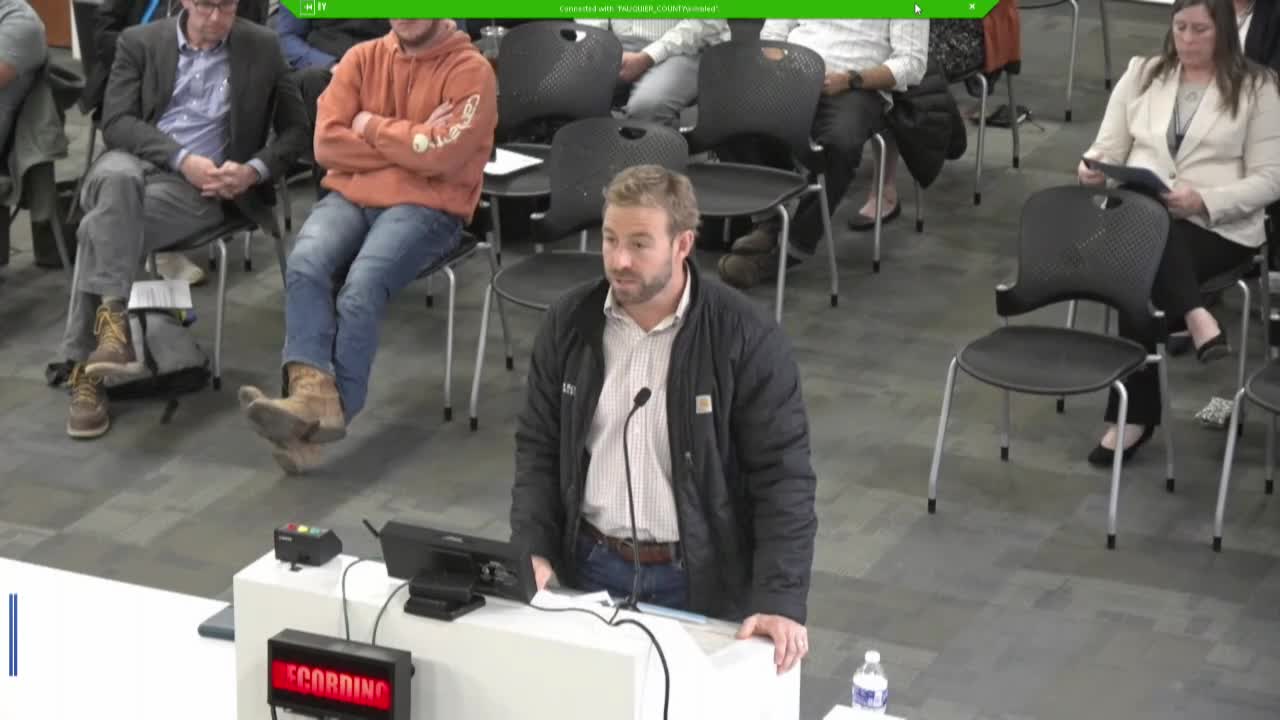
Open Road Renewables gave a 15‑minute briefing to the Board on March 13 about its Alameda Solar project, describing changes to the proposal after a February Planning Commission recommendation of denial and urging supervisors to consider the amended plan at an April public hearing.
Mike Volpe, co‑founder and senior vice president of Open Road Renewables, said the company has invested more than $3 million in the project and posted a $10 million interconnection security with Dominion. He told the board the company had revised the plan to reduce the footprint — removing southern acreage adjacent to Lake Richey and acreage that would have displaced tenant farmers — and moved from single‑axis trackers to fixed‑tilt arrays to shrink the area proposed for solar. Volpe said the company is offering regenerative agricultural leasing and permanent agricultural preservation as part of the project and that the Farm Bureau had concluded the land was unlikely to remain in agriculture absent the proposal.
Volpe said the project would generate an estimated $20 million in tax revenue over a 40‑year lifespan and that the developer had included proposed binding conditions — more than 45 draft conditions in the packet — which he characterized as unusually strict relative to other projects. He also said the company had discussed community benefits including a proposed $100,000 contribution for hangar funding at the county airport and regenerative grazing access for local producers.
Supervisors asked about conservation group positions, the Farm Bureau’s stance, community engagement and whether preservation and grazing commitments would be binding. Volpe said the company reported alignment with staff from the Piedmont Environmental Council (PEC) on draft binding conditions and that the Farm Bureau board had discussed the project and noted the likely loss of agricultural use if the project failed to proceed. Volpe said some civic conservation organizations had not been fully willing to engage directly in talks but that PEC and American Farmland Trust had been involved.
Several supervisors expressed philosophical concerns about energy subsidies and environmental footprint but acknowledged the project includes measures they view as responsive to county aims to keep land in agricultural use. The board did not take an immediate vote; the applicant said it would appear at a scheduled April public hearing.