Get Full Government Meeting Transcripts, Videos, & Alerts Forever!
Get email alerts on the Mental Health Finance topic
No spam. Unsubscribe anytime.
Integral Care tells Travis County court federal and state funding drops are squeezing services, creating $2.8M shortfall
Summary
Integral Care told the Travis County Commissioners Court that Medicaid enrollment declines and reductions in state charity-care funding have reduced two federal/state behavioral-health funding streams, producing an estimated $2.8 million shortfall for fiscal year 2024 and pressuring staffing and service expansion plans.
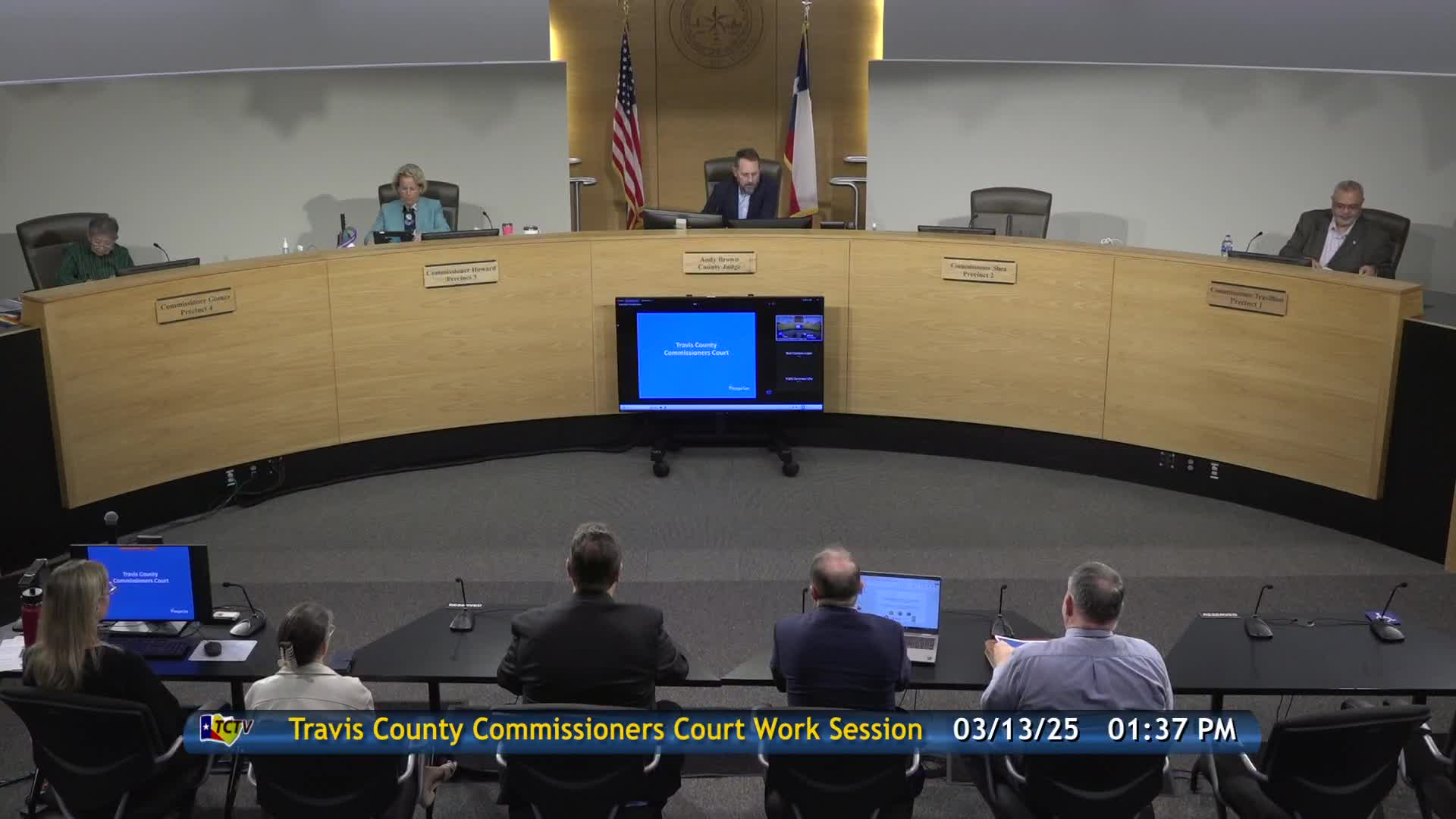
Travis County commissioners heard on March 13 from Integral Care, the local mental health authority, that changes in federal and state funding have reduced cash available for community behavioral-health services and left the agency with an estimated $2.8 million shortfall for fiscal year 2024.
The shortfall comes amid rapidly rising demand: “This year … we served about 35,000 county residents,” Jeff Richardson, chief executive officer at Integral Care, told the court, noting the agency had doubled in size over the past four years and expects continued growth in need.
Integral Care described two linked financing developments that widened access while increasing the agency’s exposure to state and federal policy shifts. Richardson said the agency’s certification as a Certified Community Behavioral Health Clinic (CCBHC) expanded services and revenue streams but also increased operating complexity. "We have nearly 160 grants, about 400 sources of income," he said.
Rusty Taylor, chief financial officer for Integral Care, presented operating and capital funding breakdowns and warned staff were still reconciling a roughly $2.93 million reduction tied to the state’s charity-care pool and related adjustments. "We need to work through that about $2,930,000. We need to work that through our expense budget side," Taylor said.
David Wheaton, former chief financial officer of Integral Care, explained how two state-run programs — the Directed Payment Program for behavioral health and the public health provider charity-care pool — have changed as Medicaid enrollment declined after the federal Medicaid “unwinding.” "At the height, Medicaid enrollment was 5,300,000 when they were not allowed to disenroll anyone. Since the unwinding, it has gone down to 3,400,000," Wheaton said, adding that fewer covered lives reduces the pool of dollars available under the directed payment approach. Wheaton summarized the agency’s estimate for the charity-care settlement: "We are estimating for fiscal year 24 about $2,800,000."
Wheaton and Taylor walked the court through how the directed-payment mechanism is actuarially calculated as a per-member-per-month payment to managed-care lives and how the charity-care pool is certified on federal fiscal-year cost reports and subsequently allocated. Both programs have annual revaluations and federal approvals; Wheaton said the most recent resizing used year-two figures and locked the pool amount through fiscal 2028, resulting in a roughly 19% proportional reduction statewide.
Integral Care officials also described internal impacts: the CCBHC certification allowed the agency to add nearly 100 full-time positions, expanding capacity, but it also increased personnel and contractor expense. Taylor said about two-thirds of the agency’s expenses are personnel costs and roughly another 19% goes to contractors.
Commissioners asked whether the state or Legislature had approved supplemental funds. Richardson said Integral Care had not yet seen state commitments and was “not expecting new dollars at this point.” A presenter added that the Senate finance committee had not added broad new funding for basic mental-health services, though some increases for youth crisis outreach teams appeared in one budget draft; that bill-level negotiation would proceed later in the session.
Integral Care asked the court to recognize both service demand and funding uncertainty and described planned internal actions: modernizing financial infrastructure, continued partnership with county and Central Health programs (including a pilot diversion center and Bridge Clinic partnerships), and program evaluation to maximize efficiency. "We're looking at every possible way that we can continue to expand services and be creative," Richardson said.
The court did not take any formal action during the presentation. Commissioners and staff said they would consider the information as the county’s budget season proceeds and requested additional detail on enrollment and demographic impacts broken down to the Travis County service area.
The presentation concluded before the court moved to the next agenda item and the presenters thanked court members for their time.