Get Full Government Meeting Transcripts, Videos, & Alerts Forever!
Get email alerts on the Public Records topic
No spam. Unsubscribe anytime.
Delta County commissioners trim FOIA fee estimate after lengthy review
Summary
After a multi-hour review and debate, the Delta County Board of Commissioners reduced the estimated public-records fee tied to FOIA appeal 25-18, removing some email groupings from the charge and lowering the total estimate to $755.54; one commissioner voted no and one commissioner recused.
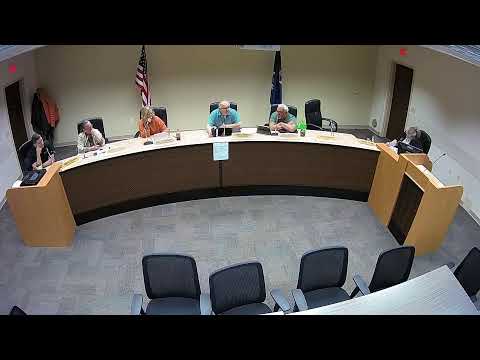
The Delta County Board of Commissioners on March 11 adjusted the county's estimated fee for FOIA appeal 25-18 after extended discussion about how the county calculates labor and email-volume charges for public-record requests.
The vote removed 182 emails from the fee calculation, excluded the digital-collection charge for those grouped emails and resulted in a revised estimated bill of $755.54, county staff told the board. The motion passed on a roll-call vote with one member opposed and one member recused.
Why it matters: The discussion focused on how Delta County applies the Freedom of Information Act when requests return large numbers of emails and attachments, the staff time used to locate and review records, and what the county may permissibly charge requesters. Commissioners said the case raises broader questions about thresholds, public access and administrative burden.
Board members and staff reviewed the county's FOIA worksheet and supporting calculations during the public meeting. Administrator and FOIA coordinator Young explained the county's current practice: charges are assessed when searches return more than an internal threshold (she said she has been using 200 emails as a working threshold) and she has been applying 30 seconds per email as the review factor for estimating redaction and review time. Young told the board the worksheet showed 6 hours and 48 minutes of administrative time for the request overall and 34 minutes specifically to locate and compile search results.
Commissioners debated whether 34 minutes to locate records constitutes a legal “burden” under FOIA case law. One commissioner said that, based on cited case law, an hour is often used as a de facto threshold for burden; another said that multiple groupings of emails across long date ranges can make even shorter searches time-consuming. Several commissioners argued the county should use the lowest-paid qualified employee to calculate hourly charges where possible, as FOIA guidance requires.
The appeal under review encompassed five groupings of emails covering May 20, 2024, to the present. County staff said the request included groupings with roughly 399 emails and 715 emails in two of the sets; three other groupings totaled 182 emails. Staff also noted that total requests across all groupings equaled 2,296 emails in the county's worksheet and that large attachments or lengthy message chains can change the final hours charged.
A commissioner moved to remove certain groupings from the fee calculation and to omit the digital-collection charge for those groupings; the motion specified removing the 182-email subset and recalculating the estimate. The board then voted on the revised estimate. Commissioner Williams voted against the motion and asked that her objection be entered into the record, stating she believes the county's labor-cost-per-hour rate used for FOIA work is too high. Commissioner Bagenhoven declared a conflict of interest at the start of the item and did not participate in the vote.
Administrator Young cautioned the board that the number adopted at the meeting was an estimate and that actual fees could be higher or lower once staff completes redaction and review — for example, if an email includes a 1,000-page attachment. She also reiterated that when an estimate increases materially during work, the county must notify the requester and obtain additional payment before continuing.
Commissioners asked staff to review the county's FOIA policy and to return with potential updates to thresholds, staffing or fee procedures. Several commissioners said they want a clearer written rule for when to charge and at what rate, and whether the county should train lower-paid staff to handle routine redactions to reduce costs charged to requesters.
The board approved the adjusted estimate and moved on to the next agenda item.
Ending: Commissioners said the FOIA issue will prompt further policy review; staff were directed to return with proposed clarifications to the county FOIA procedure for future consideration at a subsequent meeting.