Get Full Government Meeting Transcripts, Videos, & Alerts Forever!
Get email alerts on the Transportation Construction topic
No spam. Unsubscribe anytime.
City of St. Helens, Columbia County discuss traffic plans as First Street intersection work enters final phase
Summary
City and county officials and state-court representatives discussed two traffic-control options for the final concrete pour at St. Helens' First Street intersection, weighing speed and cost against juror and ADA parking needs. The board later approved a separate change order up to $4,500 after an executive session.
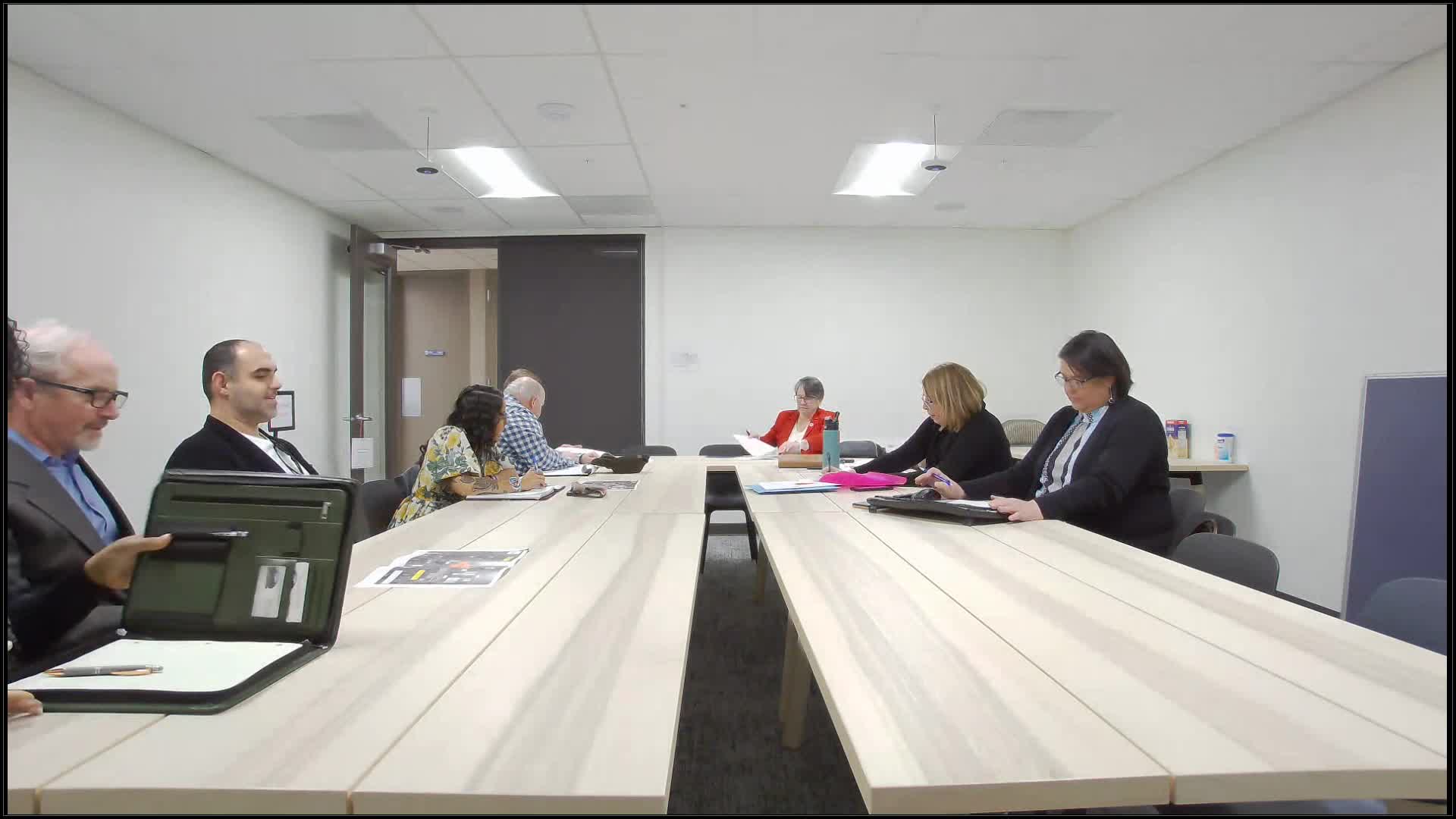
City of St. Helens and Columbia County officials met Jan. 22 to discuss traffic control and access options for the final concrete pour at the First Street intersection, a project city staff described as the largest in the city's history.
City Administrator John Walsh told the Columbia County Board of Commissioners the intersection is the project’s last “pivotal intersection” and that utilities and coordination problems forced the city to place the final work at the end of the schedule. “This has been basically the largest project in the city's history,” Public Works Director Mohammad Zahir said, adding the work has taken about two-and-a-half years.
The city presented two traffic-control plans. Option 1 would close the intersection to build the entire concrete panel at once, routing southbound traffic through the public parking lot and Strand Street; Zahir called it “the fastest” and “the cheapest for the city,” estimating the work could be done in about 45 days if permitted. Option 2 would avoid closing Strand and maintain normal traffic on that street but would require multiple phases, run vehicles close to buildings and sidewalks, and take more than twice as long and be “very expensive,” Zahir said.
State-court representatives and county staff raised concerns about juror and deputy parking and ADA access if on-street spaces are removed. “If we do this two-way, we're getting rid of 15 department spots for jurors, at least,” a courts representative said, asking whether the city could reserve 15 spaces in the city lot or otherwise accommodate juror parking. County staff said they would provide the court schedule and highlighted specific high-traffic felony trial dates that will need accommodations.
The city and county discussed intermediate measures: temporary signals on Strand, one-way reversible lanes, and reserving parking in adjacent city lots. Zahir said temporary signals might allow the city to avoid closing plaza parking, but noted signal spacing, emergency vehicle access, and flagger needs at lot exits remain to be worked out. County staff said they would compile court dates and other constraints and asked the city to estimate additional cost impacts; Zahir estimated an additional roughly $100,000 on the project if the city pursues the less-disruptive option that avoids Strand closures.
County and city staff emphasized communication and coordination going forward. Walsh and Zahir urged direct lines between project managers; county staff asked that future traffic plans be sent directly to county project staff to avoid last-minute conflicts. The teams agreed to develop a third option (Plan C) and to return to the board with refined plans, a list of exclusionary court dates and proposed accommodations.
Separately, after an executive session the board returned to open session and moved to authorize “facility permission to approve a change order in amount no greater than $4,500 for the concrete masonry,” a motion the board moved and seconded and approved by recorded “Aye” votes. The motion text as read in open session set the maximum amount; the motion file did not name a mover or seconder in the public record.
The county and city officials said the work is expected to finish the overall project and that both parties want to preserve a cooperative relationship. County staff and the city agreed to finalize a traffic-control permit and return with a plan that addresses juror parking, ADA needs and the contractor’s schedule.