Get Full Government Meeting Transcripts, Videos, & Alerts Forever!
Get email alerts on the Jttf Report topic
No spam. Unsubscribe anytime.
Council accepts Portland Police Bureau report on Joint Terrorism Task Force after public objections over transparency
Summary
Council accepted the PPB's 2025 Joint Terrorism Task Force (JTTF) report, which disclosed three 2024 requests for PPB assistance, one PPB referral to the JTTF and one closed case referred to the U.S. Attorney. The acceptance followed broad public testimony calling for more detail and tighter limits on federal collaboration.
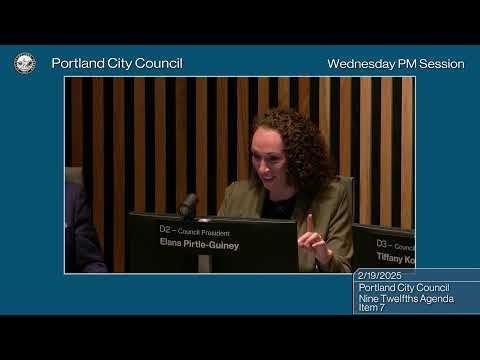
Portland City Council voted to accept the Portland Police Bureau's 2025 report on interactions with the U.S. Joint Terrorism Task Force (JTTF) on Feb. 19, 2025, after extensive public testimony urging greater transparency and stronger limits on federal cooperation.
Portland Police Chief Robert Day and Sergeant Mark Friedman presented the report required under City Council Resolution 37,424, which restricts when PPB may assist the JTTF. Friedman reported that in 2024 the FBI Special Agent in Charge requested PPB assignment on three investigations; the chief approved all three requests. The report states PPB referred one case to the JTTF involving two adults trespassing near a city air support facility, and that one of the three 2024 JTTF matters is closed — described as an interstate threat of violence to an elected official by a Portland resident. Friedman said the remaining two 2024 cases remain active and subject to federal processes, limiting the bureau’s ability to disclose details now.
The presentation summarized the report's four metrics: requests from the FBI for PPB assistance (three requests in 2024), cases referred to PPB by the FBI (none in 2024), cases PPB referred to the FBI (one in 2024), and the nature and disposition of closed cases where disclosure was permitted.
Public testimony, much of it critical, pressed for more detail on why certain incidents were labeled terrorism or hate crimes, how demographic data were used and how the city would stop federal agencies from using JTTF resources for immigration enforcement. Ethan Crow of the ACLU of Oregon cited ORS 1 8 1 8.25 and the Oregon Sanctuary Promise Act and asked for more transparency and oversight. Brandon Mayfield, an attorney who described his past wrongful targeting by federal agents, and others called the report too sparse and urged withdrawal or more stringent local limits. The League of Women Voters of Portland asked for expanded descriptions of closed cases to demonstrate why conduct rose to terrorism or bias crimes; Peace and Justice Works and Portland Copwatch recounted historical concerns about surveillance of political activists.
Sergeant Friedman and Chief Day said training had been provided by the city attorney and that PPB officers assigned to the JTTF complete required training and follow state law and bureau directives. Friedman reiterated the selection criteria used under Resolution 37,424: (1) reasonable grounds to suspect criminal activity, (2) a direct nexus to the city of Portland, and (3) a formal request by the FBI special agent in charge to the chief. Both bureau leaders said the bureau would seek to improve reporting where permitted by federal processes, and Day told council he would work with the mayor, the city attorney and council on what further information could be shared without impeding investigations.
Councilors pressed for specifics. Several — including Councilors Novick, Murillo and Kunal — asked why some closed threats of violence were characterized in the report as terrorism and asked for clearer follow-up information on cases that had been closed with little public explanation. Friedman said some closed matters had been referred to the U.S. Attorney's Office and that in other cases no suspect was identified; the bureau was limited in what it could report while cases were active.
Council acceptance of the report was followed by councilors and public testimony urging more detail in future reports and regular briefings; councilors suggested the Community & Public Safety Committee as a venue for deeper follow-up. The report was accepted by roll call with 12 ayes.
The acceptance does not change the council’s 2019 restrictions on routine participation in the JTTF, but the public testimony increased pressure on PPB to expand the report’s disclosures where legally possible and to clearly reaffirm the bureau’s commitments that it will not be used for routine immigration enforcement.