Get Full Government Meeting Transcripts, Videos, & Alerts Forever!
Get email alerts on the Committee Priorities topic
No spam. Unsubscribe anytime.
Portland committee members outline public‑safety priorities as city faces large budget shortfall
Summary
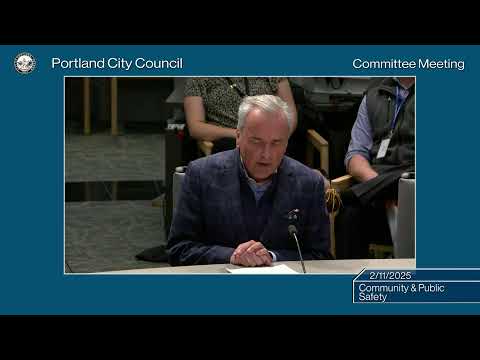
Portland’s new Community and Public Safety Committee spent its first meeting on Feb. 11 laying out priorities — from human‑trafficking enforcement and sobering centers to call‑type restructuring and a possible public‑safety district — while several councilors warned that a major general‑fund deficit will constrain implementation.
The Community and Public Safety Committee convened Feb. 11 to set its first-year work plan as councilors flagged near‑term public‑safety priorities and long‑term structural options amid a sizable city budget shortfall. Co‑chairs Councilor Samir Canal and Councilor Steve Novick framed the session as a starting point for a committee that will feed recommendations into broader budget deliberations.
The committee’s agenda, Councilor Canal said, included developing a scope of work for the panel’s five members and “an overview of the public safety service areas, operations and costs.” Councilor Loretta Smith (District 1) pressed the committee to address human trafficking and the operation of 24‑hour massage parlors in her district, saying they had become “a huge nuisance.”
Why it matters: Councilors repeatedly tied this committee’s work to an urgent budget reality. Novick said the committee’s agenda “takes on particular urgency in the context of this budget deficit,” and members emphasized that priorities must be selected with a clear view of funding constraints.
Discussion highlights
- Human trafficking and business regulation: Councilor Loretta Smith asked the committee to examine limits on business hours for massage parlors and to investigate motel‑area trafficking she described in the Sandy Boulevard corridor.
- Call‑type restructuring and response alignment: Councilor Carmen Murillo argued the committee should pursue a structured review of 911 call types and responses so that “the right personnel” go to the right calls — including whether alternative responders such as Portland Street Response (PSR) and CHAT should be dispatched more often. She said the city lacks the data to make those decisions now and called for a study to break down the calls.
- Sobering center and transport authority: Multiple councilors urged stronger support for a county sobering center and said the city should explore policy or legislative changes that would let public‑safety workers (including PSR) transport people to sobering or treatment facilities. Novick said civil‑hold laws and transport restrictions are “a hurdle that Salem should be tackling right now.”
- Public‑safety district and revenue options: Councilor Dan Zimmerman raised the idea of a dedicated public‑safety district — a local taxing district modeled after Multnomah County’s library district — as a longer‑term financing option to stabilize funding for public‑safety services.
- Prevention, environmental design and traffic deaths: Councilor Murillo described public safety broadly, listing reductions in traffic deaths, deaths of people experiencing homelessness in extreme weather, domestic violence, and prevention funding stability as priorities. Several members endorsed crime‑prevention‑through‑environmental‑design (CPTED) measures and cross‑committee work with transportation and land‑use panels.
- Aligning overlapping public‑safety services: Councilors and staff noted confusion among members of the public about the roles of park rangers, PSAs (PS3s), TriMet transit officers, private security and police. A number of members suggested a long‑term alignment of those services to clarify roles and public messaging.
Committee process and next steps
Co‑chairs Canal and Novick said they will continue refining a work plan and consult staff and agencies for briefings. Novick asked the committee to consider using its hearings to inform council budget decisions. The committee is scheduled to meet every second and fourth Tuesday at 2:30 p.m.; the next meeting was set for Feb. 25.
Ending
Members agreed the list the co‑chairs circulated was a conversation starter, not a final plan, and they asked staff to return with data and options — especially for call‑type restructuring, sobering‑center partnerships with Multnomah County, and funding models for prevention programs.