Get Full Government Meeting Transcripts, Videos, & Alerts Forever!
Get email alerts on the Board Leadership topic
No spam. Unsubscribe anytime.
LaRue elected State Board of Education president; Feder chosen vice president
Summary
The State Board of Education elected Paul LaRue as president and Theresa Feder as vice president during its organizational meeting. LaRue won the presidency after a roll-call vote; Feder won the vice-presidency in a first-round majority. Members gave short remarks before voting.
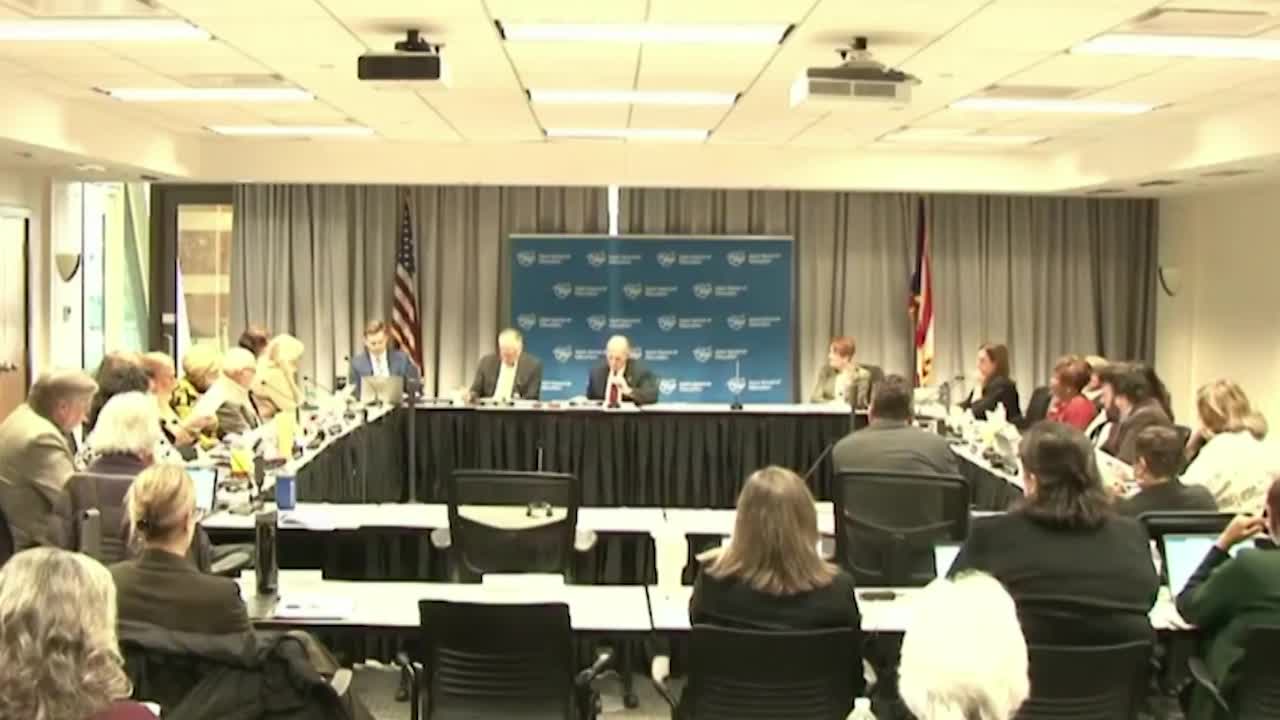
Paul LaRue was elected president of the State Board of Education and Theresa Feder was elected vice president at the board’s organizational meeting, the board announced after roll-call votes.
The election determined the board’s leadership as members begin a new term. LaRue received a majority in the presidential balloting after the roll-call process narrowed nominees; the final tally reported by the chair was 11 votes for LaRue, seven for Tom Jackson and one abstention. Feder received a majority in the first round of voting for vice president.
LaRue and Jackson were the nominees for president. Jackson told the board he had “made it a real effort here over my first two years to be involved heavily in the injector items” and said he had “chosen to lean into those responsibilities.” LaRue, nominated by Member Davis, thanked the board for its past work and emphasized continuity with recent board accomplishments.
Three members nominated candidates for vice president. Charlotte McGuire, John Hagen and Theresa Feder were nominated. Feder, in her remarks, framed the role as one that requires “balanced representation” and said the board needed diverse experience to “achieve a common goal of providing quality education for Ohio’s children.” Member Jackson spoke in support of Feder’s nomination before the vote.
The board followed the procedure explained by Chief Legal Counsel Jason Wagner: open nominations, close nominations, allow nominees to speak and then conduct roll-call voting with members stating the name of their choice. After the presidential vote concluded, the newly elected president presided and the board held the vice-presidential election using the same roll-call process.
The newly elected leadership will assume their duties immediately; members indicated the board will move forward with committee assignments and the meeting’s remaining business following the leadership vote.