Get Full Government Meeting Transcripts, Videos, & Alerts Forever!
Get email alerts on the District Finance topic
No spam. Unsubscribe anytime.
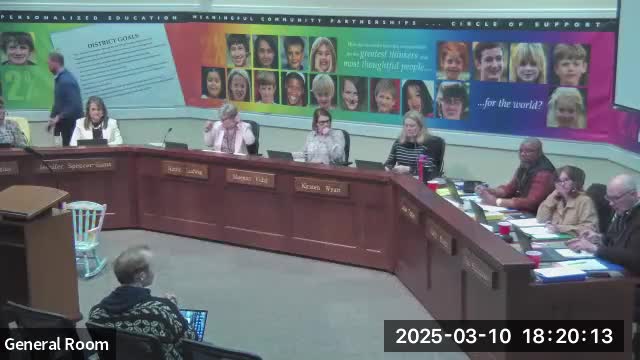
West Linn-Wilsonville board warns of multi‑million dollar shortfall, delays vote on integrated plan
Summary
Board members described falling enrollment and rising costs that together could leave the district with a multimillion‑dollar deficit; the board received an update on the district's integrated plan and deferred formal approval to next month.
The West Linn‑Wilsonville School Board heard repeated warnings about a budget gap driven by declining enrollment and higher costs, and the board postponed formal approval of the district's integrated guidance plan until its April meeting.
Board members said falling student counts and rising expenses have combined to create a structural shortfall. "Boards don't create budgets, right, any more than my friend would create a hospital's budget because he doesn't have that expertise," said Director Shoemaker, who urged the public to understand the board's oversight role as staff and experts prepare budget proposals. Superintendent Dr. Christina Ludwig summarized the statewide context, saying, "The governor has proposed a budget, 11,360,000,000.00." She and other trustees said the district is watching how the Legislature and state Department of Education will finalize allocations.
Why it matters: West Linn‑Wilsonville is projecting lower enrollment over the next decade while payroll, PERS, utilities and other costs rise. Those two trends together reduce revenue and increase expenditure pressure, forcing the board and staff to consider reductions that could affect programming and staffing.
Board members and staff described three linked threads: legislative advocacy, internal cost reductions, and community outreach on capital needs. Director Sloop, who led descriptions of recent advocacy work in Salem, urged residents to testify on two bills before the House Committee on Revenue that week: House Bill 2448 and House Bill 2953, both addressing special‑education funding. "I would really like to thank everyone who was there on the Capitol Steps rallying for special education. You parents are my superheroes," Sloop said.
Superintendent Ludwig and trustees said the district has already enacted $10 million in reductions for the prior year and is preparing another round of cuts in response to current projections. Ludwig said the district has tried to protect classroom instruction but that many of the easier nonclassroom cuts have already been made. "We are just at a point where we're going to have to make the cuts," Shoemaker said.
The board also received the integrated guidance plan, a multi‑grant strategy that links the Student Investment Account, High School Success Act funds and early literacy grants to measurable goals such as ninth‑grade on‑track rates, attendance and graduation. Dr. Spencer Iams, Director of Teaching and Learning, walked the board through engagement and needs assessment work used to draft the plan and showed early signs of improvement in ninth‑grade on‑track rates. "Our ninth grade on track data is improving," Iams said, noting gains for students with disabilities, emerging bilingual students and Latino students.
Despite promising signals from some measures, trustees decided to give themselves more time to review the full integrated plan and the grant allocations that undergird it. Director Sloop asked for additional time to digest the materials; the board agreed to resume the matter at the April meeting. The superintendent said estimated grant allocations are not final until the state completes its budget work.
Public comment reflected the budget anxiety. John McCabe, a community member, told the board he had been told by the Department of Education that most of a federal allocation the district had expected would be reduced and warned, "We will be insolvent at the end of next year." McCabe pressed for transparency on capital reserves and urged earlier reductions to preserve funds for next year.
Board next steps: Trustees will continue legislative advocacy, monitor enrollment and revenue estimates, and return to the integrated plan and budget process in April as additional state budget details emerge.