Get Full Government Meeting Transcripts, Videos, & Alerts Forever!
Get email alerts on the Managing General Agents Affiliates Oversight topic
No spam. Unsubscribe anytime.
Subcommittee presses OIR and former commissioner over unfinished draft on MGAs and affiliate fees
Summary
At an Insurance & Banking Subcommittee hearing, current and former Office of Insurance Regulation officials described a complicated, partly completed review of managing general agents (MGAs) and affiliates, flagged data gaps in a widely cited $14 billion figure, and outlined limits in state authority and follow-up work.
Members of the Insurance & Banking Subcommittee questioned Office of Insurance Regulation officials and a former commissioner at a hearing focusing on managing general agents (MGAs), affiliated companies and a draft review of affiliate fee flows that regulators say remains incomplete.
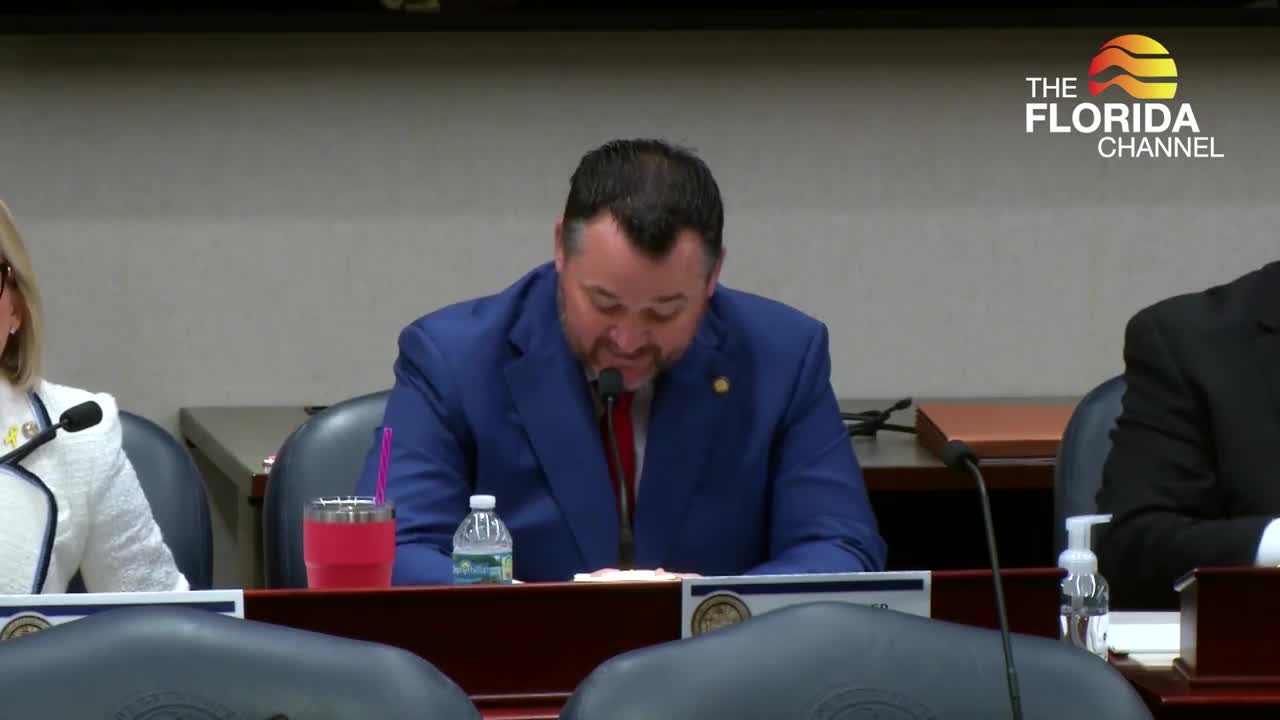
Commissioner Jaworski, testifying first, described the corporate structure that places insurers within multi-entity holding company systems and explained that MGAs are “a particular type of affiliate.” He told the committee, “MGA stands for managing general agents,” and walked members through regulators’ role in reviewing contracts between insurers and affiliates to determine whether contract terms are “fair and reasonable.” He added plainly that Florida currently lacks a statutory definition of that standard: “We don't have we do not have a standard for the fees being fair and reasonable.”
The hearing then turned to a draft executive summary produced for the office by an outside examiner (identified in testimony as Risk and Regulatory Consulting or similar vendor). The draft has been widely cited in public discussion for listing roughly $14,000,000,000 in affiliate fees but, both current and former OIR officials told the subcommittee, the document stopped short of producing a final, validated analysis. Former Commissioner Altmire said the draft “was wildly, incomplete” and that the office did not complete the report’s normal exam review process. He and Commissioner Jaworski emphasized the draft’s limitations: it aggregated national affiliate figures and did not clearly separate income that affiliates earned from non‑insurer sources, investment income, or intra‑group transfers.
Lawmakers pressed for specifics. Members cited figures quoted in the draft and related materials — for example, testimony referenced $7,000,000,000 of net income at affiliates while some insurers showed net losses — and asked whether those sums reflected Florida‑only activity or national totals. The former commissioner replied that the $14 billion number in the draft “includes national companies on a national basis” and therefore does not represent Florida‑only payments.
Committee members also raised procurement, completeness and cost questions. Witnesses said the office engaged an outside firm after receiving statutory authority to examine affiliates; testimony identified a roughly $150,000 vendor engagement cost and said companies were expected to reimburse exam costs in normal practice. Jaworski and Altmire said some companies either did not provide full data or treated filings as trade secret; the draft recorded about 23% nonresponse or partial response for requested data, according to testimony.
On enforcement and remedies, Jaworski explained that the Office’s direct authority rests chiefly with the insurer, not an unlicensed affiliate: “We can't ... hold the MGA accountable for that behavior, but we would because there's a contract, we would deem the insurer ... ultimately responsible for that behavior,” he said. Witnesses noted the state’s bifurcated regulatory structure: insolvency and receivership work is handled by the Department of Financial Services while OIR handles insurer financial regulation and market conduct, which complicates some data collection and public reporting.
Lawmakers repeatedly asked why the draft remained in draft form and why the office did not share interim findings with the legislature during 2022 policy debates. Altmire and Jaworski told the committee they became aware of the draft at different times; both said the document stopped at an internal stage that ordinarily requires follow‑up between vendor and OIR exam managers. Jaworski described steps OIR has taken since 2022 to increase oversight — reviewing and modifying affiliate contracts, removing evergreen provisions, and expanding internal review — and said the office has proposed statutory language to clarify metrics for “fair and reasonable.”
Members pressed for additional records and follow up. Several representatives asked the commissioner to provide insolvency and receivership reports from the Department of Financial Services that may reference affiliate transactions, and to deliver an updated, completed examination or an annual public product that summarizes affiliate activity and the metrics OIR uses in fair‑and‑reasonable review. Jaworski agreed to facilitate follow‑up and to make staff available for in‑depth briefings.
The hearing closed with lawmakers continuing to press for more evidence on whether affiliate payments and MGA relationships were systemic drivers of insurer impairment in Florida or, alternatively, the result of a smaller number of unusual cases. Witnesses told the panel that litigation, catastrophe claims and reinsurance costs had been the principal drivers of recent insolvencies but that affiliate transactions remain an active area of regulatory attention.
Ending: Committee members asked OIR for more detailed answers and an updated, completed report or a regularized public summary that would make affiliate contracts and the office’s metrics more transparent; OIR officials said they would continue to pursue statutory clarifications and additional oversight tools and would provide follow‑up material to the subcommittee.