
Fayette County board opens tentative-budget workshop, asks staff for follow-ups
Get AI-powered insights, summaries, and transcripts
Sign Up Free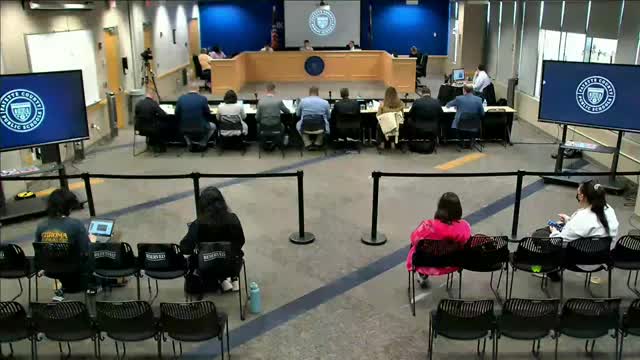
Summary
The Fayette County Board of Education held a budget workshop to begin work on the district's tentative budget for fiscal 2025–26, reviewed revenue and spending trends and requested more data on grants, safety costs and dual-credit spending.
The Fayette County Board of Education on Feb. 27 opened a budget workshop designed to begin work on the district's tentative budget for fiscal 2026, stressing that the session was an information-and-direction meeting, not a decision meeting. "Today’s meeting . . . marks the beginning of our work on the tentative budget," Superintendent Dr. Christopher Liggins said.
The workshop organized finance, enrollment, operations, safety and program staff to give board members a forensic look at revenue trends, the district's spending profile and cost pressures that could shape the tentative budget the board must submit to the Kentucky Department of Education by May 30. Chair Tyler Murphy described the session as "an organic conversation" meant to guide staff priorities and follow-up work.
Administrators told the board that revenue is up compared with the prior year but that expenses — notably personnel costs, legal fees and facility operating costs — are rising. Staff emphasized several uncertainties that could affect the district's finances, including potential changes in state SEEK funding, federal grant availability and insurance and utility cost volatility. "We have to lean toward the data that we get in this fiscal year and historical trends to make decisions," Dr. Liggins said.
Board members asked staff to return with specific follow-ups, including birth-rate comparisons to the state, annual maintenance and data-storage costs for campus camera systems, a breakdown of overtime by category, a precise accounting of how much general-fund money supports safety initiatives, and a line-item breakdown of a proposed $700,000 dual-credit investment (how much would be direct course reimbursements versus event support and how many additional students that would serve).
The board conducted two formal, procedural votes during the workshop: it adopted the meeting agenda and later moved to include the Feb. 27 agenda in the minutes. Both motions passed 5-0 (see "Votes at a glance" below). Staff said no final budget decisions would be taken at the workshop and that the tentative budget will return to the board for future action.
The board directed staff to compile the requested follow-up information and to route questions through the superintendent so responses could be prepared and shared with all members.
For context, staff outlined the district's timetable and legal requirement: the tentative budget must be submitted to KDE by May 30 and the working (final) budget is not adopted until the fall when the district is already in the school year.
The board is expected to use the coming weeks of work sessions and committee meetings to refine priorities, evaluate trade-offs between personnel and programmatic investments, and respond to the federal and state funding uncertainties highlighted by staff.