Get Full Government Meeting Transcripts, Videos, & Alerts Forever!
Get email alerts on the Public Records Privacy Reproductive Health topic
No spam. Unsubscribe anytime.
Committee approves limited IPRA exemption for provider contact and scheduling records to protect reproductive‑health staff safety
Summary
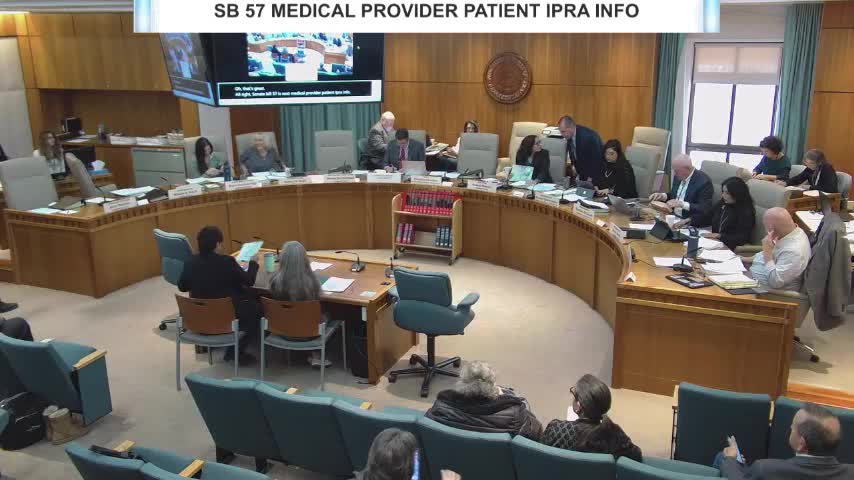
Senate Bill 57 would create a narrow exception to the Inspection of Public Records Act (IPRA) to protect certain identifying or logistical records of medical providers who deliver reproductive health services; the committee voted to pass SB 57 after testimony from providers and advocacy groups describing harassment and threats.
The House committee voted to pass Senate Bill 57, which creates a narrow exception to the Inspection of Public Records Act for certain detailed contact, scheduling and operational records of medical providers who deliver reproductive health services.
Dr. Eve Espie, a board-certified OB‑GYN from the University of New Mexico and an expert witness for the bill, told the committee the bill’s intent is not to reduce transparency but to prioritize safety: "The point of SB 57 is not to hide records, but rather to prioritize safety and to protect people from being targeted for potential harm." She described repeated and voluminous out‑of‑state public‑records requests that, she said, yielded details that could be used to target providers and trainees.
Supporters included Planned Parenthood Rocky Mountains, the New Mexico Commission on the Status of Women, Bold Futures and the ACLU of New Mexico. Jennifer Rafael Getz of the Commission on the Status of Women said the volume of IPRA requests can create "logistical nightmares" for clinicians and reduce time available for patient care. Juliana Coop, representing Planned Parenthood Rocky Mountains, and Kat Sanchez of Bold Futures also urged passage.
Several committee members sought a tighter definition of “sensitive” records. Representative Reed recorded a “no” vote and said she wanted a clearer statutory definition and emphasized that criminal threats should be handled by law enforcement rather than through exemptions to open‑records law. Sponsor Representative Martinez and other backers said the exemption is narrowly tailored to provider records (for personnel, schedules, travel and similar operational details) and does not change protections for individual patients under HIPAA.
After public testimony and questions about scope, Representative Martinez moved a do‑pass motion; the committee recorded the motion in favor and reported SB 57 out of committee.
The bill as presented does not apply to patient medical records (which remain protected under HIPAA) and focuses on provider personal or operational details that, according to witnesses, have been used in harassment campaigns.