Get Full Government Meeting Transcripts, Videos, & Alerts Forever!
Get email alerts on the Pfas Firefighting Foam Hazardous Waste topic
No spam. Unsubscribe anytime.
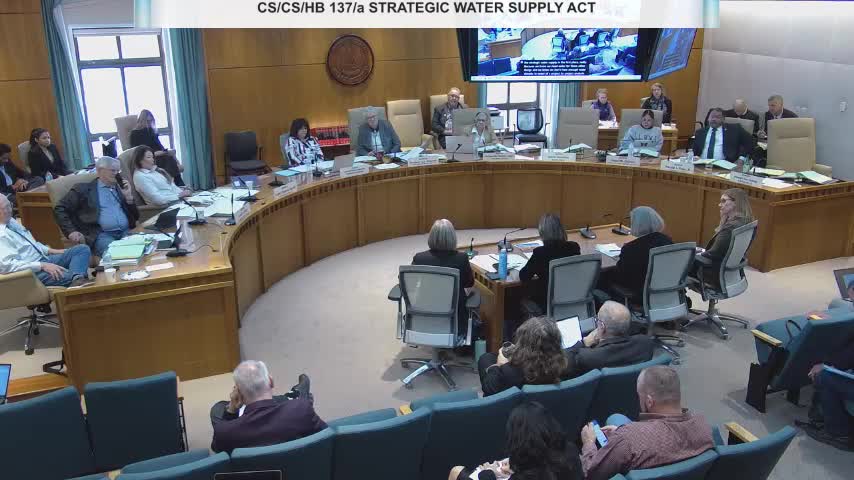
Committee hears PFAS cleanup bill focused on discarded firefighting foams; sponsors plan technical followup
Summary
A committee substitute for House Bill 140 would declare discarded firefighting foams that contain intentionally added PFAS to be hazardous waste in New Mexico and authorize limited rulemaking for disposal; sponsors emphasized the measure targets firefighting foams and agreed to further technical drafting.
Senators heard a committee substitute for House Bill 140 aimed at ensuring discarded aqueous film-forming foams (AFFF) that contain intentionally added PFAS are classified as hazardous waste under New Mexico law and at enabling limited rulemaking on destruction and disposal if the federal government does not act.
Secretary Jim Kenney of the Environment Department and bill sponsors described the measure as a focused response to firefighting-foam contamination around military installations and other sites. "Instead of opening the door ... to letting the environment department decide what hazardous waste is or isn't in the state of New Mexico, we opened it to tailor it to the point that we're looking at discarded firefighting foams," Kenney told the committee.
The sponsor said the bill preserves agricultural protections and includes language intended to avoid making agricultural biosolids or common agricultural byproducts automatically hazardous waste. The committee recorded broad audience support and no recorded opposition at the hearing; sponsors and committee staff agreed to reconvene for additional technical work and to resolve drafting questions before further action.
Committee members asked about known contamination locations, testing and whether fingerprinting of PFAS signatures can identify source materials. Witnesses said PFAS plumes have been characterized at several military bases and that forensic testing can distinguish some PFAS fingerprints, but that source attribution can be technically complex and costly.
Because the committee took no final vote on the committee substitute during the hearing, the bill will return for additional drafting and possible future action.