Get Full Government Meeting Transcripts, Videos, & Alerts Forever!
Get email alerts on the State Tax Policy topic
No spam. Unsubscribe anytime.
Committee advances HB14 committee substitute to fund expanded state earned income tax credit with oil-and-gas surtax
Summary
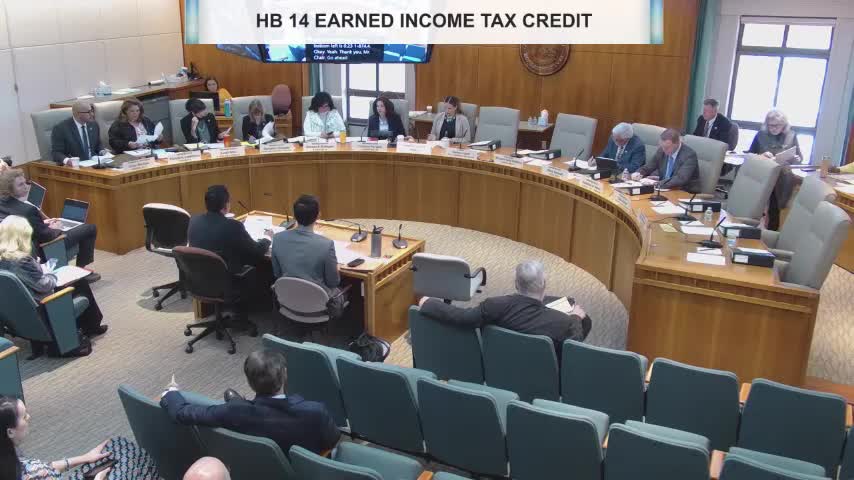
The House Taxation and Revenue Committee on Wednesday voted to advance a committee substitute for House Bill 14 that would create a New Mexico earned income tax credit and partially fund it through changes to oil and natural gas tax rates.
The House Taxation and Revenue Committee on Wednesday voted to advance a committee substitute for House Bill 14 that would create a New Mexico earned income tax credit and partially fund it through changes to oil and natural gas tax rates.
The committee substitute, as described to the panel, would bring the state’s oil tax rate to about 3.4% and reduce the natural gas rate to about 3.9%, create a new surtax on oil that only applies when crude prices exceed $55 per barrel, and use the net revenue for a state-level earned income tax credit (EITC) and other priorities. Committee members said the measure, as amended in committee, is expected to raise roughly $130 million a year while lowering natural gas liability by about $11.4 million; sponsors identified roughly $75 million of that revenue to support the EITC with remaining capacity left for Senate priorities.
Why it matters: Sponsors said the bill expands tax relief to working New Mexicans — including making workers with incomes up to $70,000 eligible to have their state tax liability eliminated — and decouples the state credit from the federal EITC so New Mexico can tailor eligibility and benefit levels. Opponents said tying a permanent credit to volatile oil-and-gas revenue risks economic instability for energy-dependent communities and the state budget.
What the bill would do: Committee testimony and the fiscal impact material presented to the panel said the substitute would (1) create a New Mexico earned income tax credit that increases the state match of the federal program and extends benefits to more workers; (2) change oil and gas taxation to move toward horizontal equity across products; and (3) include a price trigger that suspends the additional oil surtax if crude falls to $55 per barrel or below. Sponsors and analysts told the committee the substitute increases the state match (public testimony said from 25% to 30%), expands eligibility to roughly 100,000 more New Mexicans and aims to eliminate state income tax liability for many households earning $70,000 or less.
Public testimony: Dozens of witnesses joined in person and by Zoom. Supporters included Kurt Rager, director of Lutheran Advocacy Ministry of New Mexico, who urged the committee to back the bill because tax credits “have been proven to improve the lives of New Mexicans by providing additional resources to meet their basic needs, like food, housing, health care, and more.” The League of Women Voters of New Mexico and New Mexico Voices for Children spoke in favor, saying the measure would make the state tax system more progressive and protect residents from federal changes by decoupling the state credit. The Sierra Club’s Rio Grande chapter also supported the measure’s approach to using public resource revenue to fund families.
Opposition and concerns: Business and oil-and-gas interests and local chambers urged caution. Bridget Dixon, president and CEO of the Santa Fe Chamber of Commerce, said the surtax increases dependence on energy revenue, risks higher business costs and consumer prices, and could threaten jobs. Jim Winchester of the Independent Petroleum Association of New Mexico and representatives of the Greater Albuquerque Chamber and the New Mexico Chamber of Commerce warned that the sector operates on tight budgets and that sudden tax increases could be passed to consumers or slow investment. Local economic development and county lobbyists described potential ripple effects in energy communities.
Budget and timing: Committee members and Legislative Finance Committee (LFC) staff said the substitute was developed from a package of earlier tax proposals; 16 of about 31 tax-related bills were temporarily tabled and combined for consideration. LFC chief economist Ismael Torres testified on macro risks, saying recession odds have increased in recent months and that the consensus revenue group will update revenue estimates in August or earlier if there is a major economic shift. Sponsors said the substitute was intentionally scaled back from earlier versions and left some capacity for the Senate to pursue its priorities.
Committee action: Representative Chandler moved a do-not-pass on the original HB14 while moving a do-pass for the House Taxation and Revenue committee substitute; the motion to advance the committee substitute was seconded and approved by the committee.
What remains uncertain: Committee members pressed on implementation details and revenue allocation. Several members said the substitute leaves unspecified uses for portions of the revenue that could be decided by the Senate, and some questioned the timing of adding a revenue source that is tied to a volatile commodity while producers are publicly adjusting capital plans and staffing. LFC staff reminded members the general fund ultimately pays credits, and that the oil surtax’s price trigger would stop the additional levy if oil prices fall to the trigger level.
Next steps: The substitute passed out of committee and will move to the House floor and then, if passed, to the Senate where members said additional amendments and allocations are possible. The bill’s supporters said the measure is a step toward broader tax relief for working families; opponents said the reliance on oil-and-gas revenue and the timing create fiscal and economic risks for energy communities.
Ending: The committee’s approval advances debate over whether to fund an expanded state EITC through energy revenue, a choice that committee members and witnesses said balances immediate relief for low- and middle-income workers against potential volatility for the state and energy industry.