Get Full Government Meeting Transcripts, Videos, & Alerts Forever!
Get email alerts on the Local Finance Gross Receipts topic
No spam. Unsubscribe anytime.
Committee backs bill to change gross receipts distribution to help oil-producing towns
Summary
The committee gave a do-pass recommendation to House Bill 292, a measure that would change how a portion of gross receipts tax (GRT) revenue is distributed so municipal governments — particularly oil-producing communities such as Hobbs and Carlsbad — receive a larger share of revenue tied to local activity.
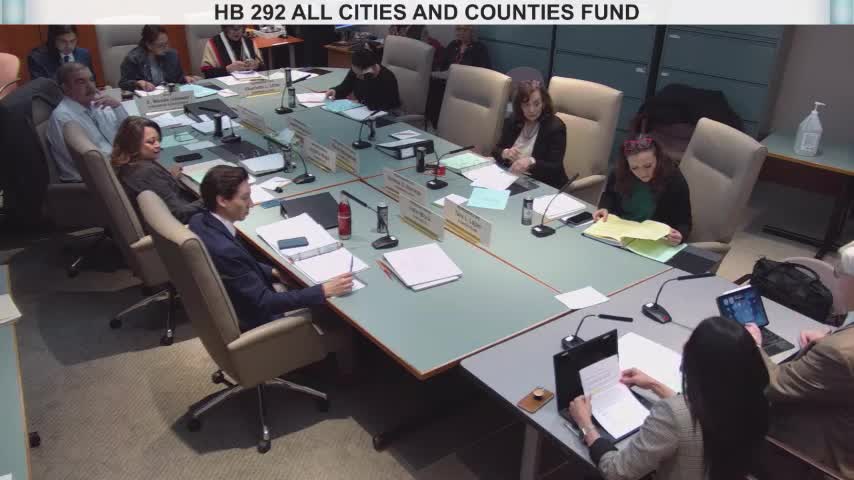
House Government, Elections and Indian Affairs Committee members voted to give House Bill 292 a do-pass recommendation after testimony from municipal officials and local governments seeking relief from a prior change in the state—s gross receipts tax distribution.
The bill would divert a portion of GRT revenue back to municipalities based on a formula that includes an 8% allocation of the statewide pool and a 30/70 weighting that recognizes contribution by counties and a per-capita share for all jurisdictions. Sponsors and municipal witnesses said the change would help localities that host oil and gas activity recover some revenue lost when the tax point-of-collection moved away from business location to destination.
Why it matters: Local leaders said the destination-based change left producing cities with sudden revenue losses despite bearing costs for infrastructure, public safety and services tied to energy activity. Hobbs city staff told the committee that the shift forced staffing cuts and other service reductions.
City and municipal presenters described the bill and answered committee questions. Todd Randall, assistant city manager for Hobbs, told the committee the city saw about a 3% revenue reduction after the destination-based change and said the city reduced staff by 88 full-time positions, "which represents about 15% of the workforce." Randall said the bill would restore funds to help maintain services and infrastructure.
Lobbyists and municipal organizations supported the measure. Luke Kotaro, testifying for the City of Hobbs, said the city "support[s] the fair and equitable distribution to the cities and counties." Allison Nichols of the New Mexico Municipal League thanked sponsors for attempting to return more of the oil-and-gas-driven revenues to local governments.
Committee questioning focused on formula details and sustainability. Witnesses described how the 8% allocation and the 30/70 weighting distribute a modest benefit statewide while prioritizing counties with larger contributions. A witness said the bill would distribute a little over $300 million statewide and that Hobbs— share would be about $12,000,000 under the formula; smaller towns would receive amounts described by the witnesses as meaningful to purchase basic equipment or cover local needs (examples cited included $200,000 figures for small towns).
Legislative control of the formula: Witnesses told the committee that any change to the formula or weighting would be a legislative decision — local governments would not control the statutory percentages.
What the committee did: Representative Zamora moved a do-pass recommendation; Representative Block seconded. The motion passed and the bill will move on for further consideration.
The committee record includes questions about tribal participation in the distribution formula. A witness said tribal communities located within counties would participate through the county per-capita distribution but that the sponsor did not recall direct consultation with tribes during drafting.
Ending: The committee approved the bill and forwarded it to the next stage; sponsors and municipal representatives said they will continue to refine technical details of the formula in later committee work.