Get Full Government Meeting Transcripts, Videos, & Alerts Forever!
Get email alerts on the Student Outcomes Midyear Review topic
No spam. Unsubscribe anytime.
Tigard-Tualatin midyear data: graduation rates steady, attendance improving, discipline gaps persist
Summary
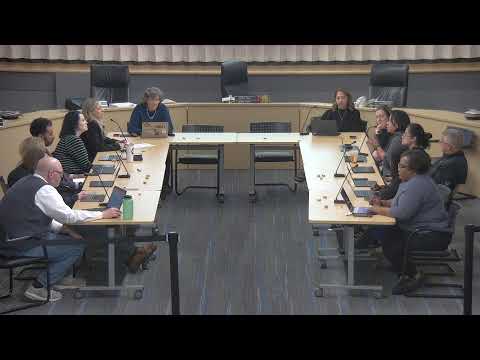
The Tigard-Tualatin SD 23J board met in a work session to review semester‑1 student outcome data, hearing district staff report that overall four‑year graduation rates have held steady since the pandemic and that attendance improved in kindergarten and sixth grade, while behavior referrals and disciplinary disparities remain concentrated in middle school.
The Tigard-Tualatin SD 23J board met in a work session to review semester‑1 student outcome data, hearing district staff report that overall four‑year graduation rates have held steady since the pandemic and that attendance improved in kindergarten and sixth grade, while behavior referrals and disciplinary disparities remain concentrated in middle school.
Director Amber Fields, who opened the presentation, said the district’s “overarching goals are based on these key indicators that are critical for student success,” and identified third-, fifth- and eighth‑grade reading; fifth- and eighth‑grade math; kindergarten, sixth- and ninth‑grade attendance; ninth‑grade on‑track credit attainment; and several social‑emotional and behavior measures as the primary metrics under review.
The midyear presentation combined three years of i‑Ready reading data (English and Spanish) and showed mixed trends by grade: a small downward trend in third‑grade reading, relative stability in fifth grade and improvement in eighth grade. Paul Verstrait, a district presenter, summarized the reading results as measures of whether students are prepared for the next instructional level.
Math scores remained lower than reading overall, the presenters said, with a modest upward trend in fifth grade, a slight decline at eighth grade from the most recent year but an increase compared with earlier years, and year‑to‑year variation that the district described as a seesaw pattern.
Attendance data for quarter 1 showed improvement in kindergarten and sixth grade compared with the post‑pandemic trough, while ninth‑grade attendance showed a slight downward trend. Staff emphasized ninth‑grade “on‑track” credit attainment as an early indicator of graduation prospects: students who have earned three credits by midyear are considered on track. The presenters said the share of ninth graders with at least three credits remained relatively steady this year.
Behavior and safety indicators drew concentrated attention. The district reported a sharp increase in major behavior referrals since the pandemic, followed by a slowdown in the 2023–24 school year and a near plateau this year. However, bullying, harassment, bias incidents and hate speech continued to rise. The district also reported that middle schools generate the highest rate of referrals per 100 students, and that students identified as belonging to underserved racial and ethnic groups are disproportionately represented among referrals and exclusionary discipline (suspensions and expulsions).
At one point Vice Chair Jaimez raised an apparent anomaly in a chart that appeared to show the Black/African American referral rate dropping from 82.1 to 9.1 at the high school; a presenter said she would re‑check the data. “I would need to check on that. That does, seem like it would be an error,” the presenter said.
Laura, one of the instructional leaders presenting classroom practices, described findings from a Disproportionality Committee that studied elementary classrooms where Latinx students performed at or above peers. She summarized four common features teachers in those classrooms used: evidence‑based teaching strategies and a strong, aligned curriculum with timely interventions; a quick instructional pace and strong classroom community; family engagement tuned to parent preferences; and tight teamwork among literacy specialists, principals and grade‑level teams. “If the parents said that they would like to have communication over … Seesaw, then that’s how they got photos of their children reading,” Laura said.
District instructional leaders said those classroom patterns are being used to align equity, student services, elementary and secondary work across the system. The four instructional leaders — including Director Carol Kinch and Dr. Eun — said they will prioritize a narrower set of indicators and ask schools to report not only data but the specific responses taken and evidence of impact. “We have a quarterly review for PBIS data…and we’ll do that for reading and math,” a district director said.
Board members praised the long‑term work to close opportunity gaps. The board chair said they were “cautiously optimistic” and highlighted charts showing the smallest gap in graduation rates between the district’s overall population and underserved students of color since the district began tracking the metric more than a decade ago.
The session was informational; no formal board actions were taken. Staff said they will revisit and validate specific chart numbers flagged during the presentation and continue quarterly reporting on PBIS and academic indicators.
The presentation also noted limits of the publicly reported breakdowns: the district does not report percentage rates for groups with too few students (for example, American Indian and Alaska Native students) to avoid identifying individuals.
The board did not set a new policy or adopt a formal motion during the work session; staff described next steps as aligned monitoring and more explicit requirement that schools report both interventions and their measured impacts.
Audience members and board members asked questions focused on whether the district could narrow its “scattershot” improvement efforts to the most effective classroom practices. Presenters said their work to identify shared, high‑leverage practices and to embed review of responses into quarterly data reports is intended to provide that focus. The work session concluded after board members and instructional leaders discussed next steps for continued alignment and monitoring.