Get Full Government Meeting Transcripts, Videos, & Alerts Forever!
Get email alerts on the Welfare Checks topic
No spam. Unsubscribe anytime.
Police Commission approves revised welfare-check policy after brief debate
Summary
The Eugene Police Commission voted to approve Policy 3-07 on welfare checks, noting only formatting and gender-neutral language edits; one commissioner abstained pending review of case law cited in accompanying materials.
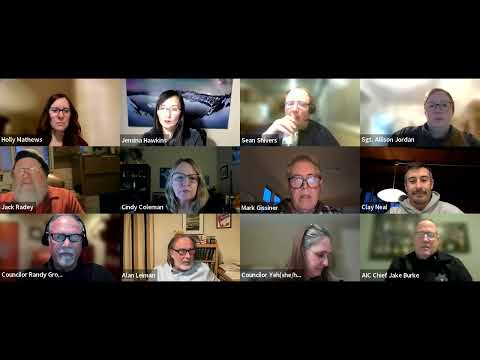
The Eugene Police Commission on Feb. 13, 2025, voted to approve the department's revised Welfare Check Policy (Policy 3-07). The motion to adopt the draft as presented was moved by Commissioner Sam Rady and seconded by Councilor Randy Groves; Commissioner Lehi Lyman recorded an abstention while he reviews related case law referenced in the packet.
The approved policy is a one-page document the department provided in draft form; staff said the draft contains no substantive operational changes and that edits addressed formatting and gender-neutral language. Sergeant Jordan told the commission the policy continues to rely on the relevant Oregon statutes that authorize peace officers to enter or remain on private premises when a welfare concern exists and that the department's standard practices would continue.
Commissioners and staff discussed practical aspects of welfare-check calls, including who may be dispatched, how responses are prioritized, and the role of partner groups. Sergeant Jordan explained that Community Assistance Teams such as Cahoots may be sent to welfare-checks "as their workload is permitting" and may perform less-invasive roles when appropriate, but that sworn officers retain the legal authority to make forcible entry when the statutory standard is met. Acting-in-capacity Chief Jake Burke confirmed that the department uses the Oregon Revised Statutes as the legal basis for entry decisions and that, in some cases, medical personnel pronounce death or the medical examiner assumes notification responsibilities.
Commissioners recounted a recent ride-along in which a welfare check resulted in the discovery of a deceased person; Commissioner Rady said the experience underscored how often welfare checks involve life-or-death circumstances.
The motion passed; the chair said the commission will revisit the policy if further substantive edits are proposed.
The policy packet included a short legal summary referencing community-caretaking case law (including the Supreme Court decision in Caniglia v. Strom and state-level decisions and statutes). Commissioners asked staff to clarify how that case law intersects with Oregon statute in any future draft revisions.
The commission adopted Policy 3-07 with the stated edits and an expressed intent to return to any substantive changes that arise from legislative or case-law developments.