Get Full Government Meeting Transcripts, Videos, & Alerts Forever!
Get email alerts on the Building Inspections topic
No spam. Unsubscribe anytime.
Senate committee advances bill to allow virtual reinspections, adds inspection timing and refund rules
Summary
Representative Josh Wheeler said HB 266 would "modernize and codify some best practices for Idaho's building inspection process," and the Senate Commerce and Human Resources Committee voted to send the bill to 14th order for possible amendment.
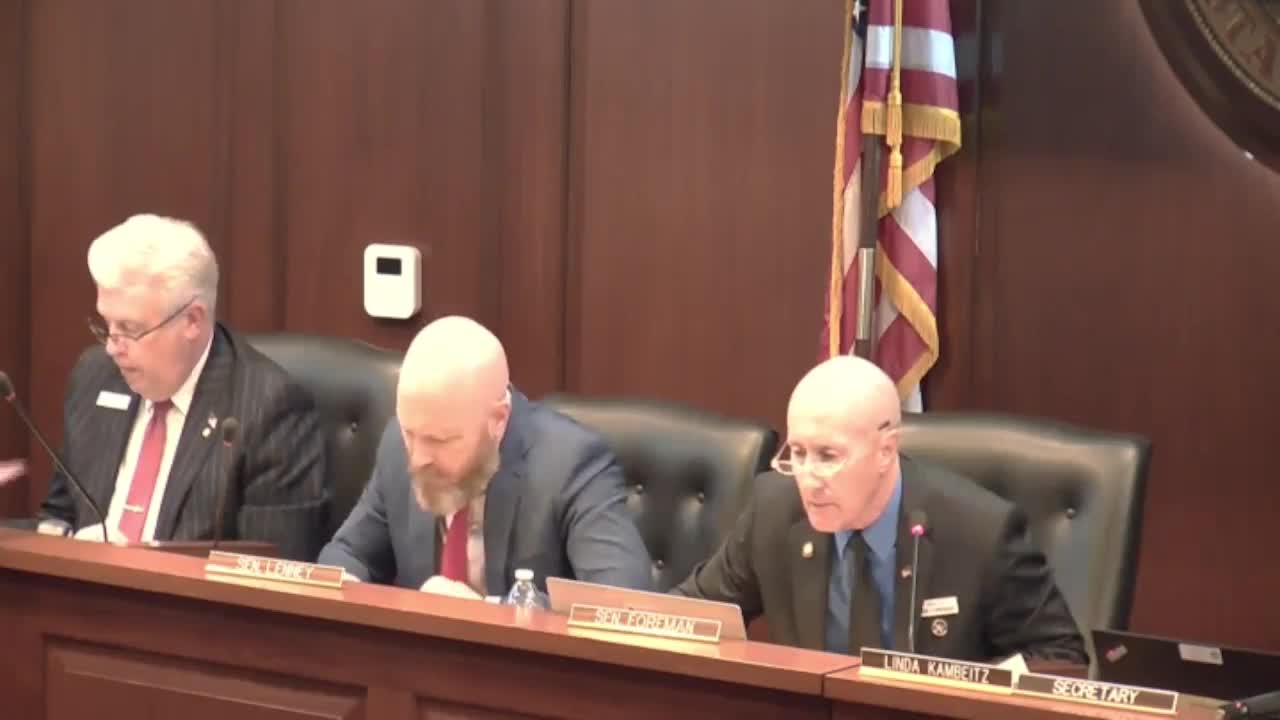
BOISE — The Senate Commerce and Human Resources Committee on Tuesday voted to send House Bill 266 as amended to 14th order for possible further amendment after hearing testimony from lawmakers, municipal building officials and local government associations.
Representative Josh Wheeler, R-District 35, told the committee HB 266 “is looking to modernize and codify some best practices for Idaho's building inspection process.” The bill, as presented, would authorize live virtual reinspections, create a 48‑hour standard after which a property owner or contractor could hire a third‑party inspector and require a 10 percent refund of applicable fees if a reason for a failed inspection is not provided within three days.
The measures are framed as three principal changes: allowing inspectors to approve reinspections by live virtual means; a “shot‑clock” that, if a local government misses a 48‑hour inspection window, permits the permit holder to hire an ICC‑certified third‑party inspector and be reimbursed for the inspection fee; and a customer protection requiring a 10 percent refund of fees if a locality does not notify the permit holder within three days of the reason an inspection failed. Representative Wheeler said the bill is limited to building inspections.
Municipal and county witnesses supported the virtual‑reinspection portion but asked for clarifying amendments before full approval. Brett Stoddard, representing the City of Rexburg, said Idaho jurisdictions already use virtual inspections and supported the bill “as Representative Wheeler has presented it, with the amendments.” John Nielsen, director of building safety for the City of Nampa, said he initially opposed the bill because of the 48‑hour requirement but would support it if the timing language were limited to business days.
Kelly Packer, executive director of the Association of Idaho Cities, urged inserting explicit language to make clear that when a small city contracts with another entity — the state division, a county, or a third‑party inspector — the contract party would be responsible for refunds when they miss the statutory timelines. Clay Beccle of the Idaho Association of Counties said his organization supports the virtual reinspection component and is willing to work on the shot‑clock language.
Committee members asked how third‑party inspections would be vetted and whether a locality could override a third‑party approval. Representative Wheeler said third‑party inspectors would be required to be ICC certified, the same certification standard used for Idaho building officials, and that the bill does not grant a post‑inspection veto to local governments; instead, he said the statute is intended to hold parties to the same inspection standards and to create timeliness incentives. Wheeler acknowledged an ambiguity in the refund subsection that could be read to require a local government to refund even if it contracted out the work; he said the intent is that the party that caused the delay be responsible.
The committee adopted a motion from Senator Guthrie, seconded by Senator Nichols, to send HB 266 as amended to the fourteenth order for possible amendment. The motion passed; the committee chair announced, “Motion carries. House Bill 2 66 as amended. We'll go to our fourteenth order for a possible amendment.”
What happened next: the bill will go to the committee’s 14th order for potential further amendment. The committee record shows broad stakeholder interest in specifying “business days” for the 48‑hour and three‑day timing references and in clarifying which contracting parties would be financially responsible for refunds.
Votes at the committee: motion to send HB 266 as amended to fourteenth order — moved by Senator Guthrie; seconded by Senator Nichols; outcome: motion carried (vote count not recorded on the transcript).