Get Full Government Meeting Transcripts, Videos, & Alerts Forever!
Get email alerts on the Workers Compensation topic
No spam. Unsubscribe anytime.
Committee approves pilot letting some special districts seek private workers' comp; bill includes sunset
Summary
House Bill 160 would allow selected specialty districts, including some fire districts, to seek private workers' compensation alternatives under a time-limited pilot; the committee sent the bill to the Senate floor with a due-pass recommendation after testimony addressing adverse-selection concerns and pool size.
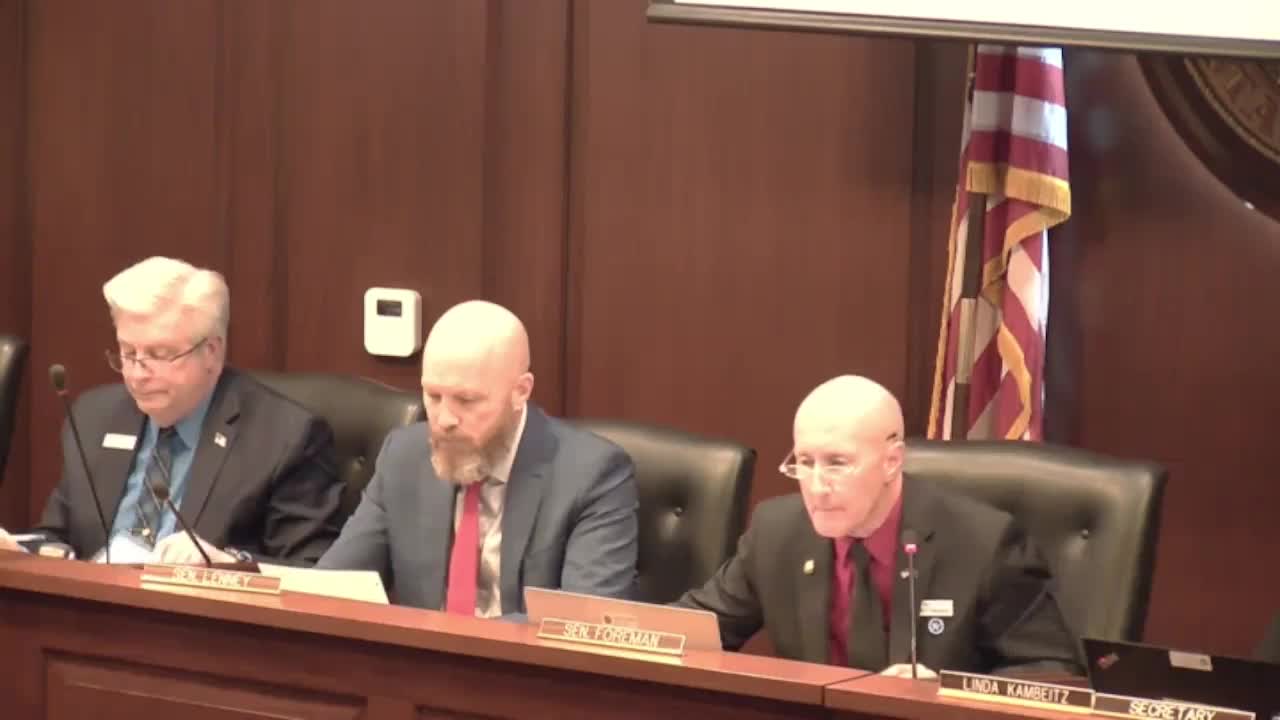
The Senate Commerce and Human Resources Committee voted to send House Bill 160 to the Senate floor with a due-pass recommendation. The bill permits certain specialty local districts to explore private-market workers’ compensation coverage under a pilot program and includes a sunset provision.
Representative Josh Tanner, sponsor of House Bill 160, told the committee that the proposal grew from conversations with fire districts and others that need specialized services and quicker claims management. "This bill...just allows a few of those specialty districts to be able to go outside," Tanner said, and he described a limited pilot with a sunset so the approach can be rescinded if it does not produce the expected benefits.
Senators asked whether the pilot would cause adverse selection and weaken the State Insurance Fund’s pooling advantages. Senator Todd Leahy described the bill as a "narrow" compromise and said it provides a path to address specialty needs while preserving the overall pool. Rick Ferguson, chief executive officer of the State Insurance Fund, told the committee the fund writes roughly $230,000,000 in premium and that about 80% of the business is private-sector work. He said the local government sector accounted for about $38,000,000 of premium, and roughly $6,000,000 of that was special districts, numbers he offered to show the carve-out’s small relative size.
Ferguson said he did not expect destabilizing adverse selection from a narrow pilot focused on specialty districts such as certain fire districts. Committee discussion emphasized the sunset clause as a safeguard; members recorded support from the State Insurance Fund for the compromise option. The motion to send HB 160 to the floor was moved by Senator Todd Lakey, seconded by Vice Chairman Lenny, and carried by voice vote.