Get Full Government Meeting Transcripts, Videos, & Alerts Forever!
Get email alerts on the Professional Licensing topic
No spam. Unsubscribe anytime.
Senate committee rejects respiratory-care interstate compact after sovereignty concerns
Summary
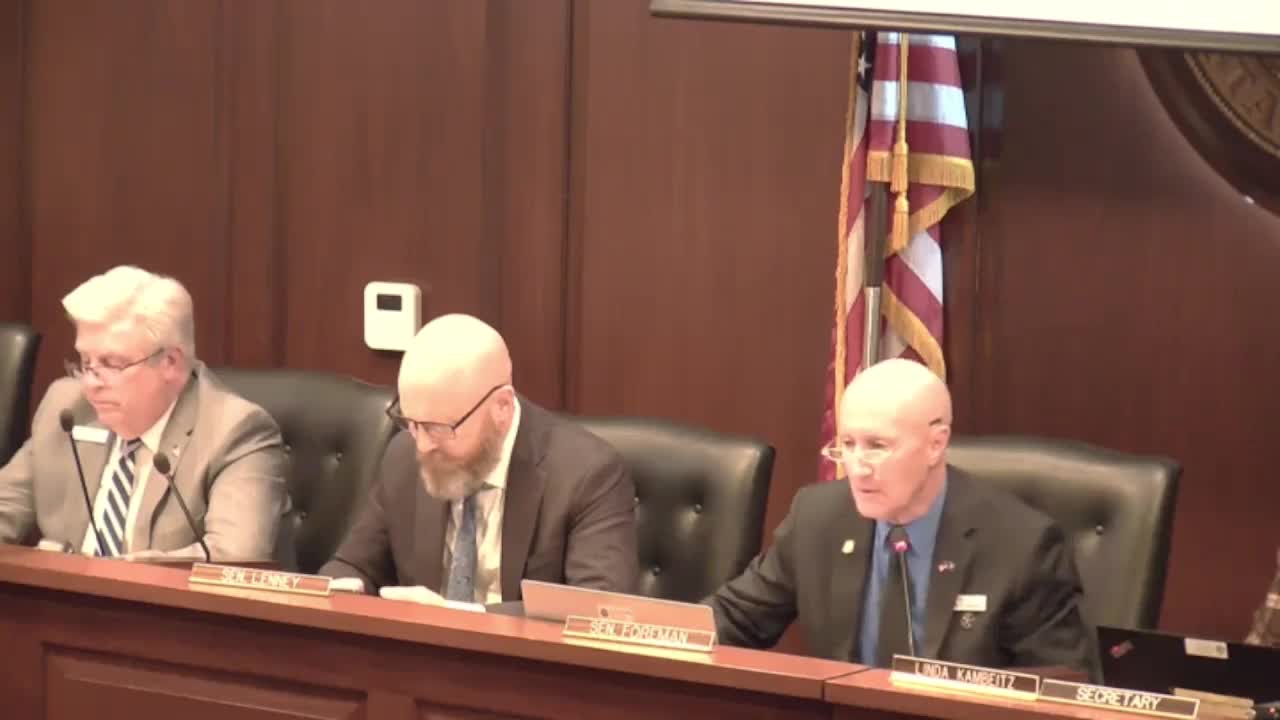
The Senate Commerce and Human Resources Committee voted 5-4 against sending Senate Bill 1136 — a proposal to join an interstate compact to ease licensure portability for respiratory therapists — after members raised concerns that commission rules could override state authority.
The Senate Commerce and Human Resources Committee on March 3, 2025, declined to advance Senate Bill 11‑36, a bill to adopt the Respiratory Care Interstate Compact (RCIC), after a roll-call vote resulted in five nays and four ayes.
The compact would have allowed licensed respiratory therapists from compact member states to practice across state lines without obtaining separate Idaho licensure, proponents said. Senator Carl Bjerke, the bill sponsor, told the committee the compact would “facilitate multi state practice through enhanced license portability” and improve patient access, especially in border towns and for relocating military families.
Supporters framed the proposal as a workforce and access measure. Dr. Megan Koster, a respiratory therapist and delegate for the Idaho Society of Respiratory Care, said the compact would reduce administrative burdens and help recruit and retain practitioners. “The RCIC … improves licensure portability while also maintaining Idaho’s sovereignty,” Koster said in testimony. Tammy Perot, representing the U.S. Department of Defense, told the committee that the department “supports occupational licensure compacts as the premier method for licensure portability, protecting state sovereignty, and also protecting patients, in within the state.” A Boise resident and registered dietitian, Jen Beazer, also testified in support and described family and clinical reasons she backed the measure.
Opponents focused on language they said could cede rulemaking power to an interstate commission. Senator Nichols said she was troubled that the compact appeared to grant a commission rules “the force of law” in member states and called it a potential “violation of state sovereignty.” Senator Leahy said Idaho already has statutory mechanisms to expedite licensure for military members and their spouses and expressed a preference for Idaho-controlled reciprocity rather than commission-driven rules. Other senators raised questions about the compact’s data-sharing, fee authority and biometric-background-check provisions.
After discussion the committee moved to a roll-call vote on the motion to send the bill to the full Senate with a “do pass” recommendation. The recorded vote: Senator Leahy — Nay; Senator Guthrie — Aye; Senator Nichols — Nay; Senator Burnt — Aye; Senator Zito — Nay; Senator Ward Engle King — Aye; Senator Ruckte — Aye; Vice Chairman Lenny — No; Chairman Foreman — No. The chair announced the tally as five nays and four ayes; the motion failed.
The committee record contains multiple exchanges seeking clarification about whether the compact’s administrative rules would supersede state licensure laws. Proponents repeatedly characterized the compact as administrative and not a change to scope-of-practice law; opponents said the statutory language was ambiguous and could produce unintended consequences.
With the motion failed, the bill will not advance from this committee. Committee members indicated the substance and language of commission rule authority, data-sharing, and fee provisions would need to be clarified or amended before they would be willing to advance the compact.
Votes at a glance: Motion to send Senate Bill 11‑36 to the Senate floor with a due pass recommendation — Motion by Senator Ward Engle King; second by Senator Guthrie; roll-call vote — Result: Failed (4 ayes, 5 nays).