Get Full Government Meeting Transcripts, Videos, & Alerts Forever!
Get email alerts on the Civil Rights Anti Discrimination topic
No spam. Unsubscribe anytime.
Judiciary committee reviews bill to add political affiliation to Maine Human Rights Act
Summary
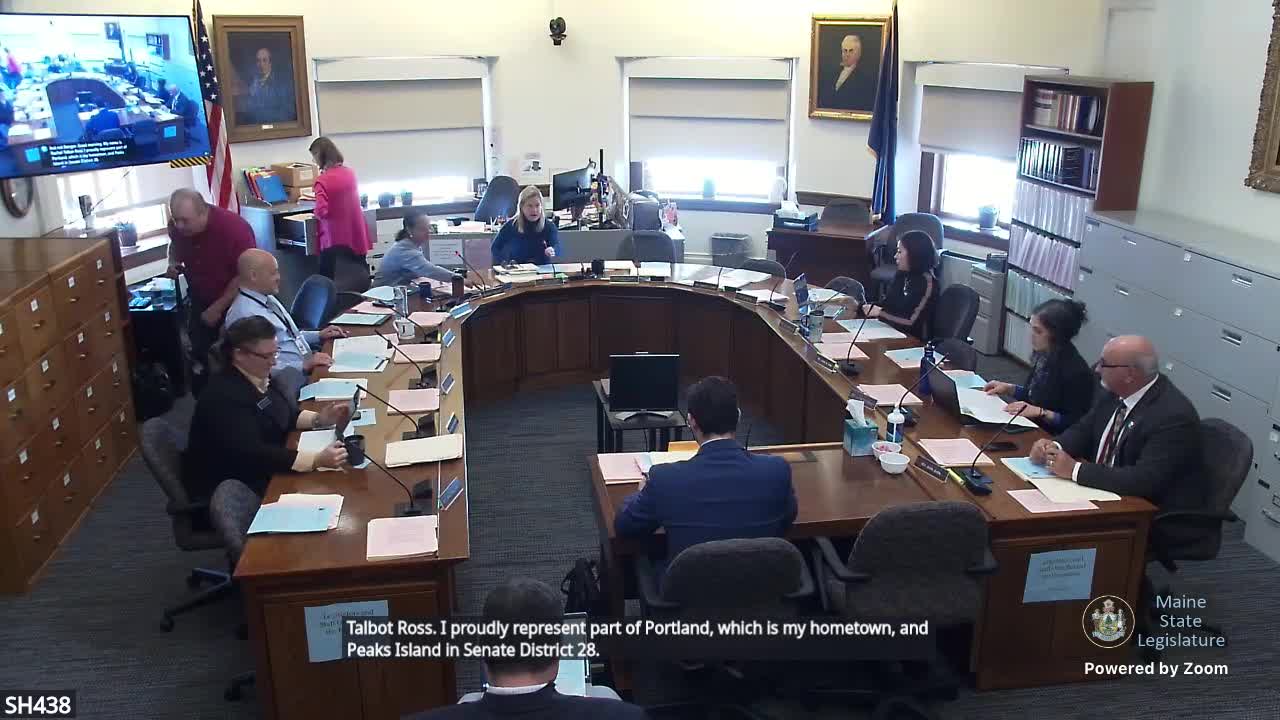
The Joint Standing Committee on the Judiciary held a work session on LD 10, a bill sponsored by Sen. Libby that would add political affiliation as a protected class to the Maine Human Rights Act, legislative analyst Eli Murphy said.
The Joint Standing Committee on the Judiciary held a work session on LD 10, a bill sponsored by Sen. Libby that would add political affiliation as a protected class to the Maine Human Rights Act, legislative analyst Eli Murphy said.
The bill would add political affiliation to the list of protected characteristics in the Maine Human Rights Act and includes a non-substantive correction to a repealed cross-reference related to protection orders, Murphy said. Proponents and analysts discussed concerns about the bill’s definition and the scope of its protections compared with similar statutes in other states.
Eli Murphy, legislative analyst with the Office of Policy and Legal Analysis, told the committee, “LD 10 would add political affiliation as a protected class to the Maine Human Rights Act.” Murphy noted that the bill also contains a separate technical correction of a repealed cross-reference related to protection orders that is not part of the bill’s substantive purpose.
Murphy read the bill’s definition for the committee: “political affiliation means belonging to or endorsing a party or particular political philosophy, creed, or ideal.” Committee members and witnesses discussed whether the definition in the bill should be broadened or clarified. A proposed amendment raised at the public hearing sought a more detailed definition of either political activity or political affiliation.
Committee members asked about how similar laws have affected enforcement workload in other states. Murphy said he and the Human Rights Commission’s executive director, Kit Thompson Crossman, were unable to determine a clear impact on case volume from California or New York. Murphy noted a key distinction: the California and New York provisions discussed at the hearing apply to employment settings, while LD 10 would extend protection to every jurisdictional class under Maine’s Human Rights Act, which is broader than the employment-only protections described in the attachments.
Murphy pointed the committee to the attached statutes for comparison. He summarized that New York’s applicable provision (included in materials as New York Labor Law section 201-d) “generally prohibits an employer or employment agency from discriminating against an individual because of the individual's political activities” carried out off duty and off employer premises, while California’s cited sections enumerate prohibited employer conduct that restricts employee political activity.
The committee discussed remedies shown in the materials; Murphy noted the attachments include examples of enforcement remedies, including remedies by the attorney general and private actions in the New York materials, and suggested members compare those to remedies currently in the Maine Human Rights Act. The technical cross-reference correction included in LD 10 was described as separate from the bill’s substantive protections.
No formal vote or committee decision on LD 10 was recorded in the portion of the work session in the transcript provided. Committee members and staff discussed definitional language and asked for more detailed comparisons and context about how employment-limited protections in other states operate versus a broader, Act-wide protection in Maine.
The committee chair, Sen. Anne Carney, opened the work session and turned the bill analysis to Eli Murphy; the record shows the analysis and clarifying exchanges but does not show a motion or final action in the excerpt provided. Further committee consideration, possible amendments and any subsequent votes would be recorded in later minutes or transcripts.
Ending: The work session continued with technical and definitional questions about LD 10; the committee did not register a final vote in the provided transcript excerpt. Additional testimony, proposed language changes and staff comparisons to other states’ enforcement experience were discussed as next steps.