Get Full Government Meeting Transcripts, Videos, & Alerts Forever!
Get email alerts on the Hemp Regulation topic
No spam. Unsubscribe anytime.
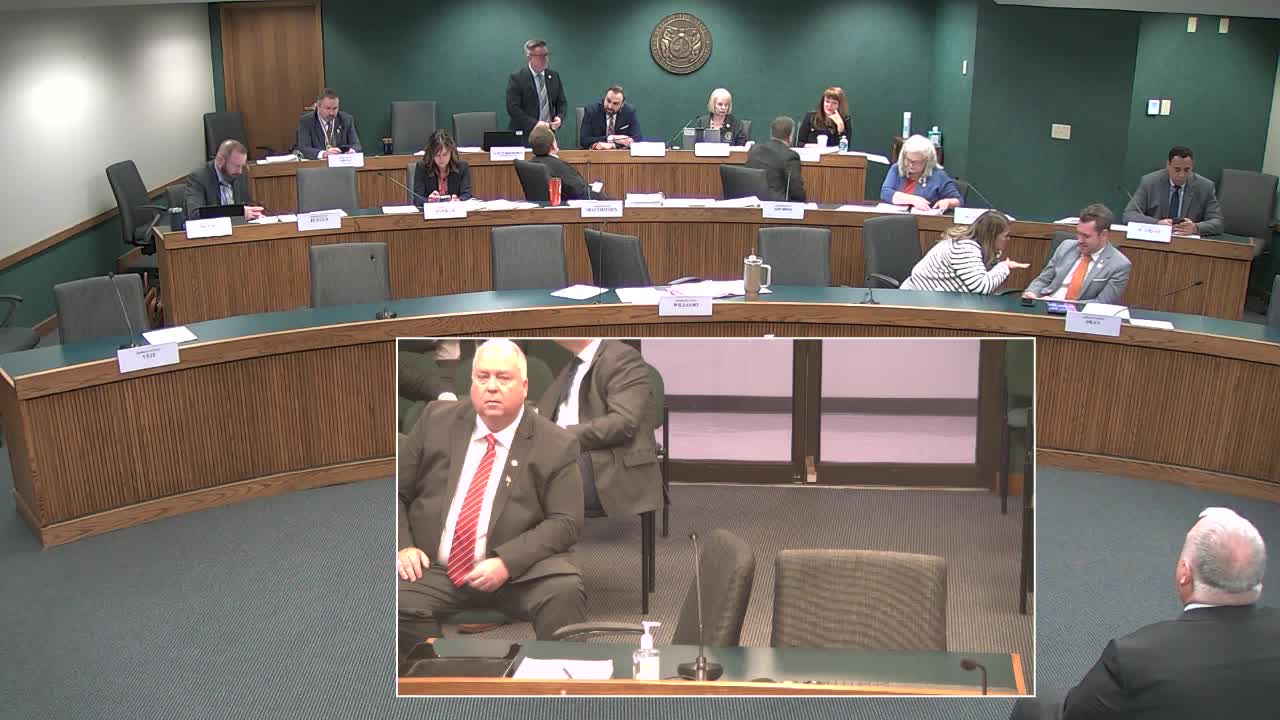
General Laws committee rejects House committee substitute for House Bill 393 on hemp products
Summary
After extended debate over testing, packaging and distribution rules for intoxicating hemp products, the House Committee on General Laws voted 5–7 to defeat the committee substitute for House Bill 393. Sponsors and several members described multiple compromises in the substitute; opponents said the committee had not fully vetted all changes.
The Missouri House Committee on General Laws voted down the House committee substitute for House Bill 393 on a 5–7 roll call, ending the committee's consideration of the substitute Thursday.
The substitute would have set testing, labeling and distribution rules for intoxicating hemp products (including THCA) and included several substantive compromises developed by the bill sponsor and stakeholders, the sponsor told the committee. The sponsor said, "we had 11 stakeholders plus myself in a room hashing through the bill trying to come up with solutions and compromises," and listed the principal changes in the substitute.
Why it matters: supporters said the substitute aimed to regulate an emerging market while protecting children and creating a predictable licensing and testing regime; opponents said the package included significant substantive changes that had not been publicly vetted and raised enforcement and safety concerns.
The substitute lowered a proposed per-serving potency cap to 5 milligrams (the sponsor said an earlier recommendation had been 100 milligrams), set a 4,500-gallon threshold tied to Missouri beer-distribution rules for a three-tier distribution requirement, and included a two-year compliance period for manufacturers already above that threshold. The sponsor also said the substitute raised the excise tax recommendation from 2% to 6%, removed a prior license-fee exemption so each retail location pays a $250 license fee, increased the civil fine in one provision from $250 to $1,000, and added testing and labeling requirements. The testing language in the substitute specified that a registered independent testing laboratory need not be reexamined if the lab is accredited to ISO/IEC 17025 or "registered with the Federal Drug Enforcement," and allergen requirements were revised to reference the FDA's identified allergens rather than a fixed list.
Representative Engel and others pressed for details about changes that had been folded into the substitute. Engel said, "Makes me really hesitant to vote on something that our committee hasn't vetted at all," and asked whether the committee had received testimony on a bill the sponsor said had been combined into the substitute (referred to in the transcript as House Bill 7 81 and the "3 40 b program"). The sponsor answered that those pieces had not been heard by the committee separately but were negotiated as part of the compromise.
Several members raised concerns about THCA and packaging. Vice Chairman Gregg relayed constituent concerns that "the longer that sits on the shelf the stronger it gets," asking whether packaging could prevent potency increases. The sponsor and other members said packaging and use-by dates (which the substitute requires) were the primary safeguards; the sponsor said testing at manufacture combined with packaging requirements should address most issues but acknowledged experts could elaborate further.
Representative Matitzson gave extended opposition remarks focused on public-safety and retail proliferation risks, saying the product is "a drug on the market that's affecting our kids" and arguing that broad retail availability would favor large corporate entrants over Missouri farmers. Representative Reuter offered an amendment (ending 0.03h) expanding intellectual-property protections in the bill to cover trademarks, copyrights and trade dress; that amendment was adopted into the substitute before the final substitute vote.
Committee members also debated testing scope and timing: the substitute requires testing at the manufacturer, and members noted there is no routine re-testing after distribution unless random sampling occurs. Members who opposed the substitute said that left a risk if packaging failures occurred during distribution or on retail shelves.
The clerk called the roll for the final vote on the substitute; the committee recorded five ayes and seven noes and the motion failed. The clerk later stated: "By your vote of, 5 ayes and 7 noes, you have failed to vote house committee sub due pass. That will end executive session and that will, that will complete all business before this committee."
With the substitute defeated, the committee took no further formal action that advanced a new substitute for House Bill 393 in this session.
Notes: The debate included many technical changes summarized above; members repeatedly asked for more stakeholder input and greater vetting of items that had been folded into the substitute.