Get Full Government Meeting Transcripts, Videos, & Alerts Forever!
Get email alerts on the Energy And Utilities topic
No spam. Unsubscribe anytime.
Senate Bill 4 clears House after extended debate over reliability, costs and consumer protections
Summary
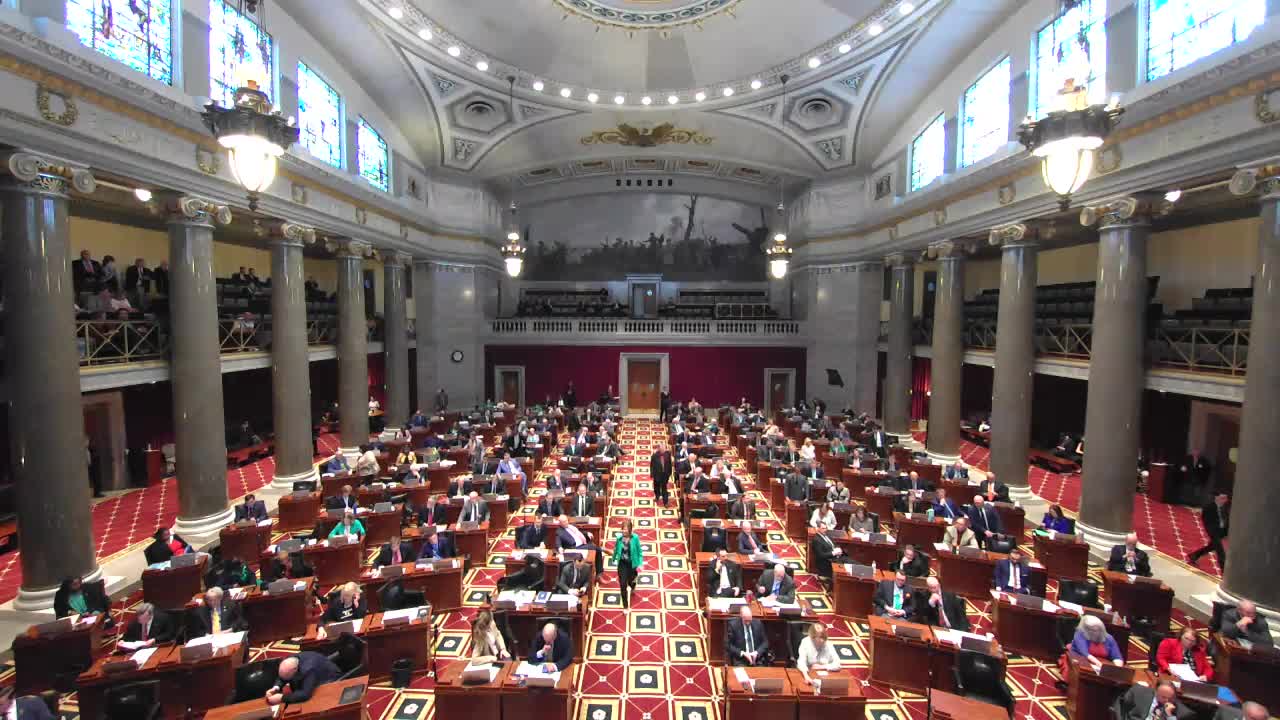
After extended debate on grid reliability, costs and consumer protections, the Missouri House on March 12 passed Senate Substitute No. 2 for Senate Bill 4 by a recorded vote of 96–44.
The Missouri House on March 12 approved Senate Substitute No. 2 for Senate Bill 4, a 33‑page package described on the floor as the "Power, Predictability and Reliability Act," by a recorded vote the clerk announced as 96 ayes and 44 nays.
Why it matters: Sponsors and supporters said the measure is intended to ensure grid reliability, spur replacement generation capacity (including natural‑gas and possibly small modular reactors in future), and keep Missouri competitive for energy‑intensive economic development projects. Opponents warned the bill could raise residential utility bills, increase fossil‑fuel generation, and transfer financial risk to ratepayers through provisions such as construction work in progress (CWIP) and future‑test‑year accounting.
On the floor, the sponsor identified as the Representative from Clay County opened debate by framing the bill as a bipartisan, negotiated package that reduces regulatory barriers to build new generation, strengthens Public Service Commission (PSC) oversight and includes consumer protections. "When we flip the switch, our lights come on," the sponsor said, arguing the bill protects households and businesses from volatile open‑market prices during tight supply periods.
Supporters emphasized worker and economic arguments. The Representative from Pulaski County described practical consequences of past outages and the costs some communities faced when buying emergency power at high market rates. Another supporter noted the bill includes an expanded role and funding for the Office of Public Counsel and other consumer protections negotiated in the Senate, including opt‑out rules for smart meters and provisions for low‑income customer discounts.
Opponents repeatedly raised the bill's possible effect on household rates. The Representative from Jackson County said many constituents "can barely afford their bills currently" and urged colleagues not to "condemn our children and future generations to poverty" by approving provisions that might drive rates higher. Environmental concerns were also raised: one member asked whether the measure would increase carbon emissions by favoring dispatchable fossil‑fuel generation when coal plants retire.
Key negotiated protections were highlighted by the sponsor and supporters: limits on the size and timing of recoverable CWIP amounts, a 2.25% rate‑impact cap tied to specific accounting treatments, a statutory cold‑weather rule preventing disconnections during forecast extreme cold, additional funding for the PSC to hire expertise, expanded Office of Public Counsel resources, and clawback provisions allowing the PSC to require utilities to return funds with interest if projects go over budget or fail to come into service on time.
The House debated a series of technical questions and inquiries to committee members and bill handlers, including discussion of construction work in progress, the definition of "dispatchable" generation, protections for municipal utilities and co‑ops, and the mechanics of future‑test‑year accounting. Supporters repeatedly argued the bill puts Missouri "in the headlights, not the taillights" on energy planning; opponents said it risks saddling ratepayers with costs for projects that may not deliver proportional public benefit.
Formal action and votes
- Motion: "I move that Senate substitute number 2 for Senate Bill 4 be truly agreed and finally passed." Mover: Representative (Clay County). Final tally announced by the clerk: ayes 96, nays 44; outcome: approved.
Context and clarifying details
- The House debate included extended questioning and multiple inquiries to members who had carried related provisions in committee; the transcript records a dense, hours‑long debate with many technical exchanges. - Supporters cited a recent near‑miss of system stress and warned that planning, permitting and construction for new baseload plants takes multiple years. - Opponents cited external studies and sample scenarios suggesting possible rate increases; proponents countered that many of those projections used assumptions (for example, conventional nuclear plant costs) not applicable to the projects most likely under this law (natural‑gas combined‑cycle and smaller modular options).
Provenance
This article draws on floor remarks beginning with the sponsor's introduction of the bill (floor remarks by the Representative from Clay County) and concludes with the clerk's final announcement of the vote that passed Senate Substitute No. 2 for Senate Bill 4.
Ending
After several hours of debate and multiple technical exchanges about consumer protections, accounting treatments and reliability needs, the House passed the bill 96–44. The transcript records both the bill sponsor's and critics' core arguments and the specific package of negotiated consumer protections added in the Senate; questions about long‑term rate impacts and environmental tradeoffs remained central in floor remarks.