Get Full Government Meeting Transcripts, Videos, & Alerts Forever!
Get email alerts on the Infrastructure Finance topic
No spam. Unsubscribe anytime.
Springdale approves $58.72 million water and sewer revenue bonds to finish west-side line
Summary
The council authorized $58,720,000 in water and sewer revenue bonds to complete a 48-inch water line tie to Beaver Water District and other system improvements; bonds mature to 2046 and are payable only from system revenues.
Springdale City Council on March 11 approved an ordinance authorizing the issuance and sale of $58,720,000 in water and sewer revenue bonds to finance extensions, betterments and improvements to the city’s water and sewer systems, including completing a 48-inch water line connection to Beaver Water District.
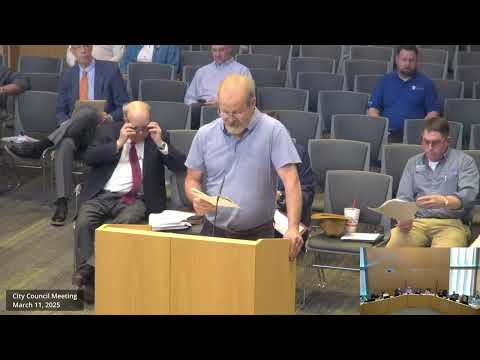
Heath (city staff presenter) said the financing will finish the west-side 48-inch water line, provide fire protection and water redundancy for future growth, and support sewer capacity improvements. Shep Russell, the city’s bond attorney, told the council the bonds were marketed that day and summarized the financing: the sale covers $58,720,000, the bonds run to 2046, and the net interest cost is 4.1 percent. Russell emphasized the city’s pledge is limited to system revenues. “I wanna be clear. There's no obligation on the city to pay these bonds except from the water and sewer system revenue,” he said.
Council members moved, seconded and the ordinance passed on an 8-0 vote; the council also adopted the ordinance’s emergency clause 8-0.
Why it matters: The bonds fund infrastructure intended to support growth on Springdale’s west side and to increase system redundancy and fire flows. The financing is structured as revenue bonds and therefore is payable from the water and sewer system revenues rather than the general fund.
What’s next: Bond sale and closing will proceed under the bond ordinance; staff will return with implementation steps and construction scheduling as projects advance.