Get Full Government Meeting Transcripts, Videos, & Alerts Forever!
Get email alerts on the Direct Care Workforce And Admin topic
No spam. Unsubscribe anytime.
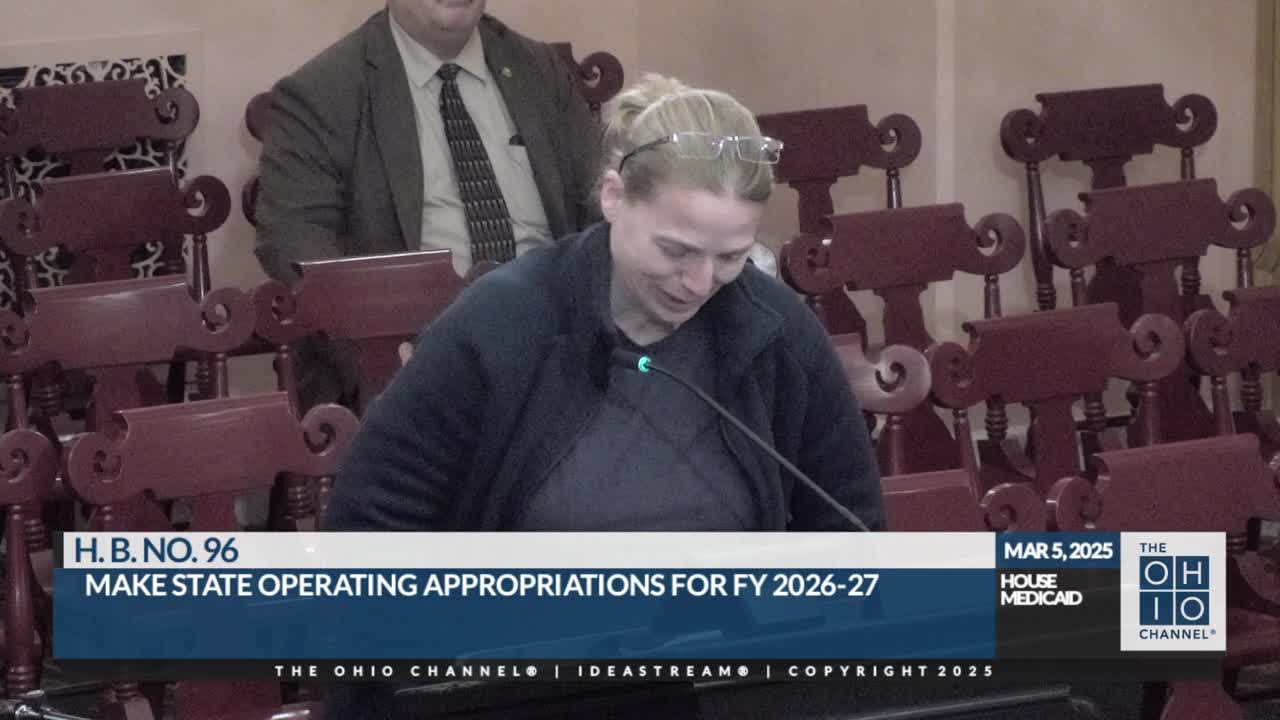
Disability advocates and families call for direct‑care wage protections and overhaul of prior‑authorization vendors
Summary
Multiple witnesses urged the committee to require wage pass‑throughs for Medicaid rate increases, create a direct‑care workforce task force and to review extensive use of outside contractors for prior authorization and pharmacy benefits after families reported denials and dangerous delays.
Several witnesses described persistent workforce and administrative problems in Ohio’s Medicaid‑funded home‑and‑community‑based services and asked the House Medicaid Committee to take legislative steps to stabilize care.
Georgie Elson, a MiCare waiver recipient, and Jay Marie Sowers, whose adult daughter relies on Medicaid home care, praised recent rate increases but urged additional actions: a built‑in cost‑of‑living adjustment for direct‑care wages, a requirement that agencies pass rate increases through to employees, and creation of a direct‑care workforce task force that includes people with disabilities.
Sowers described repeated prior‑authorization denials and vendor problems after state contractors took over pharmacy benefit and authorization functions. She said Gainwell Technologies placed a prior authorization on a seizure medicine for her daughter that had not previously required one, creating a days‑long medication gap; she also recounted long delays and payment‑error problems that left providers uncompensated. Sowers and others urged the committee to hold the Department of Medicaid accountable for outcomes under its outsourced contracts with Gainwell, PCG (Public Consulting Group) and other vendors.
Why it matters: Witnesses said workforce shortages and administrative denials threaten continuity of care for highly dependent individuals, increase family caregiver burden and risk institutionalization. Georgie Elson described the care crisis as ongoing and urged structural fixes so wages remain competitive and staffing stable.
Committee response: Members thanked witnesses and asked for rule references and documentation of prior‑authorization denials; Representative Barhorst requested follow‑up materials. No action was taken at the hearing; witnesses said they will provide written evidence and recommended statutory remedies.
Ending: Witnesses requested direct engagement with the committee to design a wage pass‑through, a workforce task force and corrective oversight for state contractors handling authorizations and pharmacy benefits.