Get Full Government Meeting Transcripts, Videos, & Alerts Forever!
Get email alerts on the Medicaid Expansion topic
No spam. Unsubscribe anytime.
Committee hears concerns about Group‑8 trigger and proposed work requirement waiver for Medicaid expansion
Summary
Advocates, providers and department officials discussed the administration's waiver and budget language that would allow suspension of Group‑8 (expansion) coverage if the federal match rate falls; witnesses urged caution and proposed mitigating approaches and transition timelines.
Lawmakers heard competing views on the administration's proposed waiver and budget language that would allow the state to suspend Group‑8 (the ACA Medicaid expansion population) coverage if the federal medical assistance percentage (FMAP) falls below the current 90%.
Advocates and provider groups warned the committee that an abrupt cutoff would create substantial disruption. Sarah Hudasek of Advocates for Ohio's Future said the provision could affect approximately 770,000 Ohioans covered under expansion and that sudden loss of coverage without transition would likely increase uninsurance and reduce preventive care access.
The nut graf: Advocates asked the committee to alter the language so any FMAP decline triggers an off‑ramp or buffer — for example, a phased timeframe or a higher threshold — rather than immediate suspension. They argued that many people would face gaps in care and that premium credits and employer coverage do not reliably substitute for Medicaid for low‑income workers.
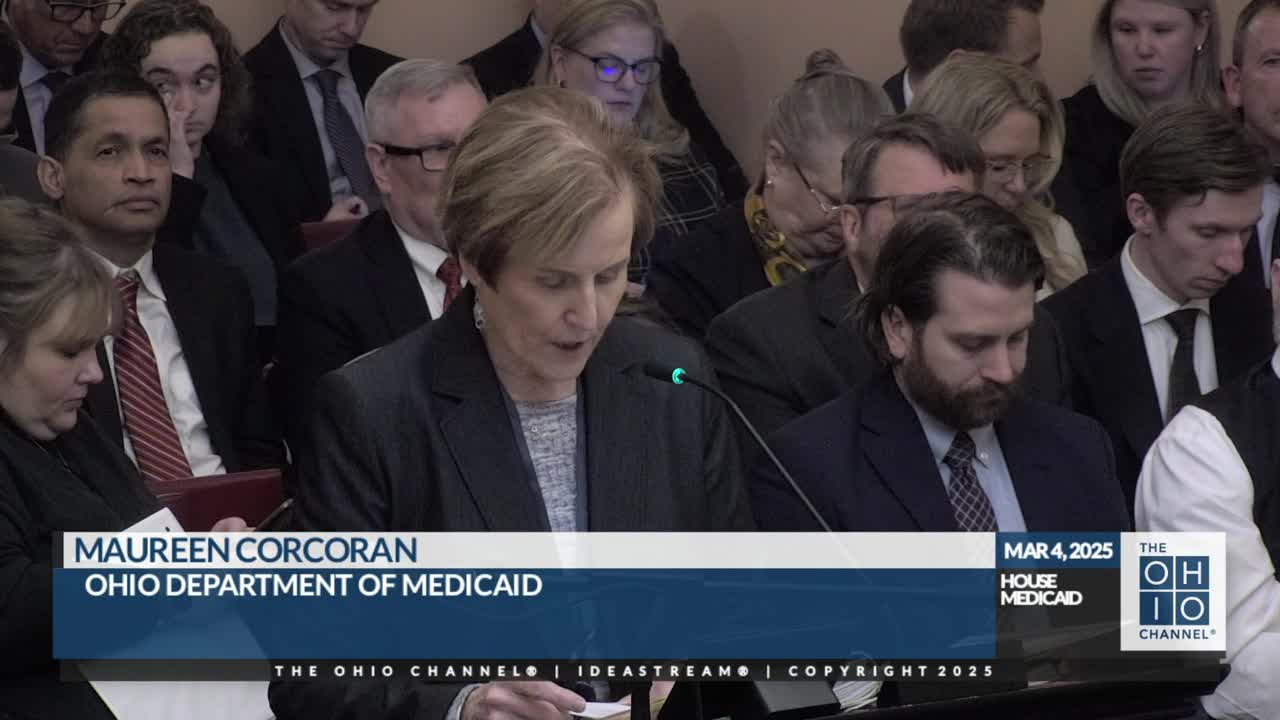
Department context and fiscal math: Director Corcoran and budget staff explained that a 5‑percentage‑point drop in FMAP would increase state costs materially (department staff described roughly $390,000,000 per year for a 5% change in one example), and the administration's language aims to protect the state's fiscal position. Corcoran noted statutory requirements to submit a waiver for the expansion population as part of House Bill 33 and described ongoing planning for voluntary activities and supports tied to the waiver.
Public comment and lived experience: Jennifer Kucera of the Ohio Olmstead Task Force described how caregivers and people with disabilities rely on Group‑8 coverage and said losing expansion could force caregivers to stop working or push some people into nursing homes. “It would be devastating,” she told members, adding personal testimony about the difference Medicaid made for her independence and ability to live at home.
Ending: Committee members asked for alternatives and clarifications, including possible phased timelines and cost scenarios. Advocates urged lawmakers to ensure members would receive adequate notice before any coverage change and to consider mitigation and off‑ramps in the budget language rather than an immediate trigger.