Get Full Government Meeting Transcripts, Videos, & Alerts Forever!
Get email alerts on the Nursing Home Reimbursement topic
No spam. Unsubscribe anytime.
Nursing home providers press for careful PDPM implementation and capital‑rate reform in Medicaid rates
Summary
Representatives of skilled nursing providers urged the Medicaid Committee to adopt an acuity adjustment focused on nursing under PDPM, allow a phased implementation with stop‑loss protections, and reform capital payments to better reflect facility condition and private rooms.
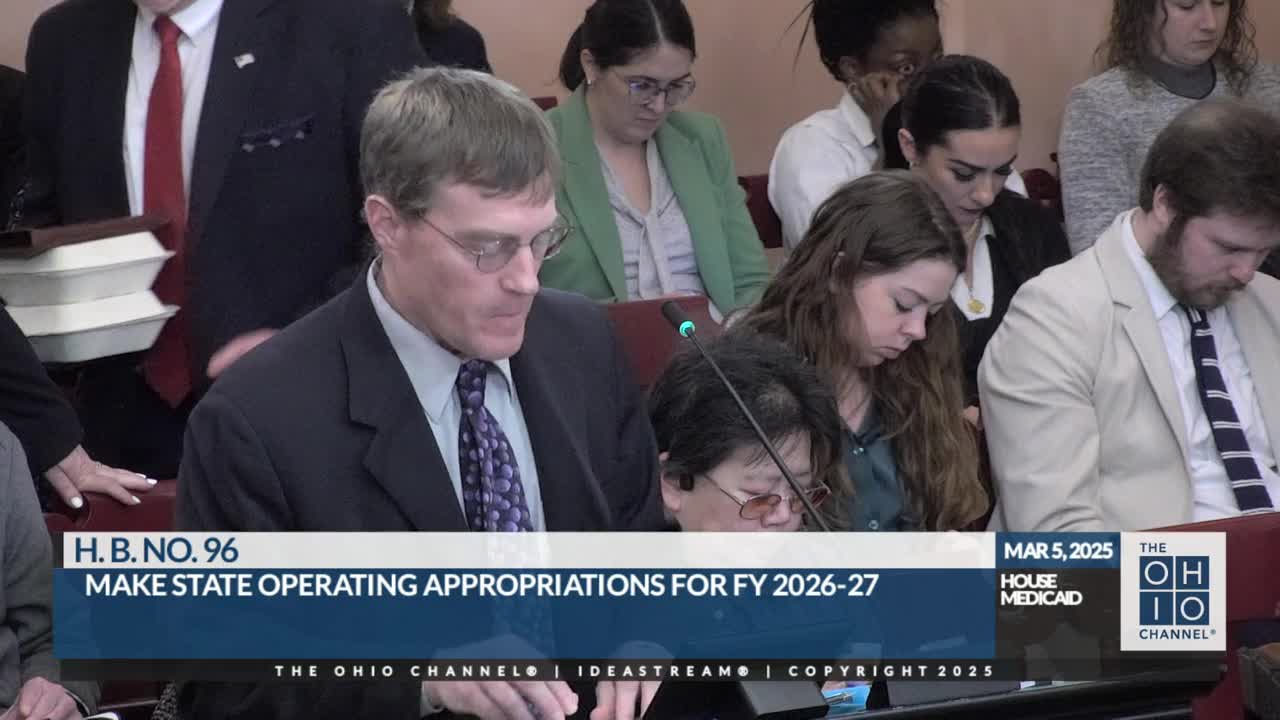
Chris Murray, CEO of the Academy of Senior Health Sciences and a representative for skilled‑nursing providers, told the House Medicaid Committee that House Bill 96’s proposed changes to how Medicaid adjusts direct‑care payments should rely on the nursing component of the Patient‑Driven Payment Model (PDPM) for long‑stay Medicaid residents.
Murray said Medicare’s PDPM divides facility reimbursement into five components — physical therapy, occupational therapy, speech, non‑therapy ancillaries and nursing — and that Medicaid should use the nursing component to align long‑stay reimbursement with residents’ needs because most long‑stay services are delivered by nursing staff.
He also asked for a transition timeline: a full year for providers to adjust, followed by an interim stop‑loss/stop‑gain quarter before full implementation. On capital rates, Murray criticized the existing single price that ignores facility age, upgrades and quality. He suggested a blended system with an appraised fair‑rental value plus quality elements and supported removing the private‑room cap.
Why it matters: Acuity adjustments and capital payments drive facility revenue and staffing decisions. Murray said prior adjustments had been driven by therapy utilization under older RUGs systems and PDPM intends to match reimbursement to clinical characteristics rather than therapy hours.
Committee dialogue: Representative Stevens asked how acuity differs from quality measures; witnesses clarified that acuity measures clinical resource needs (activities of daily living, wound care, nursing time) while quality measures evaluate outcomes (pressure ulcers, infection rates). Murray and committee members discussed how acuity values translate into direct‑care payment multipliers and how to preserve quality incentives.
Ending: Providers asked the committee to allow phased implementation and financial protections while revising capital payments and removing the private‑room cap to better support residents’ quality of life.