Get Full Government Meeting Transcripts, Videos, & Alerts Forever!
Get email alerts on the Pharmacy Access And Pbm topic
No spam. Unsubscribe anytime.
Ohio Medicaid credits single PBM with transparency and savings; pharmacies and lawmakers ask about deserts
Summary
Director Corcoran and the Medicaid pharmacy director reported large savings from a single pharmacy benefit manager and higher dispensing fees, while committee members and pharmacy witnesses raised concerns about pharmacy closures and access in some counties.
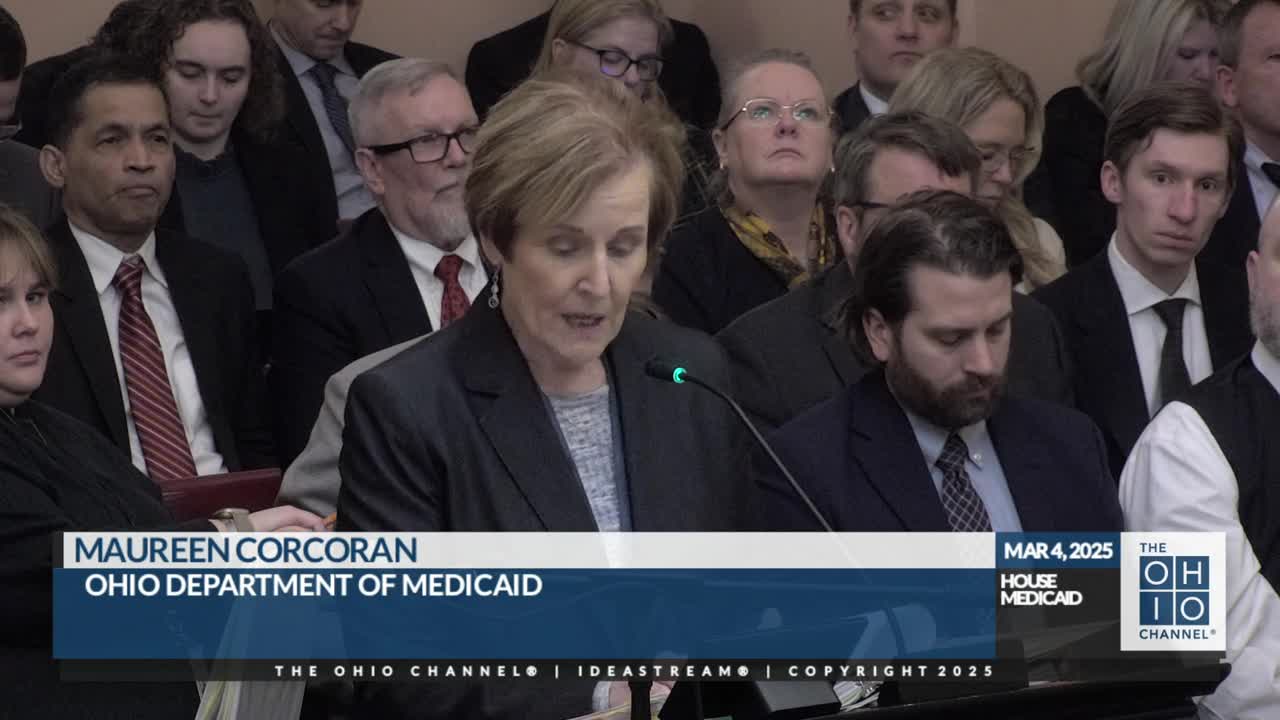
Ohio Medicaid told the House Medicaid Committee that its single pharmacy benefit manager and unified drug-list approach have yielded administrative savings and improved transparency — and have allowed the agency to identify lost rebates tied to 340B contract-pharmacy claims.
Director Maureen Corcoran reported that the state's single PBM recorded about $139.5 million in savings in its first two years and roughly $333 million in administrative savings. She also said the state increased the average dispensing fee from roughly 73¢ to about $9 per fill, which she said “yields about $700,000,000 that would have been paid to pharmacy benefit managers.”
Committee questions focused on pharmacy deserts and local access: Representative Barhorst asked whether closures have affected Medicaid members’ ability to fill prescriptions locally. Sean Eckert, the department’s pharmacy director, acknowledged a national trend of pharmacy closures — including large chains — and said Ohio still has contracted pharmacies in all 88 counties and that the single PBM offers home delivery and mail-order options.
Eckert said the department conducts quarterly network adequacy analyses by county and that some counties have only a single contracted pharmacy. He told the committee the department can produce churn data by county (pharmacies lost vs. added) and that home delivery and transportation options can mitigate access in thin counties.
Why it matters: Pharmacy access is part of Medicaid beneficiaries’ routine care. Department figures showing PBM savings and increased dispensing fees are key inputs to the budget package; local access challenges prompted lawmakers to ask for county-level network analyses.
What to watch: The committee requested county-level pharmacy network data and details on contract-pharmacy participation to monitor any access trade-offs while the state pursues rebate recapture associated with 340B claims.
Ending note: The department said it will provide deeper county-level data on closures and mail-order/home-delivery use; pharmacies and some lawmakers signaled they will keep monitoring adequacy in rural and high-poverty areas.