Get Full Government Meeting Transcripts, Videos, & Alerts Forever!
Get email alerts on the Pharmacy Pbm 340b topic
No spam. Unsubscribe anytime.
Single PBM and 340B changes draw scrutiny as Ohio tracks lost drug rebates and pharmacy access
Summary
Department witnesses said a single pharmacy benefit manager has increased transparency and produced drug and administrative savings, while the department is proposing changes to 340B contract‑pharmacy claims to recoup rebates it says have been lost.
The Ohio Department of Medicaid told the committee that the state's single pharmacy benefit manager (PBM) and the Ohio Medicaid Enterprise System (OMES) have substantially improved visibility into prescription drug use and costs.
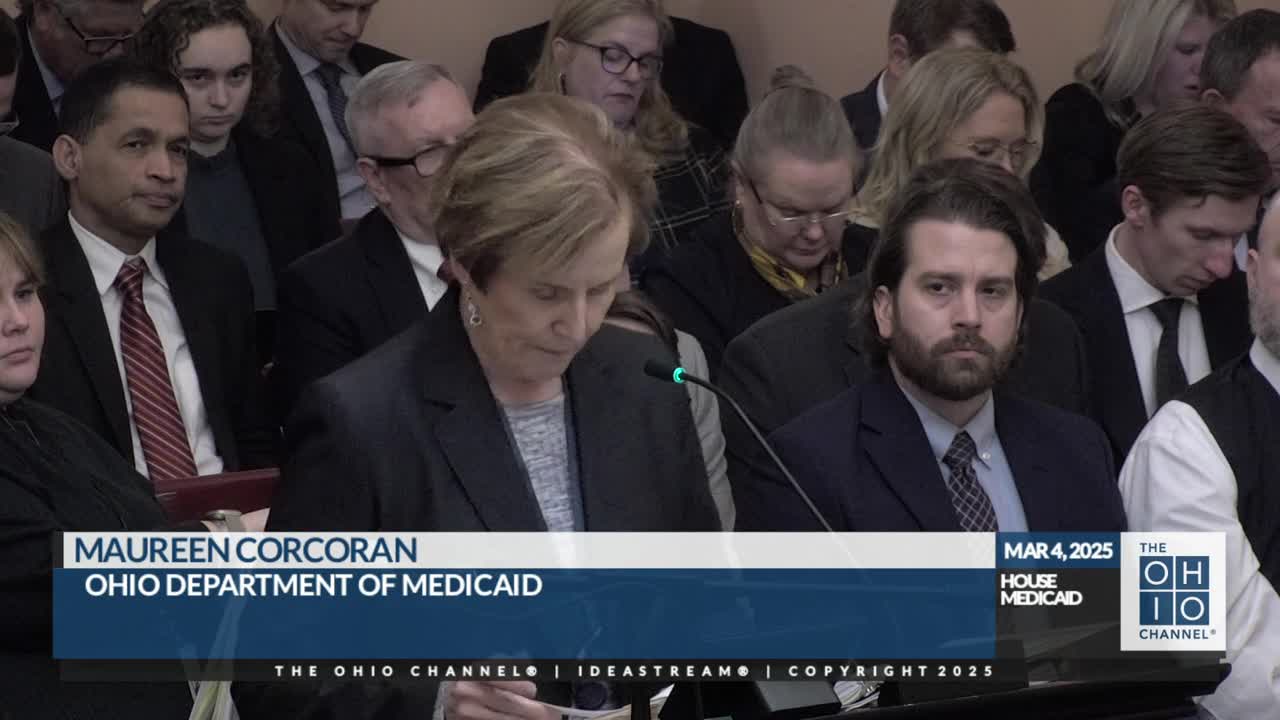
“Today, more than 99% of all pharmacies in the state are Medicaid providers,” Director Maureen Corcoran said during testimony. She told members the single PBM helped identify previously unseen rebate losses tied to 340B contract pharmacy claims and allowed the department to book significant savings and administrative reductions.
The nut graf: Medicaid officials said visibility from a single PBM allowed them to identify growth in 340B claims and to estimate that the state had lost more than $323,000,000 in rebates because of contract‑pharmacy arrangements. The department is proposing changes that would exclude contract‑pharmacy transactions from higher billings that produce rebate shortfalls, while preserving grantee operations for federally qualified health centers (FQHCs) where possible.
Pharmacy access and deserts: Sean Eckert, pharmacy director for Ohio Medicaid, told the panel the issue of “pharmacy deserts” is national but Ohio's single PBM now maintains a pharmacy in every county and offers home delivery and mail options. “We do have at least 1 pharmacy that's contracted with the PBM in all 88 Ohio counties,” Eckert said, and the PBM maintains network adequacy analyses by county.
340B and rebate mechanics: Corcoran and Eckert explained that 340B federal program rules allow certain grantees to purchase drugs at discounted prices and bill Medicaid at higher prices; the spread is intended to fund grantee services. The department said expansion of hospital participation in 340B after the Affordable Care Act has raised visibility and rebated revenue concerns. Corcoran said contract‑pharmacy claims doubled recently after the department obtained PBM data, and the department estimated lost state rebates of roughly $323,000,000. The department told committee members it is working with grantee groups and the Health Center Association to avoid unintended impacts on FQHCs.
What proponents and opponents said: Providers and pharmacy stakeholders pressed the committee for data on closures and network adequacy. County lawmakers and members asked about how changes would affect rural access. The department said it is trying to balance recouping rebates with maintaining access and that contract pharmacies already are enrolled and contracted with Ohio Medicaid and the PBM.
Ending: The department recommended policy language targeting the rebate loss while preserving grantee operations where possible and working with stakeholders on mitigations; committee members asked for follow‑up data on county‑level network changes and on the projected federal share of any recovered rebate revenue.