Get Full Government Meeting Transcripts, Videos, & Alerts Forever!
Get email alerts on the Land Use And Development topic
No spam. Unsubscribe anytime.
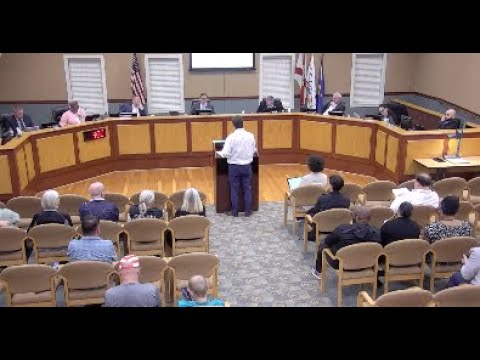
St. Cloud council approves settlement to end concrete‑crushing at Hickory Place, adopts industrial zoning with conditions
Summary
After months of legal proceedings and neighborhood complaints about a concrete‑crushing operation, the St. Cloud City Council approved a settlement requiring the crusher to stop within 45 days, a 10% reduction of accrued code fines contingent on compliance, and rezoned the parcel to an industrial PUD with use restrictions and site‑plan review.
The St. Cloud City Council approved a settlement with Hickory Tree Industrial LLC on March 13 that calls for the concrete‑crushing operation on Parcel 1 of Hickory Place Industrial Park to cease within 45 days and for the property to be rezoned to an industrial planned unit development with limits on permitted uses.
City Attorney Dan Menzares told the council the settlement “provides that the concrete crushing facility will stop existing and operating on that property within 45 days.” He said the agreement also would bar the crushed‑material operation from future permitted uses on the parcel and would include a negotiated list of lighter industrial uses allowed under the PUD.
The settlement resolves a statutory challenge filed under Section 70.51, Florida Statutes, after the council denied a land‑use and zoning request in November 2023 and the special magistrate recommended the council’s denial of the land‑use change was “unreasonable and unfairly burdened” the property. The magistrate recommended the crushing operation not be allowed to continue on the parcel; the settlement adopts that outcome while creating a narrower list of permitted future uses and post‑approval controls.
Neighbors urged the council to remove the crusher. Resident Jennifer Torres said the crushing “affects us. We live there … it’s not the same” and asked the council to consider residents’ health and quality of life. Other nearby homeowners echoed concerns about noise, dust and vibration.
Brent Spain, attorney for the property owner, summarized remaining bargaining points as the parties neared agreement: “We’re essentially down to the 2 issues,” he said — the amount of the code‑enforcement fine and the type of opaque screening required along the property edge. The parties negotiated a compromise on both points at the council dais.
Key settlement terms voted by council include: - The crusher must cease operating on Parcel 1 within 45 days of the agreement’s effective date, or sooner if existing materials are processed. The operator must remove or relocate the crusher from the property within that time frame, and any remaining unprocessed material must be removed within 75 days. - During any wind‑down period before full removal, the agreement limits crushing activities to Monday through Thursday from 9 a.m. to 4 p.m., restricts deliveries of new material, and limits truck loading to help reduce neighborhood impacts. - The outstanding code‑enforcement fine (reported in materials and staff briefings as roughly $126,000 accrued across related proceedings) will be reduced to 10% of the assessed amount — roughly $12,600 — but only if the property is brought into compliance in accordance with the settlement terms. The reduction is contingent on demonstrated compliance and is not effective until the council finds the terms satisfied. - The land‑use designation for the parcel will be changed to industrial and the zoning will be I‑3 with a PUD. The PUD will list permitted uses that exclude the existing concrete‑crushing activity and allow staff and, by council direction, the council itself to impose performance standards (setbacks, buffers, operations restrictions) at the site‑development stage. - The parties negotiated the language about screening: the council approved deleting the draft subparagraph that would have deferred the exact type of opaque screen until site plan review and instead required the applicant to bring any site development plan back to the council for review, giving the council a final say on the need for a masonry wall or other screening. Staff had estimated a masonry wall could cost on the order of $151,000 plus roughly $17,000 in engineering; the applicant argued screening type should be decided at site‑plan review.
Council action and votes A motion to approve the settlement (including the 10% fine reduction contingent on compliance, the crusher wind‑down schedule, the PUD with the permitted‑uses list, and removal of the draft paragraph deferring screening type to staff) passed on a 3–2 vote: Mayor Robertson, Council member Paul and Council member Urban voted yes; Council member Gilbert and Deputy Mayor Fletcher voted no. The council then adopted implementing ordinances to change the land‑use and zoning for the parcel; both ordinances passed by majority votes recorded on the final public hearing.
Why it matters The settlement resolves a long‑running dispute that neighbors said has eroded the quality of life in adjacent residential neighborhoods. It removes the active crushing operation from the site, limits activity during the wind‑down, and creates a PUD intended to limit future uses and give the city enforceable performance standards at the site‑plan stage. The council’s vote also reduces the accrued code‑enforcement fine as part of the compromise, but only if the owner meets the settlement’s compliance milestones.
What’s next If the property owner complies with the 45/75‑day removal timeline and other settlement terms, the 10% reduced fine becomes payable as specified in the agreement. Any future development on Parcel 1 will require a site‑development plan; under the approved motion, council review of that plan is required so council members will have a public opportunity to weigh in on screening, buffering and operational limits before final permits are issued. The city attorney said the settlement contains enforcement provisions, including recovery of city costs and potential remedies for breach.
The council’s action resolves the administrative challenge under Section 70.51 and aims to prevent further operation of the crushing equipment on the property while establishing a path for limited industrial redevelopment under a PUD.