Get Full Government Meeting Transcripts, Videos, & Alerts Forever!
Get email alerts on the School Vouchers topic
No spam. Unsubscribe anytime.
Lakota Board votes 3-2 to join state coalition challenging Ohio voucher expansion
Summary
After a two-hour discussion and a Q&A with three state legislators who support vouchers, the Lakota Board of Education voted 3-2 to join the Ohio Coalition for Equity and Adequacy of School Funding, a group associated with litigation over the state’s voucher expansion.
The Lakota Board of Education voted 3-2 on March 12 to join the Ohio Coalition for Equity and Adequacy of School Funding, the board said, signaling its intent to participate in litigation challenging the state’s recent expansion of EdChoice vouchers.
Board members cast roll-call votes after roughly two hours of discussion and a question-and-answer session with three state lawmakers: State Senator Lang, State Representative Thomas Hall and State Representative Jennifer Gross. The motion to join the coalition passed with three members voting yes and two voting no.
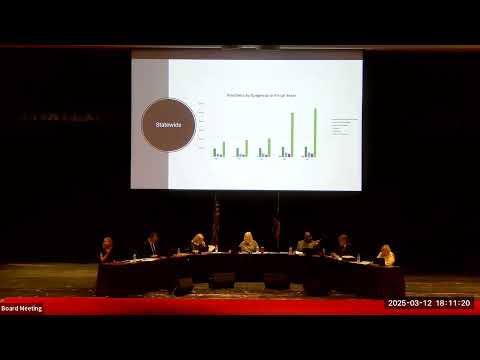
The vote followed a board presentation that reviewed state and local funding figures and a demographic breakdown of voucher recipients. The board’s staff presented a slide that listed the state’s “base cost per pupil” at $8,241.61 and a calculated state average distribution figure near $5,707 per pupil; the district’s share of that base was shown as about $2,839.15. Board staff also noted that, under materials reviewed for House Bill 96 and the EdChoice expansion, some private providers in Butler County were receiving average payments reported in the meeting at roughly $4,186 per pupil and that a single provider’s average payment was cited at $5,337.
Board members and staff highlighted operational impacts beyond the voucher payment itself: Lakota continues to be responsible for transportation and for special‑education services for district residents, even if those students attend private schools. “The state dollars follow the child in the backpack,” said Representative Jennifer Gross, adding that local property taxes and certain federal funds continue to remain with the district.
All three visiting legislators said they support school choice. “I’m a strong believer in vouchers,” Senator Lang said during the meeting, adding that he favors market competition among schools. “Vouchers are here to stay,” Representative Hall said, and pledged to continue work on the state budget and the voucher program in the legislature. Representative Gross described parental choice as central to her position and said private schools must still meet many state requirements.
Board members who voted to join the coalition pointed to concerns about distributional effects and local fiscal impacts. Board President (by custom the meeting chair) and other members cited the district’s enrollment and funding profiles, the differences between total per‑pupil revenues and the state share that follows a student, and what they described as a growing share of voucher recipients who had not previously been enrolled in Lakota schools.
Opponents on the board said they support parental choice but opposed joining the coalition at this time. One board member said the district should continue dialogue with legislators and examine additional data before formal legal action. The motion passed 3-2 (Horton yes, French yes, Dee no, Casper yes, Schaefer no), according to the roll call recorded by board staff.
The board’s discussion also included legal and constitutional references. Representative Gross cited Zelman v. Simmons‑Harris (2002), the U.S. Supreme Court decision upholding certain scholarship programs, and board members raised Article VI, Section 2 of the Ohio Constitution during the conversation. Board members asked the legislators for more information on program outcomes, reporting and accountability for private providers receiving state scholarship dollars.
Before the vote, the board agreed that any participation would be coordinated with the Lakota Education Association if that partnership and shared financial responsibility were part of the association’s proposal. Board members asked legislators and staff for follow‑up information, including state revenues, provider payment detail and proficiency/growth reporting for scholarship students.
The board made no change to district operations at the meeting beyond the vote to join the coalition. Members said they would continue outreach with state lawmakers and review additional data before authorizing further legal or financial commitments.