Get Full Government Meeting Transcripts, Videos, & Alerts Forever!
Get email alerts on the School Safety Youth Protection topic
No spam. Unsubscribe anytime.
County and clinicians urge measures to protect children: age limits, safe storage and supports
Summary
Multnomah County public‑health officials, child and adolescent psychiatrists and Everytown testified that gun violence harms children directly and indirectly, and recommended safe storage, youth‑focused interventions and raising the minimum age for certain semi‑automatic rifles to 21.
Speakers from Multnomah County public health, child psychiatry and the advocacy group Everytown presented the scale and consequences of firearm harm to young people and urged policies to reduce youth access to the most lethal weapons.
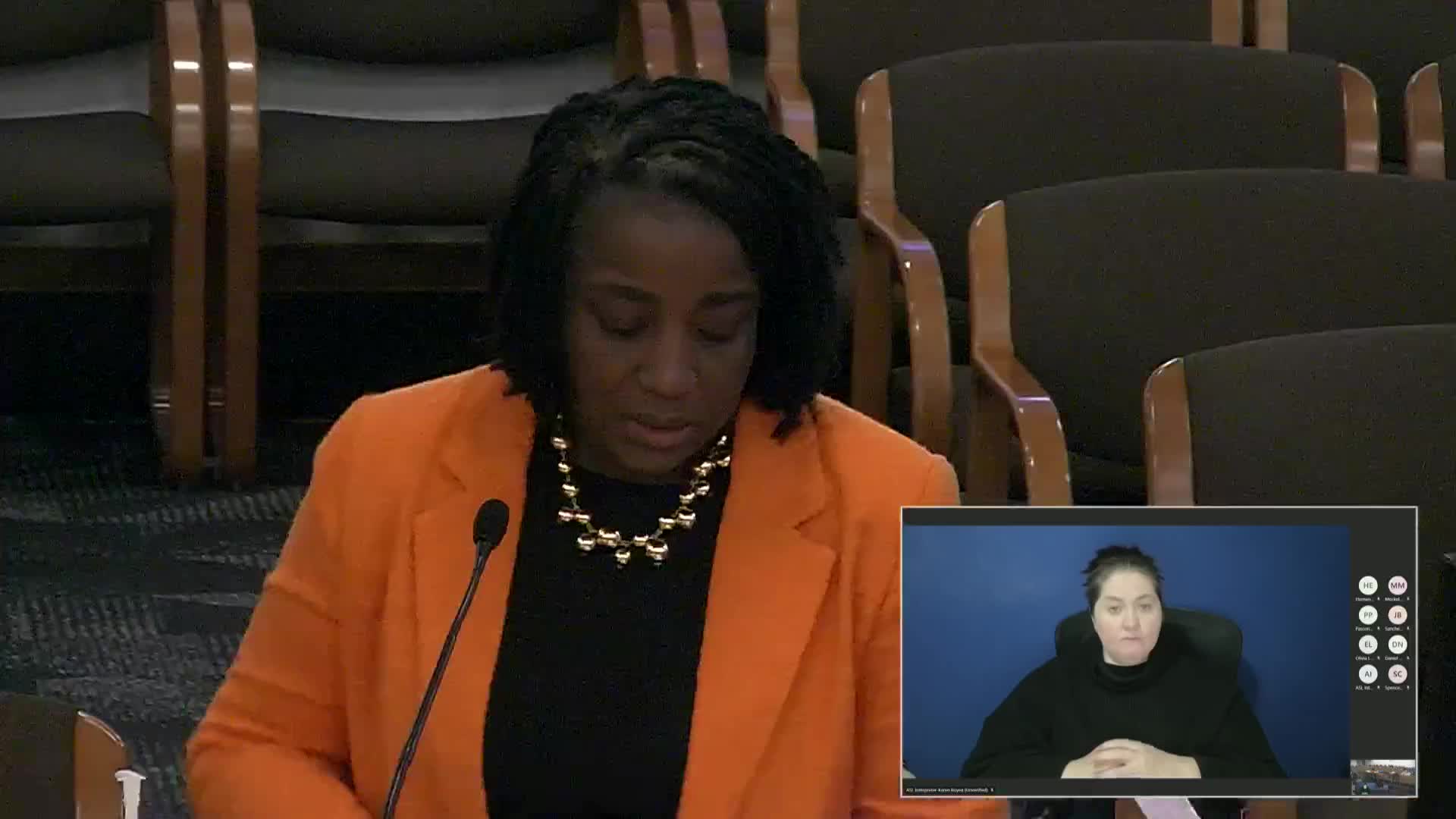
Charlene McGee, director of Multnomah County’s Prevention Health Promotion Unit, said that violent crime and homicide mortality rates in Multnomah County are more than twice the Oregon average and that BIPOC youth are disproportionately affected. McGee cited school‑survey data showing that 27% of Portland Public School students reported witnessing someone being attacked, stabbed or shot in their neighborhood, with higher rates among Black (40%), Latino (31%) and multiracial (31%) students.
Dr. Daniel Nikolai, a child and adolescent psychiatrist representing the Oregon Psychiatric Physicians Association, described clinical impacts: children and teenagers experience anxiety about school shootings, traumatic grief after losing family members to gun violence, and long‑term psychiatric needs in many cases. He noted firearms surpassed motor‑vehicle crashes as the leading cause of death in under‑19s in 2020 and said clinicians increasingly see school‑related fear and related school avoidance.
Olivia Lee, senior counsel for Everytown for Gun Safety, urged lawmakers to set a minimum purchase age of 21 for semi‑automatic assault weapons, noting that Oregon currently allows residents 18–20 to buy some AR‑style rifles while handguns typically require purchasers to be 21. Lee cited examples — including the Uvalde shooter and other mass shootings — where perpetrators obtained assault weapons around age 18 and argued that a narrow age restriction on assault‑style rifles could be crafted to allow hunting firearms to remain available to 18–20 year olds while restricting access to the most lethal types of semi‑automatic rifles.
Presenters recommended a mix of prevention strategies: safe storage campaigns, investments in community and school‑based prevention, mental‑health supports for youth, improved data collection on firearms on campuses, and consideration of minimum age restrictions for certain firearm types.
Committee members did not take action during the informational hearing; presenters offered to provide data and technical assistance to staff.