Get Full Government Meeting Transcripts, Videos, & Alerts Forever!
Get email alerts on the Self Sufficiency And Human Services topic
No spam. Unsubscribe anytime.
Broad Public Testimony Urges Full Funding for Self‑Sufficiency Programs in SB 5526
Summary
Dozens of advocates, service providers and clients urged the Joint Subcommittee on Human Services to fully fund Self‑Sufficiency programs in Senate Bill 5526, including Double Up Food Bucks, hunger-response funds, domestic-violence survivor assistance, refugee case management and youth homelessness services.
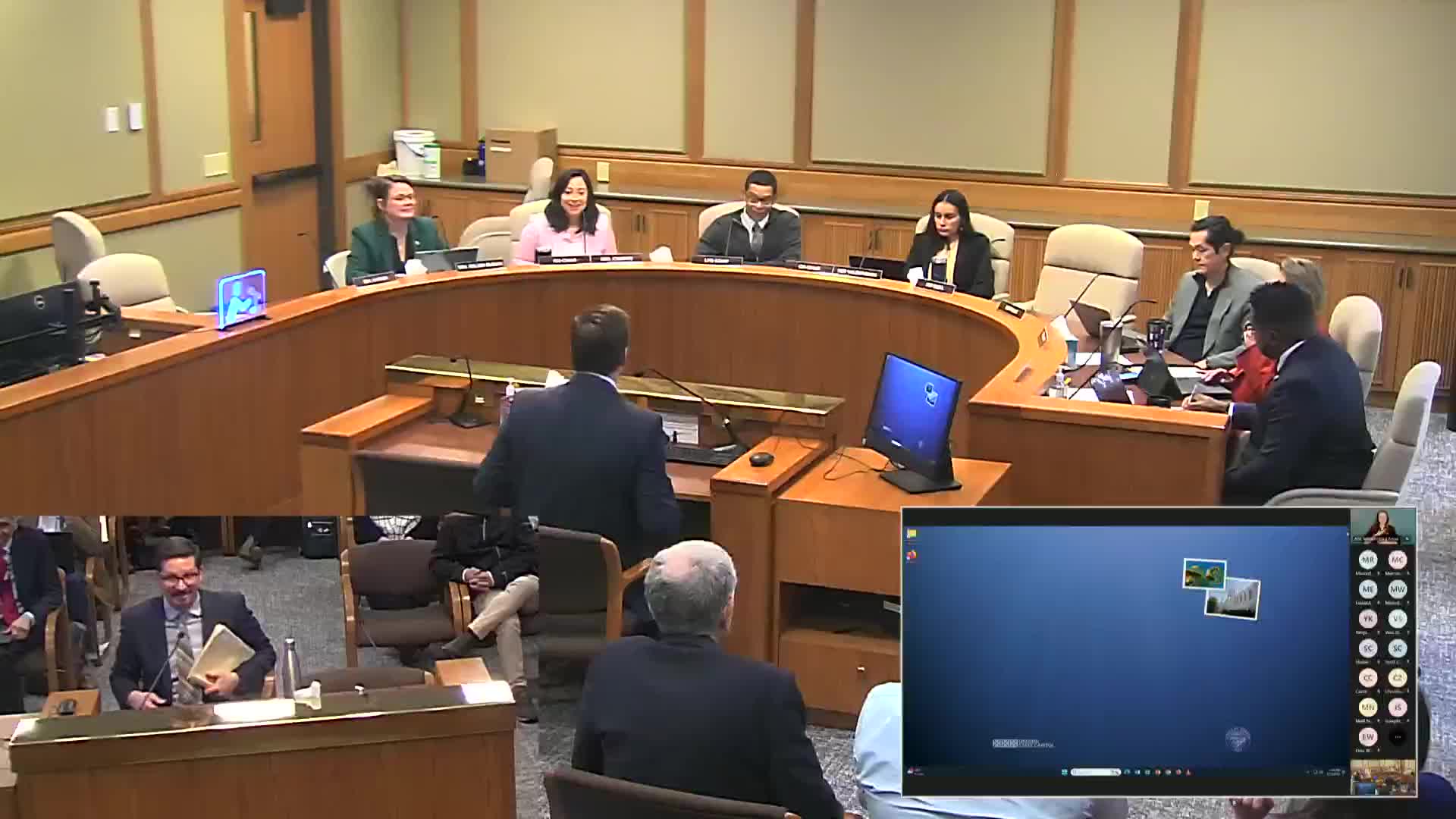
Salem — During the March 13 public hearing on Senate Bill 5526, dozens of individuals and nonprofit leaders delivered two-minute testimonies urging full funding for self-sufficiency programs that support food access, survivors of domestic violence, refugees and youth experiencing homelessness.
Who spoke and why: Rachel Ward, director of the Farmers’ Market Fund, said the Double Up Food Bucks program matches every dollar of SNAP spent at participating outlets with an additional dollar to buy Oregon-grown fruits and vegetables; she said Double Up operated at 216 farmers markets, farm stands, CSAs and grocery stores and that in 2024 it facilitated about $5,500,000 in produce purchases. Ward and other witnesses asked the committee to continue state funding so that the program can leverage federal SNAP spending and expand reach.
Partners for Hunger Free Oregon (Sarah Weber Ogden and Chris Baker) and Oregon Hunger Task Force representatives testified that SNAP and complementary programs such as Double Up and the Elderly Simplified Application Process help reduce food insecurity, which has risen since federal emergency pandemic benefits ended. Professor Mark Edwards of Oregon State University provided historic context, saying safety‑net investments in prior downturns reduced food insecurity and urging continued state investment.
Nonprofit and business testimony: Melissa Brown, owner of Kiva Grocery & Deli in Eugene, said Double Up serves about 1,600 unique SNAP shoppers per month at her store and brings federal dollars into local economies. Holly Hutchison of the Pacific Northwest CSA Coalition described how Double Up increased CSA participation and farm revenues; she said participating farms saw substantially larger average profits in 2024 compared with 2018.
Survivor and domestic-violence programs: Carrie Moran, director of the Oregon Coalition Against Domestic and Sexual Violence, and Ashley Carson of the Center for Hope and Safety supported funding lines in SB 5526 for the Survivor Investment Partnership, co‑located advocacy and the Temporary Assistance for Domestic Violence Survivors (TADVS) grant. Testimony said co‑located advocates work inside ODHS offices to provide confidential safety planning and that in fiscal year 2024 co‑located advocates served 6,297 survivors. Carson and Moran gave examples in which TADVS funds (historically up to $3,200 per eligible family) helped pay deposits, first/last month rent and emergency shelter costs; a witness said FY24 data showed 8,794 families were eligible for TADVS.
Refugee, immigrant and legal services: Multiple service providers urged continued funding for extended case management (ECM), refugee employment services and immigration legal services that are funded through ODHS. Rebecca Zorn of Lutheran Community Services Northwest and Mohsin Jamal of Salem for Refugees described client outcomes under ECM, including emergency food and cash assistance, health‑plan enrollment and referrals to employment services; Zorn cited an Afghan client who moved from couch‑surfing to part‑time work and vocational training after ECM support.
Ecumenical Ministries of Oregon and SOAR immigration legal services (testified by Mercedes Riggs) urged that ODHS continue to fund immigration legal services and that the Legislature consider SB 703, the Pathways to Protection and Citizenship Act, or a budget note to maintain legal services inside ODHS. Riggs explained that housing legal services within ODHS enables seamless referrals to housing, employment, mental health and other wraparound services and said the program has a long track record and multilingual staff.
Youth experiencing homelessness: Dozens of speakers described the impact of the Youth Experiencing Homelessness program. Doug Riggs and Vera Stolo highlighted that a $19.9 million investment in the previous biennium expanded services from 13 providers in 12 counties to 42 providers in 26 counties and served roughly 6,200 young people. Representatives of Maslow Project and J Bar J Youth Services described individual success stories and said reduced funding would eliminate prevention, host home and rural services and increase the risk that youth homelessness becomes chronic adult homelessness.
Process notes: The subcommittee set a two‑minute limit for public testimony and prioritized in-person speakers; committee chairs said there would be another opportunity to testify the following Thursday and that written testimony would be accepted.
Ending: Witnesses asked lawmakers to fully fund the self-sufficiency budget items in SB 5526 and related proposals (including SB 703 or budget notes) to preserve services that beneficiaries and providers said are essential to stability and public health.