Get Full Government Meeting Transcripts, Videos, & Alerts Forever!
Get email alerts on the Vocational Rehabilitation topic
No spam. Unsubscribe anytime.
Oregon Vocational Rehabilitation Program Warns of Possible Wait List as Caseloads Rise
Summary
The Oregon Department of Human Services’ Vocational Rehabilitation program told the joint subcommittee it faces rising caseloads, flat federal funding and higher per-case costs and is preparing an "order of selection" that would place some applicants on a wait list.
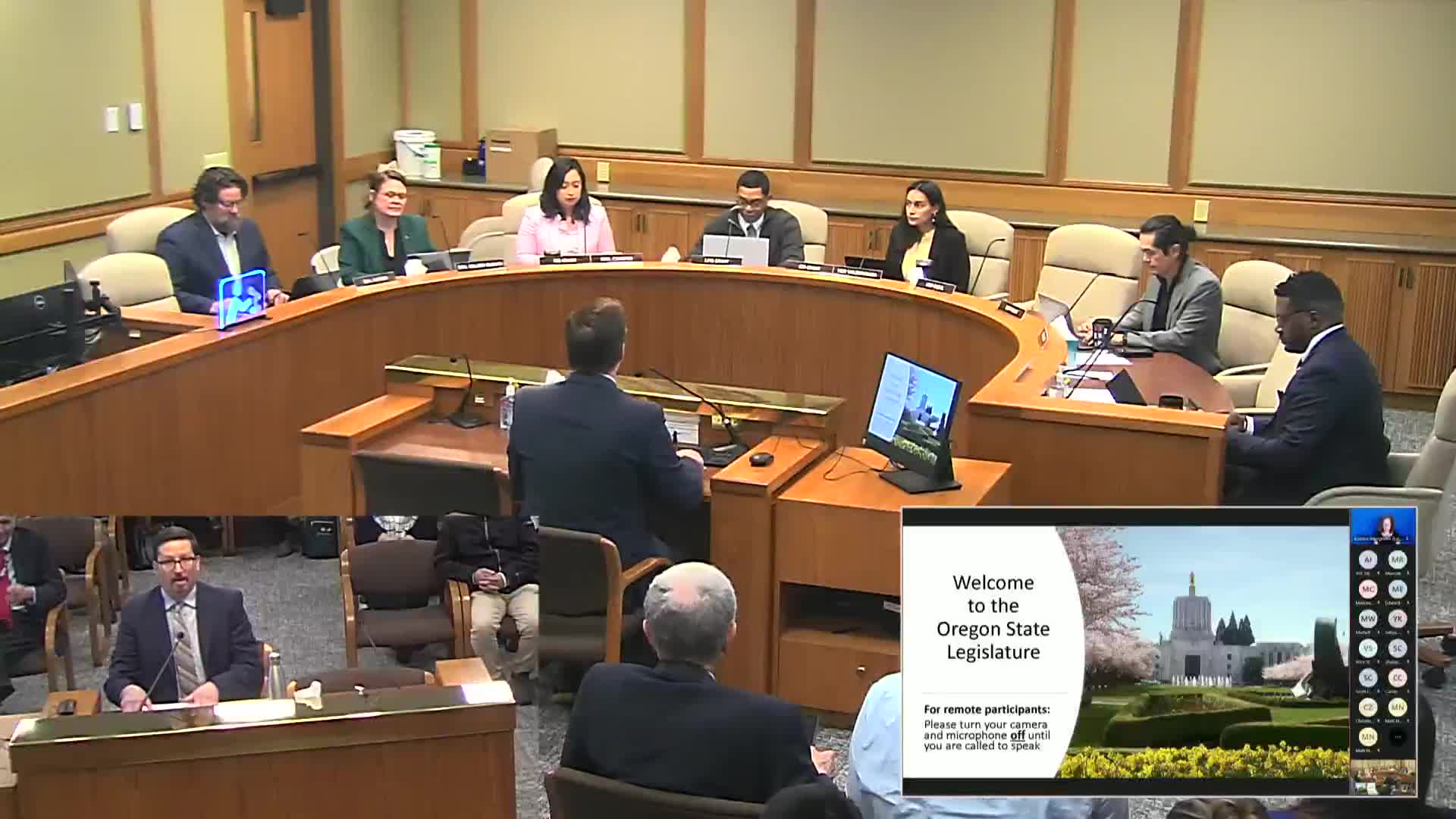
Good afternoon: the Joint Subcommittee on Human Services heard a presentation March 13 from Keith Ozils, director of the Vocational Rehabilitation (VR) program at the Oregon Department of Human Services, who said VR is serving more Oregonians with disabilities while federal funding has not kept pace with inflation.
Ozils told members the governor’s recommended budget for the program is about $160,000,000, and that most of that funding goes directly to clients and field staff who deliver services. He said VR had 286 positions statewide and that roughly 96% of those positions provide direct services to job seekers with disabilities.
The agency told the subcommittee that in state fiscal year 2024 VR served 14,253 job seekers and that 2,052 moved into competitive integrated employment. Ozils described other program achievements: the Inclusive Career Advancement Program (ICAP), a federal disability innovation grant run with community colleges, reached 500 enrolled participants ahead of its 2026 target; VR expanded its youth counseling team by hiring six youth counselors; and VR is recognized among the top-performing state VR programs nationally on placement metrics.
Why it matters: Ozils said VR faces three converging pressures — rising caseloads, inflation-driven increases in the cost per plan and essentially flat federal grant funding. He explained that because the program has exhausted the federal funds available to it, VR is proactively preparing to implement an "order of selection," a federally permitted mechanism that creates a wait list and prioritizes services for people with the most significant disabilities when resources are insufficient.
What the presentation said about the order of selection: Ozils described the order of selection as a legal tool already in federal guidance to be used when programs lack resources to serve all eligible applicants. He said students would be exempt — VR still must spend 15% of its budget on pre-employment transition services for youth. Ozils estimated a potential reduction in direct services of about 27% under an order of selection and projected that about 2,580 individuals could be placed on a wait list while funding remained constrained.
Budget details and cost controls: Ozils said VR’s mix of funding is predominantly federal and that the program’s federal match rate is approximately 78.7%. He said VR applied in August 2024 for an additional $5,000,000 in federal funds and received $2,300,000. He listed cost-control steps the agency has already taken or is considering, including bringing some contracted services in-house, reducing some temporary positions, revising or allowing certain contracts to expire, consolidating offices where feasible, limiting travel and office expenditures, and improving contract oversight. Ozils described a proposed budget request (POP 105) to add four positions for contract and fiscal compliance, quality assurance and training to strengthen vendor oversight after a 2023 review found insufficient contract monitoring.
Services and outcomes: Ozils summarized core services — counseling, assistive technology, rehabilitation technology, training and job placement supports including job coaching — and provided line items he said were in recent spending: about $6,000,000 for pre-employment transition services, $3,400,000 for rehabilitation technology, $2,900,000 for training, $2,000,000 for medical and psychological evaluations and $854,000 for transportation. He emphasized VR’s role as a dual-customer program serving both employers and job seekers and highlighted partnerships with Centers for Independent Living, nine Oregon tribes (five of which run VR programs), WorkSource centers and 170 contracted small businesses and 57 school districts.
Personal stories and outreach: The presentation included short videos and client testimonials. One client, Justin, described how a power chair obtained with VR support lets him travel sites and continue working: "My new chair is like a tractor. It goes everywhere. It takes me downhills, uphills, through water. It gets me where I need to go so I can do my job correctly." Ozils also highlighted examples of youth ("Rose" and "Logan") who received paid work experiences, training and certificates through VR-supported programs and later found employment or started businesses.
Questions and next steps: Committee members asked clarifying questions about Centers for Independent Living and what having a local VR office means in rural places; Ozils said offices vary from co-located WorkSource sites to standalone VR brick-and-mortar offices and that many staff are mobile and meet clients in community settings. He said the agency would notify the federal Rehabilitation Services Administration, revise the state plan to include order-of-selection procedures, hold public meetings, train staff and partners, and implement the wait list if required.
Ending: Ozils closed by emphasizing partnerships and process improvements — including an electronic filing transition and contract oversight investments — as his recommended near-term steps while the agency seeks funding to avoid or minimize an order of selection.