Get Full Government Meeting Transcripts, Videos, & Alerts Forever!
Get email alerts on the Agriculture topic
No spam. Unsubscribe anytime.
State Board of Agriculture presents 2025 priorities to Senate Natural Resources committee
Summary
The State Board of Agriculture presented its 2025 biennial report to the Senate Committee on Natural Resources and Wildfire on March 13, outlining seven priority areas for Oregon agriculture including workforce, animal health, water and climate resilience, transportation infrastructure and value‑added processing.
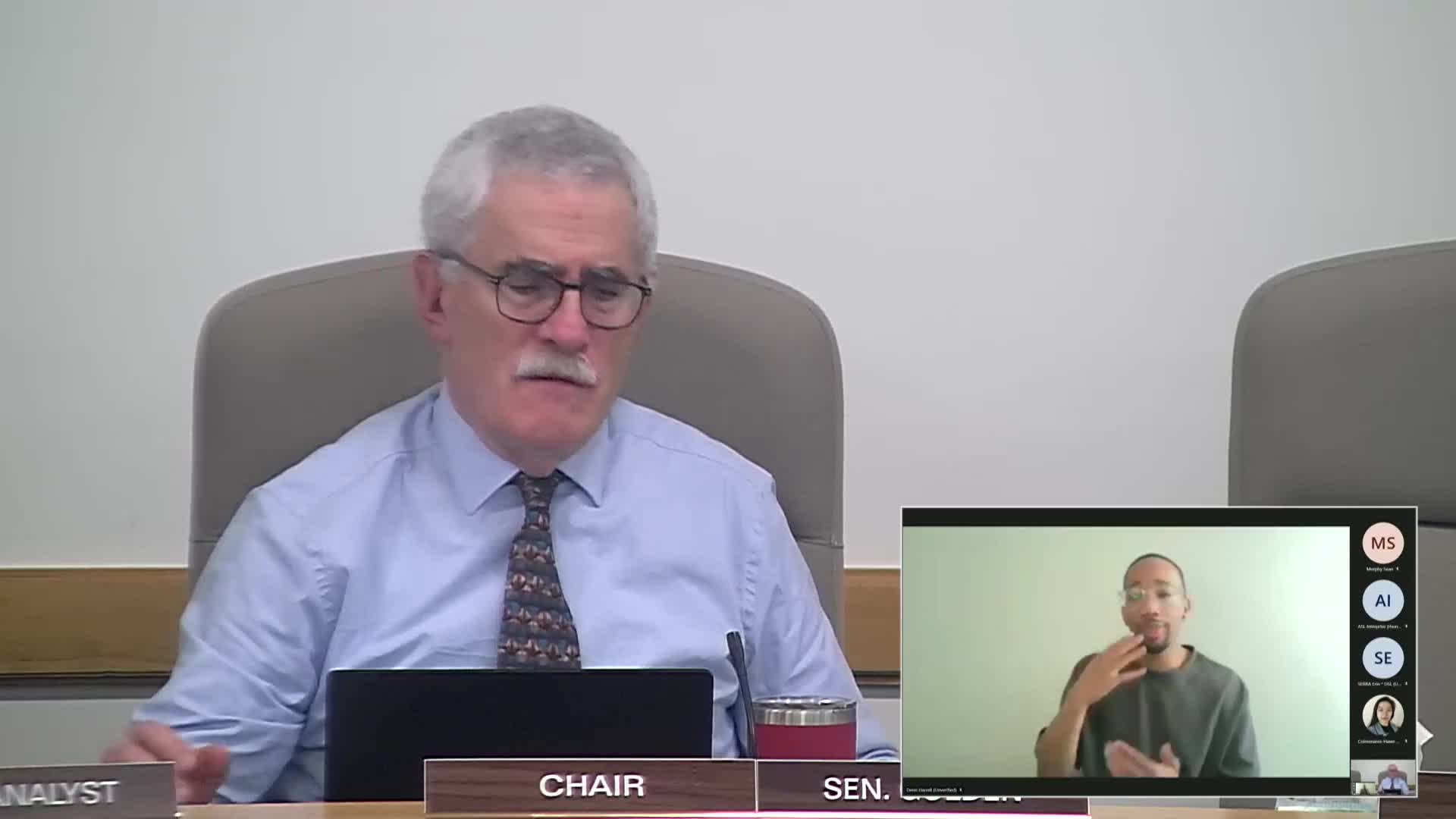
Chair Senator Golden opened an informational meeting of the Senate Committee on Natural Resources and Wildfire on March 13, 2025, welcoming State Board of Agriculture leadership and Lisa Sharp Lohansen, director of the Oregon Department of Agriculture, who introduced the board and its biennial report.
The report, presented by State Board Chair Elin Miller and Vice Chair Eric Gorham, summarizes extensive engagement across Oregon agriculture and flags seven priorities the board recommends the Legislature monitor and support. "The board ensures alignment among public policy, community interests, and practical challenges that face our farmers, ranchers, fishers, and food processors day in and day out," Miller said.
Why it matters: Miller and Gorham told the committee that agriculture remains a major economic and community driver in Oregon. Miller said 95% of Oregon farms are family owned and operate on about 15.2 million acres cultivating more than 225 crops. She described the sector as supporting thousands of jobs and large economic outputs; Gorham warned that net farm income fell in 2023 and again in 2024 and said 2025 did not look promising.
Key priorities outlined in the report include workforce and cost-of-business pressures, animal health and pest response, water and climate resilience, transportation infrastructure, and investments in value‑added processing such as meat inspection and farm‑to‑school initiatives. Gorham said those topics emerged from board engagement and panel discussions across regions and production types and that strategic investments are needed to bolster long‑term resilience.
Committee members asked for clarifications about several statistics and how the board defines categories such as "new and beginning" farmers. Lohansen told the committee that the U.S. Census of Agriculture defines a new farmer as someone in operation 10 years or less. The board said it will provide a more regular reporting cadence: Miller said the board will reinstitute a quarterly report to the Legislature to surface emerging trends and issues earlier than the biennial document.
Board members attending introduced themselves to the committee. Those who provided brief remarks included Ellie Norris, a second‑generation blueberry farmer; Ty Claver, a hay farmer and commercial brewer from the Klamath Basin; Chad Allen, a dairy producer from Tillamook; and Miguel Lopez, a grape grower in the Willamette Valley. Members described regional perspectives on labor, regulation, and rural infrastructure.
The board asked the Legislature to consider regulatory processes through the lens of farm size and capacity; several members emphasized that small and mid‑sized operations face higher per‑farm regulatory and administrative burdens than larger operations that can absorb compliance costs.
The committee welcomed the board's overview and the new quarterly reporting plan. Senator Golden said the board is a useful early warning resource for state policymakers and encouraged continued engagement. The informational meeting closed after the board's presentation and introductions.