Get Full Government Meeting Transcripts, Videos, & Alerts Forever!
Get email alerts on the Columbia River Gorge Budget topic
No spam. Unsubscribe anytime.
Subcommittee holds public hearing on SB 5508 funding for Columbia River Gorge Commission
Summary
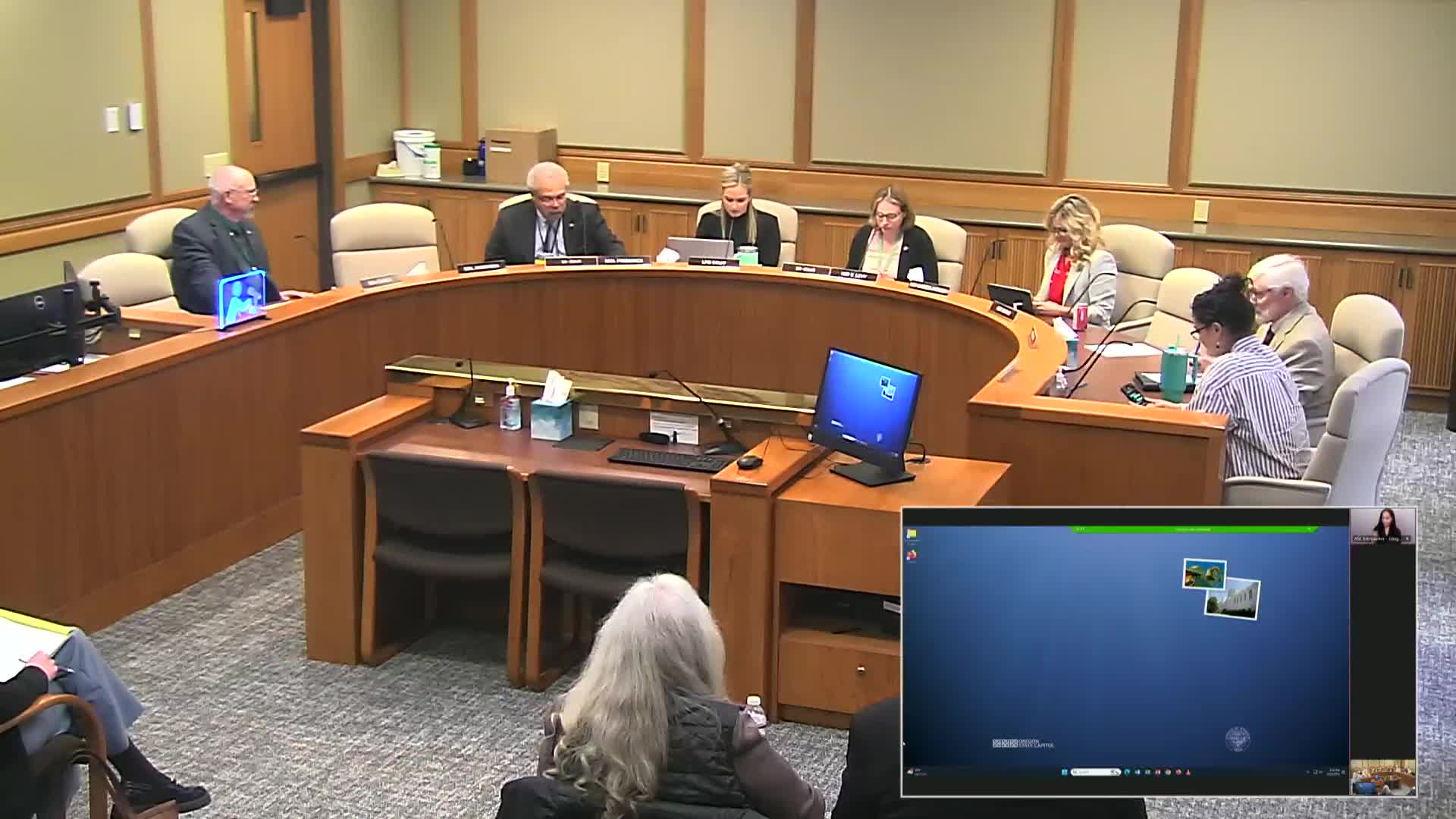
The Senate Natural Resources Subcommittee opened a public hearing on Thursday on SB 5508, the governor's appropriation bill for the Columbia River Gorge Commission, hearing presentations from the state's budget office, the commission's chair and executive director and a conservation group representative.
The Senate Natural Resources Subcommittee opened a public hearing on Thursday on SB 5508, the governor's appropriation bill for the Columbia River Gorge Commission, hearing presentations from the state's budget office, the commission's chair and executive director and a conservation group representative.
Kendra Beck, chief financial officer at the Oregon Department of Administrative Services, told the subcommittee the governor's recommended 2025–27 budget supports current services and includes one‑time funding to complete the Columbia River Gorge Commission's access‑database replacement project. Beck said Oregon's portion of joint commission funding is supported entirely from the general fund and that the commission has no Oregon FTEs because position authority rests with Washington.
Michael Mills, chair of the Columbia River Gorge Commission, provided background on the bi‑state agency's role hearing land‑use appeals and coordinating with counties, tribes and federal partners. Christina Walikowski, the commission's executive director, outlined the agency's request and the priorities driving it: finishing a three‑phase digital transformation for permitting and records, continuing a Vital Signs indicators program, implementing a climate‑change action plan and expanding diversity, equity and inclusion work.
Walikowski said the commission is requesting $350,000 from Oregon for “phase 3” of the access database replacement, to be matched by $350,000 from Washington, to finish migration of historic records, implement an enterprise permitting and document management system, pay licenses and ongoing maintenance, and better link permitting with GIS. She told legislators the project has remained on schedule and on budget through phases 1 and 2 and that independent quality assurance has reported a low risk level for the project so far.
Walikowski described agency staffing and workload: the commission has 9.5 FTE with one half‑time vacancy (a natural‑resources planner), three land‑use planners, a GIS manager who also serves as project coordinator for the database effort, and a finance and administration manager who handles two‑state administrative functions. She said the agency typically reviews 100–150 county permit applications a year and serves as the appellate body for county land‑use appeals.
The presentation listed previous appropriations and one‑time items: the 2023–25 legislatively approved budget included $900,000 one‑time for phase 2 of the database project; the phase‑3 request totals $350,000. Walikowski also described program achievements funded in the prior biennium, including purchase of water‑monitoring equipment used by USGS and Fish and Wildlife Service partners to measure temperatures at salmon cold‑water refuges, a Vital Signs indicators program coordinating monitoring across partners, a Climate Stewards program run with Oregon State University Extension, and an organizational equity initiative that included interns and training.
Members questioned agency relationships with counties and federal partners. Walikowski explained that three Oregon counties (Hood River, Wasco and Multnomah) and two Washington counties (Clark and Skamania) have adopted the management plan into local ordinance; Klickitat County has not, so the commission administers permitting there on Washington's funding. She and Mills said the Forest Service — a co‑manager of the National Scenic Area — is facing federal budget uncertainty that could affect shared work but that Oregon funding for the commission itself is not directly affected by current federal staffing concerns.
Madison Kenny of Friends of the Columbia Gorge testified in support of SB 5508, saying the conservation group works closely with the commission and that a well‑funded commission is vital to enforcing the management plan, supporting climate resilience and protecting the area's natural and cultural resources.
Committee chairs closed the public hearing after testimony; no committee vote or formal action on the bill was taken during the hearing.
The subcommittee record shows the commission is urging completion of the digital transformation project to improve public access to records and permit review, maintain interagency monitoring for climate and species indicators, and sustain staffing levels required to manage increased recreation and permitting workload.