Get Full Government Meeting Transcripts, Videos, & Alerts Forever!
Get email alerts on the Solid Waste Landfill topic
No spam. Unsubscribe anytime.
Greenridge representatives outline double‑liner landfill plan, limits on waste and traffic at Cumberland County workshop
Summary
Company planning a new landfill presented engineering, monitoring and operational limits — including a double‑liner system, restrictions on waste types, caps on truck counts and a commitment not to relocate Pine Grove Road — during a March 3 joint workshop of the Cumberland County Board of Supervisors and Planning Commission.
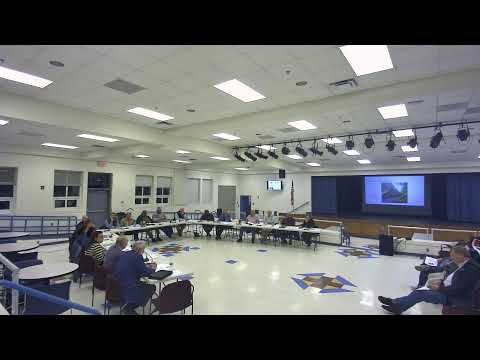
Representatives for Greenridge and its engineering consultant described a proposed modern municipal solid waste landfill and requested local conditions meant to limit community impacts at a March 3 joint workshop of the Cumberland County Board of Supervisors and the Planning Commission.
The presenters said the project will be designed to a higher standard than Virginia’s regulatory minimum, including a double‑liner system, a groundwater and gas monitoring network, limits on incoming waste types and daily tonnage caps. They also outlined proposed conditions that would bar relocation of Pine Grove Road, limit hours of operation and restrict out‑of‑state waste.
The details are significant because the company said the design and the permit conditions are intended to reduce potential environmental and community impacts compared with an earlier, larger plan and because the county must sign off on local zoning and a conditional‑use permit before the Virginia Department of Environmental Quality (DEQ) will accept a full Part B design permit application.
Mike Wallace, an engineer with ERC, walked through technical features of the proposed facility, saying modern landfills under federal Subtitle D design standards include multiple engineered layers. "These are engineering systems, highly regulated systems, that are designed to protect the environment and human health," Wallace said, describing compacted clay, geosynthetic clay liners (GCLs), high‑density polyethylene flexible membrane liners, drainage layers and a leachate collection system.
Presenters said the project would use a double‑liner design (two GCL layers and two high‑density polyethylene liners with an interstitial drainage layer) so that any liquid between liners can be collected and tested before it could reach groundwater. They described an on‑site leachate tank and off‑site wastewater treatment for leachate hauled from the site, as well as a groundwater monitoring well network that would be proposed to DEQ in the Part B application.
Company representatives said the landfill would not accept certain high‑odor or higher‑risk wastes. "This landfill will not accept either sludge or a process wallboard," the applicant (identified in the meeting as Jerry) said; presenters also said they would prohibit fly ash and would accept only Virginia‑generated waste under the amended permit request.
On traffic and access, presenters described an initial access arrangement that would route most inbound trucks east‑to‑west on Route 60 and into the site via Pine Grove Road. They said the permit package would include a traffic analysis and that the company has proposed limits tied to the access route. One example offered during the presentation: an initial cap of about 1,500 tons per day from Pine Grove Road (about 75 tractor‑trailer loads), with a proposed cap on tractor‑trailer counts as well as tonnage. The company said it hopes to build a Route 60 entrance in future phases; if that entrance is constructed and permitted, the company said the site could be allowed to receive up to 3,500 tons per day under those later conditions.
Presenters emphasized limits intended to reduce the project footprint compared with earlier approvals. They said the current proposed initial disposal area is about 104 acres (the Part A approval showed suitability for that footprint), whereas earlier conditional use approvals in 2018 allowed a much larger maximum (presenters cited up to 650 acres under the original approvals). Company representatives said expansions beyond the initial footprint would require additional federal and state permits and that they have proposed a local cap so the site would not expand beyond a figure the presenter stated as "under no circumstances ... more than 350 acres." They also proposed a height cap and said the current design would be substantially lower in elevation than the earlier proposal.
Board and commission members asked detailed technical and operational questions. Planning/board member Kevin Meadows (identified in the meeting as "Mister Meadows") expressed frustration at seeing repeated slides from earlier briefings: "This is the same slide, same everything I've seen before, 3 years ago," Meadows said. Other officials asked about groundwater response plans, timelines for filling the site, post‑closure monitoring and seismic suitability; presenters said the DEQ Part B application will include detailed monitoring plans, quarterly groundwater sampling, landfill gas monitoring and financial assurances, and they reiterated that post‑closure care and monitoring would continue for at least 30 years after the landfill is closed.
Company representatives also described community benefits and commitments they intend to include in agreements with the county, including an on‑site convenience center for county residents, guaranteed tip fees paid to the county, scholarships and a revenue‑sharing component for landfill gas if gas becomes a commercial resource. Presenters said the company would pay the full cost of a county employee to monitor operations and submit required reports to county staff.
No formal local vote or final decision was taken at the workshop; presenters and county staff said additional work remains on drafting specific CUP conditions, completing the DEQ Part B design and defining final mitigation and access improvements. The county must resolve local zoning and CUP conditions before a full Part B application can be accepted by DEQ.
Questions and written conditions remain outstanding on truck access, road improvements and monitoring details; presenters said the company will work with county staff to finalize proposed conditions and to submit the Part B application once local approvals are in place.