Get Full Government Meeting Transcripts, Videos, & Alerts Forever!
Get email alerts on the Traffic Safety topic
No spam. Unsubscribe anytime.
Stuart schedules neighborhood workshop after residents cite speeding and dangerous crossings on 10th Street
Summary
After weeks of resident complaints and a city speed study showing repeated high-speed incidents, the City of Stuart agreed to hold a public workshop March 20 at the Tenth Street Recreation Center to gather community input and staff recommendations on traffic calming and enforcement for Tenth Street and nearby neighborhood streets.
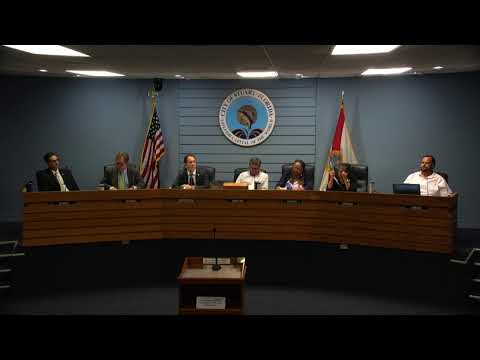
Stuart city commissioners on March 10 agreed to schedule a neighborhood workshop to gather community input and staff recommendations on traffic safety in the Tenth Street corridor, after residents described repeated speeding and close calls near J.D. Parker Elementary and St. Joseph’s parking/driveway areas.
The workshop will be at 5 p.m. March 20 at the Tenth Street Recreation Center and will be noticed as a regular city commission meeting so the board may receive public comment and — if the commission chooses — take action that night. The commission also set a public-comment procedure for that session: speakers will have four minutes each and will be allowed to speak a second time once all in-person attendees have had an initial turn.
Nut graf: The decision follows a months‑long neighborhood campaign and a recent city speed-monitoring study that found a small share of drivers traveling far above posted limits during school times and other periods. Residents urged a mix of near‑term measures — increased enforcement and temporary “quick‑build” traffic calming — plus longer-term engineering and policy work.
City Manager Michael Mortel summarized staff findings and the next steps. Chief Felicia Stewart told commissioners the police speed trailer data showed most drivers complied with the 20 mph school‑zone limit but that “there was anomalies of people speeding well over, sometimes 40 miles an hour, in different times of the day,” and she described lowering the speed limit as a low‑cost policy option for staff to evaluate.
Neighborhood advocates pressed for traffic‑calming changes. Bonnie Moser, a traffic consultant and resident, recommended a mix of tactics that can be tried quickly: radar feedback signs, temporary lateral shifts (flex posts and paint), and test “quick‑build” curb extensions before committing to permanent engineering. “About 10 percent of drivers each day were going at least 10 miles an hour over the speed limit,” Moser told the commission, and she described national crash‑severity research she said showed collision fatality risk climbs sharply once speeds exceed 20–30 mph.
Parents and long‑time residents described repeated near‑misses at the school crosswalks and on neighborhood cut‑through streets. Erin Kirkwood said her daughter was nearly hit on a crosswalk and asked the city to consider permanent 20 mph speed limits in the school area. Several speakers called for more targeted enforcement during pickup and drop‑off and for neighborhood traffic studies covering more than one street, to avoid shifting cut‑through traffic from one block to another.
Commissioners directed staff to organize the March 20 workshop, to summarize resident proposals and technical options, and to return with recommendations and, if requested, proposals for a traffic consultant to design longer‑term changes. Vice Mayor Collins said the police department already increases enforcement during school hours and told the commission a dedicated traffic unit (three officers) is being developed to address chronic complaints. Commissioner Joby asked staff to prepare material explaining how conditional approvals, curb‑cut rules and engineering tradeoffs would affect possible remedies.
Ending: Residents left the meeting with a scheduled opportunity to present focused proposals to the commission on March 20; staff will compile those comments and assess options that range from low‑cost temporary installations to engineering and enforcement plans that would require further funding or consultant support.