Get Full Government Meeting Transcripts, Videos, & Alerts Forever!
Get email alerts on the Residential Treatment Regulation 5342 topic
No spam. Unsubscribe anytime.
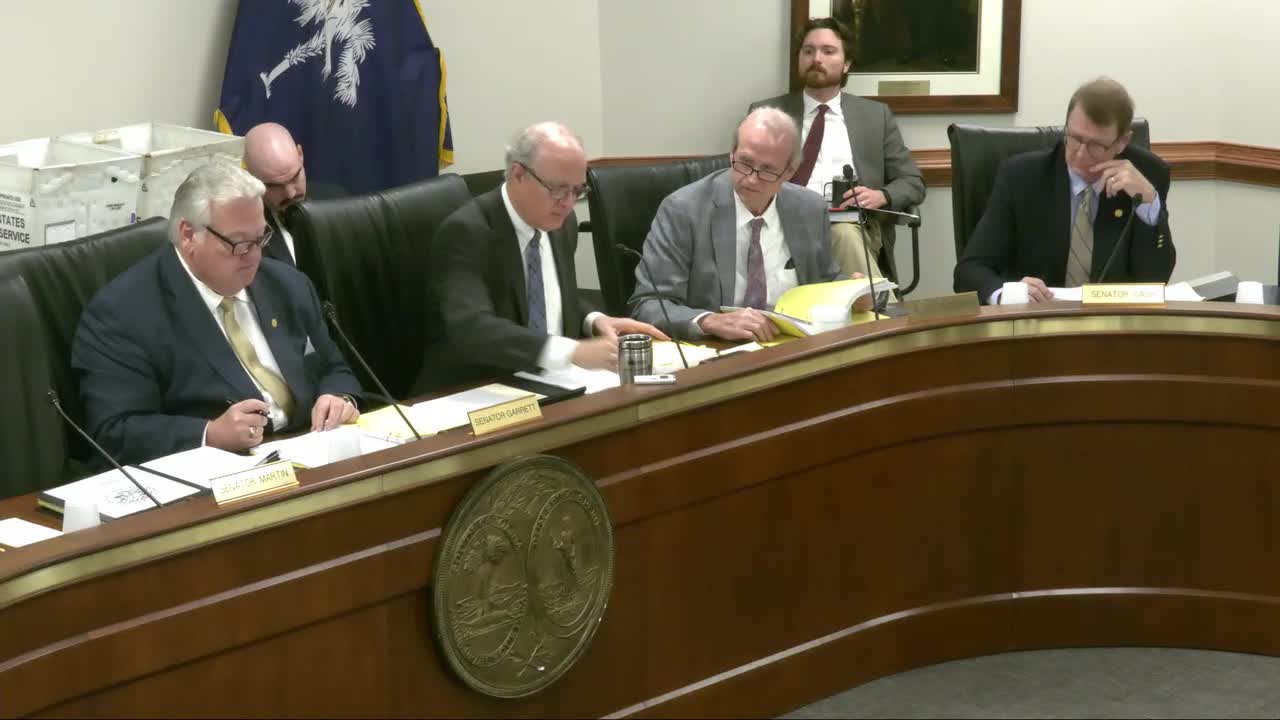
Subcommittee delays residential-treatment rule after debate over staff disqualifications and incident reporting
Summary
The subcommittee carried over regulation 53 42, which would tighten staff disqualification language, add staffing minimums, and revise incident reporting timelines for residential treatment facilities for children and adolescents, after senators pressed for clearer language on disqualifying convictions and for immediate incident reporting.
The Medical Affairs Subcommittee voted to carry over proposed regulation 53 42, which sets licensing standards for residential treatment facilities for children and adolescents, after questions from senators about which criminal convictions would disqualify staff and whether incident reporting deadlines should require immediate notification.
Vito, a Department of Public Health staff member, told the subcommittee the regulation “is intended to just clarify, what are the disqualifying convictions for staff members.” The proposed language replaces the prior phrasing—"abuse, neglect or exploitation"—with citations to unlawful conduct as defined in the South Carolina Code and adds requirements that staff not have adverse findings on the child abuse and neglect central registry, sex offender registry, or nurse aide registry.
Senator Cash pressed whether the code-based phrasing is more or less expansive than the prior language and whether the change would narrow protections. Vito said the code sections have existed for some time and that the intent was to clarify which convictions disqualify staff.
The regulation also prescribes minimum direct-care staffing numbers and adds a new provision that at least one awake, on-site direct-care staff member or volunteer “of the same sex as the residents” be present; if both male and female residents are present, at least one male and one female direct-care person must be present and awake. The subcommittee discussed inserting a cross-reference to an existing statutory definition for "sex" used in another code section.
A major point of contention was a change to incident reporting language that replaces phrasing such as "at the earliest practical hour, not to exceed 24 hours" and "immediately" with a requirement to notify within 24 hours. Senator Cash and other members objected, arguing immediate reporting better protects evidence for criminal investigations. Senator Cash said, “I don't want somebody waiting 24 hours where everybody gets together in a room and says, now this is our story about what happened.”
DPH staff said the intent of the amendments was to clarify reporting timelines and to include a distinct 24-hour report and a separate five-day report with more comprehensive investigation information for DPH. Staff also said statutory mandatory reporting requirements for alleged criminal acts to DSS and law enforcement already exist and that the regulation should avoid duplicating statutory duties.
The subcommittee carried the regulation over to allow agencies to provide stakeholder comments and to consider restoring or tightening the "immediate" language. The motion to carry over passed by voice vote; the record does not show a roll-call tally.