Get Full Government Meeting Transcripts, Videos, & Alerts Forever!
Get email alerts on the State Auditor Bill topic
No spam. Unsubscribe anytime.
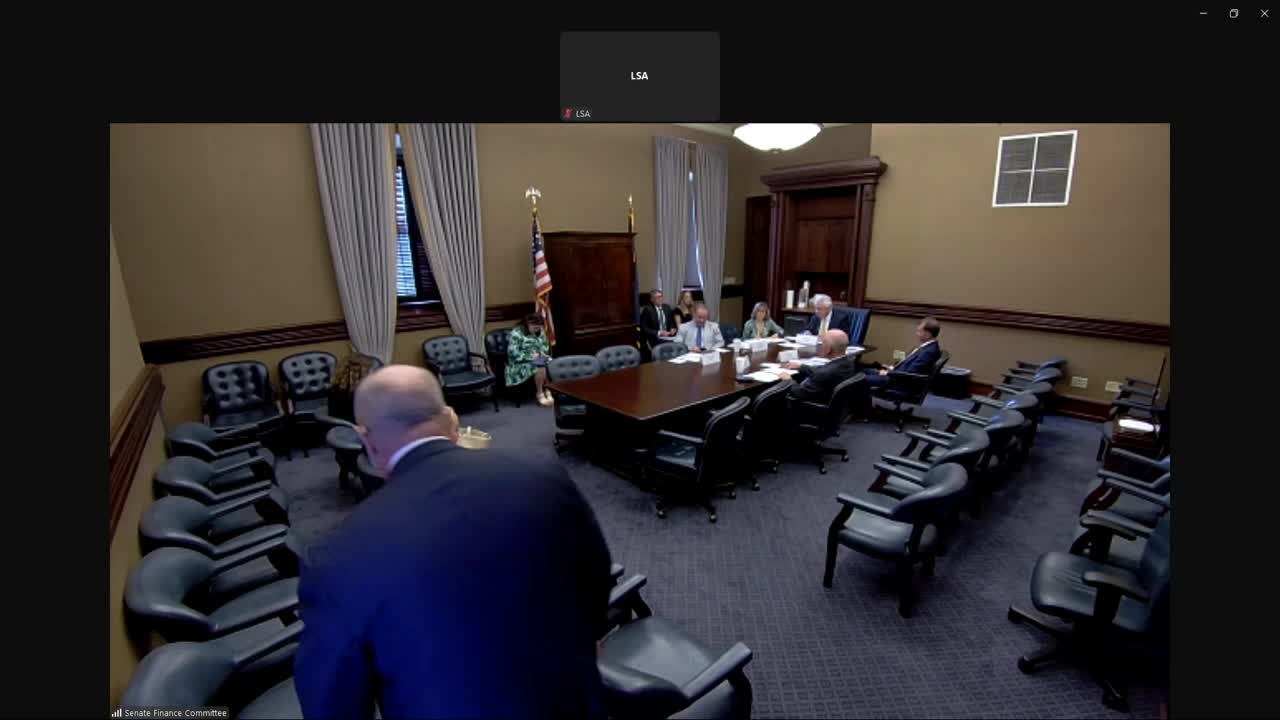
Committee advances amendment to create Department of Governmental Auditing and revise state auditor duties
Summary
A finance committee discussion advanced H 34 30, an amendment that would establish a Department of Governmental Auditing, set a six-year term for the state auditor, and clarify staff transfers, audit scope and referrals for alleged criminal conduct; committee moved the measure to a vote after debate and amendment.
The committee moved H 34 30 — a bill to establish a Department of Governmental Auditing and revise the selection, term and duties of the state auditor — to a vote after members discussed and adopted a set of amendments.
The amendment presented to the committee would delete existing language and authorize the new department to select a state auditor who would be reappointed by the governor with the advice and consent of the senate and serve a six-year term beginning July 1 and ending June 30 six years later. The amendment also spells out qualifications and sets a seven-month maximum holdover period to bridge appointments pending required certification and the Annual Comprehensive Financial Report process.
Amanda, a staff member who walked the committee through the amendment, said the revised language would require the auditor to be “selected without regard to political affiliation and on the basis of integrity, capability for strong leadership, demonstrated ability in accounting, auditing, financial analysis, law management analysis, public administration, investigation, or criminal justice administration, or other closely related fields.” She also told the committee that employees of the current office of the state auditor would become employees of the new department on the act’s effective date with the same compensation classification and grade until the state auditor exercises authority to set salaries for their staff.
Members pressed for clarity on several points. One question addressed how the auditor’s compensation is protected: the amendment ties pay-setting to the agency head salary commission and states the salary “shall not be reduced during the term of their office,” but staff cautioned that past court opinions and budget controls mean the legislature could still affect compensation through the budget process. Committee members also sought clearer wording about the timing of an in‑depth audit of the state treasurer’s office; staff described the requirement as an audit when a new treasurer takes office and again at the end of that treasurer’s term, and members directed staff to refine the language to avoid ambiguity about midterm vacancies and regular timing.
The amendment would expand the new department’s responsibilities to include review of county and municipal audits and posting of published audits on a publicly accessible website. It would also codify procedures for reporting apparent criminal violations, malfeasance or fraud: findings that appear criminal or constitute malfeasance or misfeasance would be reported to the governor and attorney general, and suspected fraud, waste or abuse would be referred to the state inspector general. The amendment adds language to address what happens if the governor or attorney general is the subject of a report by directing the auditor to report to the president of the senate, the speaker of the house and other appropriate officials.
A motion to move the amended bill to a committee vote was made and seconded; the committee then proceeded to a vote. The transcript does not include a roll-call or tally in the record provided to the committee transcript.
Why it matters: supporters said centralizing and clarifying audit responsibilities would strengthen oversight by creating a clear statutory home for statewide performance and financial audits and by ensuring continuity of staffing when the office transitions to a new department. Critics and some members pressed for clearer statutory language on timing of treasurer audits and on the limits of legislative control over executive compensation.
What happens next: committee staff said they expect technical cleanups — including clarifying the timing language for treasurer audits — to be handled in a subcommittee or through a further amendment before the measure is posted for final consideration.